AI Image
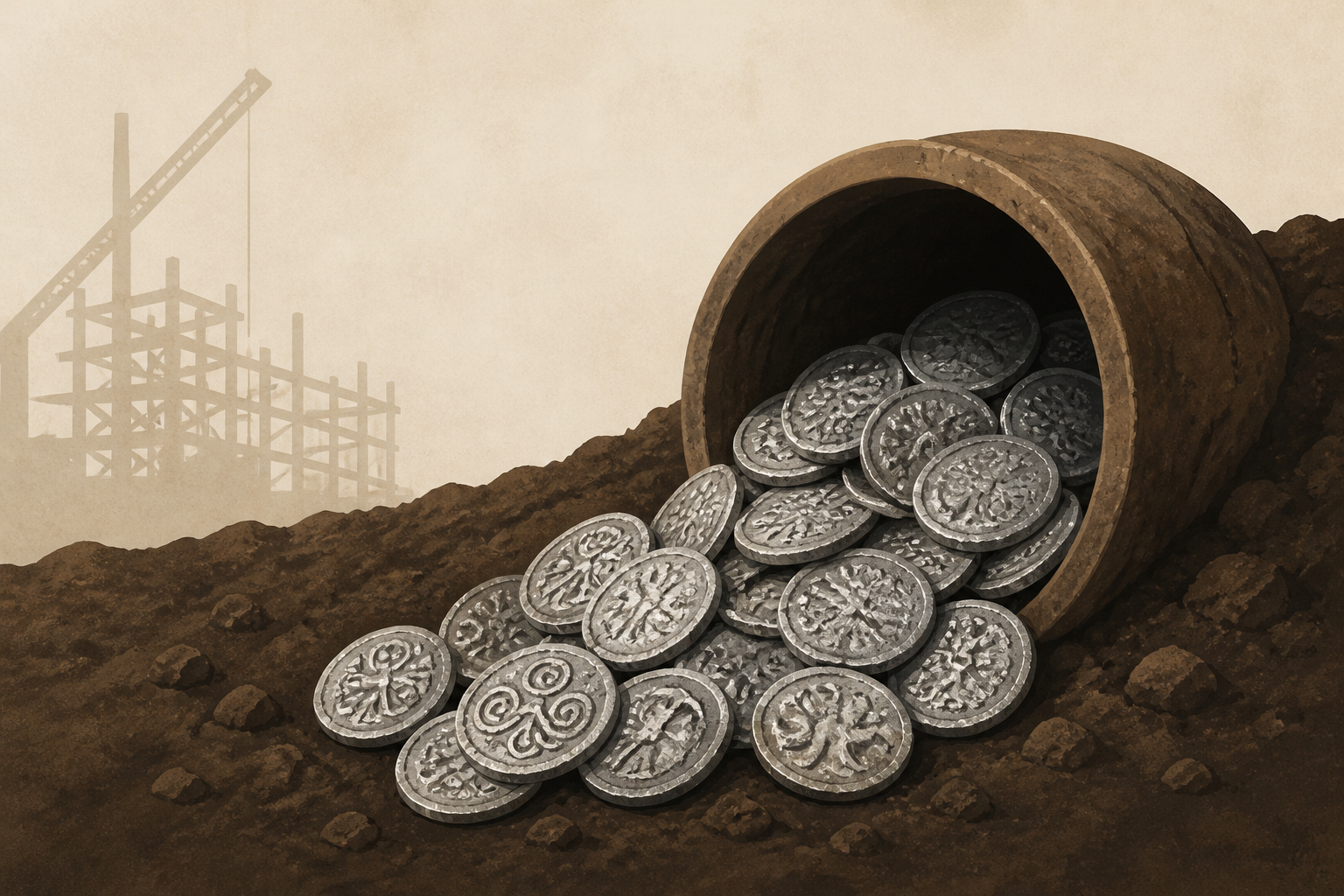
2,200-year-old Celtic silver coin hoard unearthed at construction site in Hungary
Live Science • • world
Key Points:
- Archaeologists in western Hungary discovered a hoard of over 200 Celtic silver coins dating from the late 2nd to early 1st century B.C., making it one of the largest finds in the country in decades.
- The coins, weighing about 2 kilograms and modeled on Greek tetradrachms, were found inside a small ceramic vessel approximately 40 centimeters underground at a former farm site.
- The "Velem" type coins feature a stylized head likely representing Apollo on one side and a helmeted rider on horseback on the other, reflecting Celtic adaptations of Greek designs.
- Excavations at the site revealed artifacts spanning 7,000 years, including a polished stone chisel and Roman-era villa remains, highlighting continuous occupation without disturbing the buried coin hoard.
- Celtic tribes in the Carpathian Basin minted these high-value coins inspired by Hellenistic examples, often hoarding them as wealth or using them in ritual offerings rather than everyday transactions.


