AI Generated Image
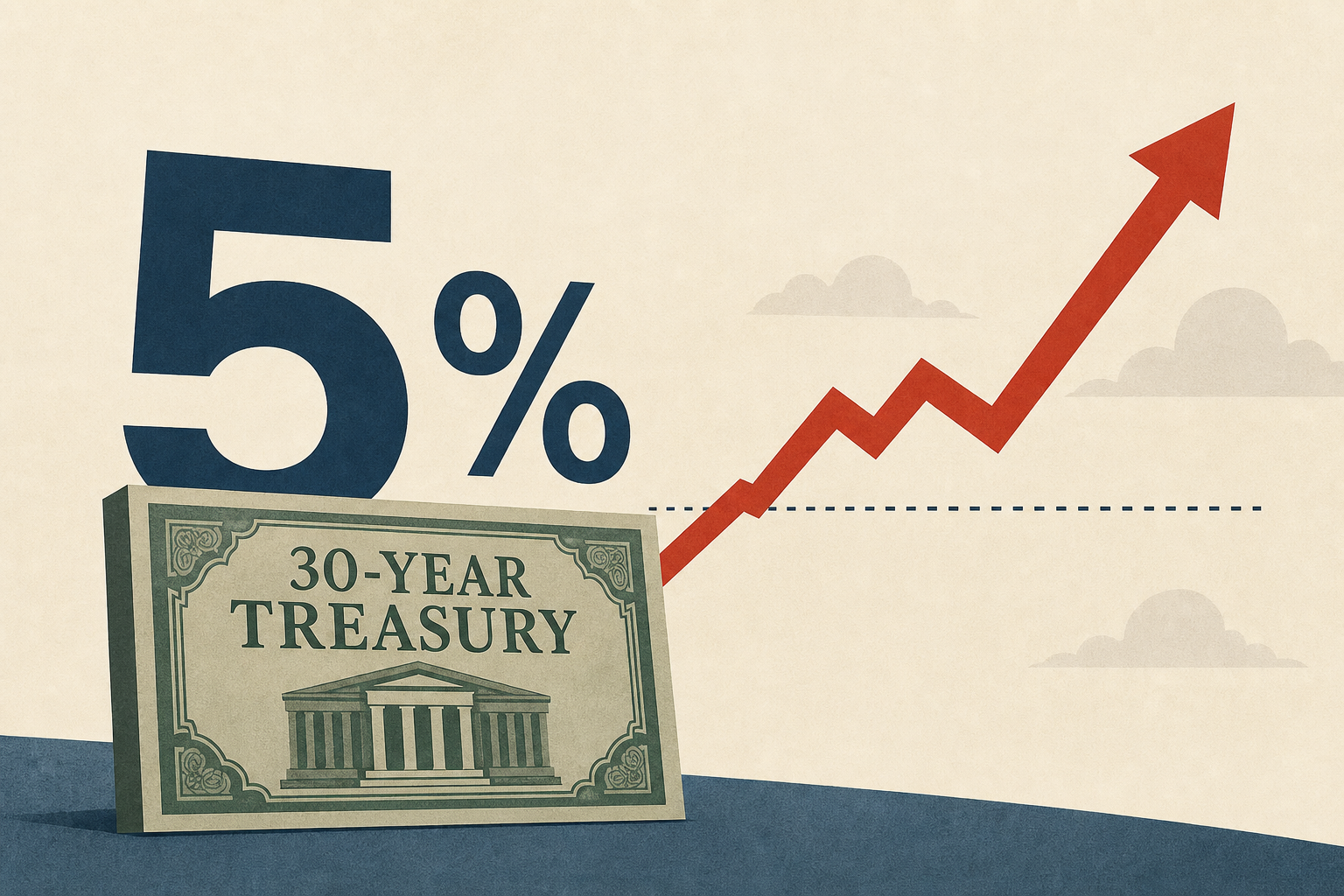
30-year Treasury yields stick above 5%
marketplace.org • • business
Key Points:
- The 30-year U.S. Treasury bond yield recently surpassed 5% and has remained above that level for about two weeks, marking the longest stretch since 2007, signaling increased investor demand for higher returns due to long-term risks.
- Investors are wary of locking up money for 30 years amid concerns about the U.S. government's large and persistent budget deficit, which hit 100% of GDP in March, with no credible plan for reduction.
- The rise in yields reflects market discomfort and competition from high-yield, long-term bonds issued by tech companies investing heavily in AI infrastructure, offering attractive alternatives to government debt.
- Institutional investors like pension funds and insurance companies favor these higher yields, driving demand for better returns on long-term bonds amid economic uncertainties.
- While 30-year yields do not directly impact shorter-term loans like mortgages or car loans, the increase in long-term rates signals broader concerns about the future economic environment.


![Hasbro reveals The Legend of Zelda: Heroes of Hyrule toys [update: pre-orders live]](https://media-cdn.cashwalklabs.io/https%3A%2F%2Fs3.us-west-2.amazonaws.com%2Fimages.cashwalklabs.io%2F0_admin%2Fnews-ai-images%2F019f8d27-04ed-7167-a03a-c3a6947127e9.webp?format=webp&w=120&h=80)


