AI Generated Image
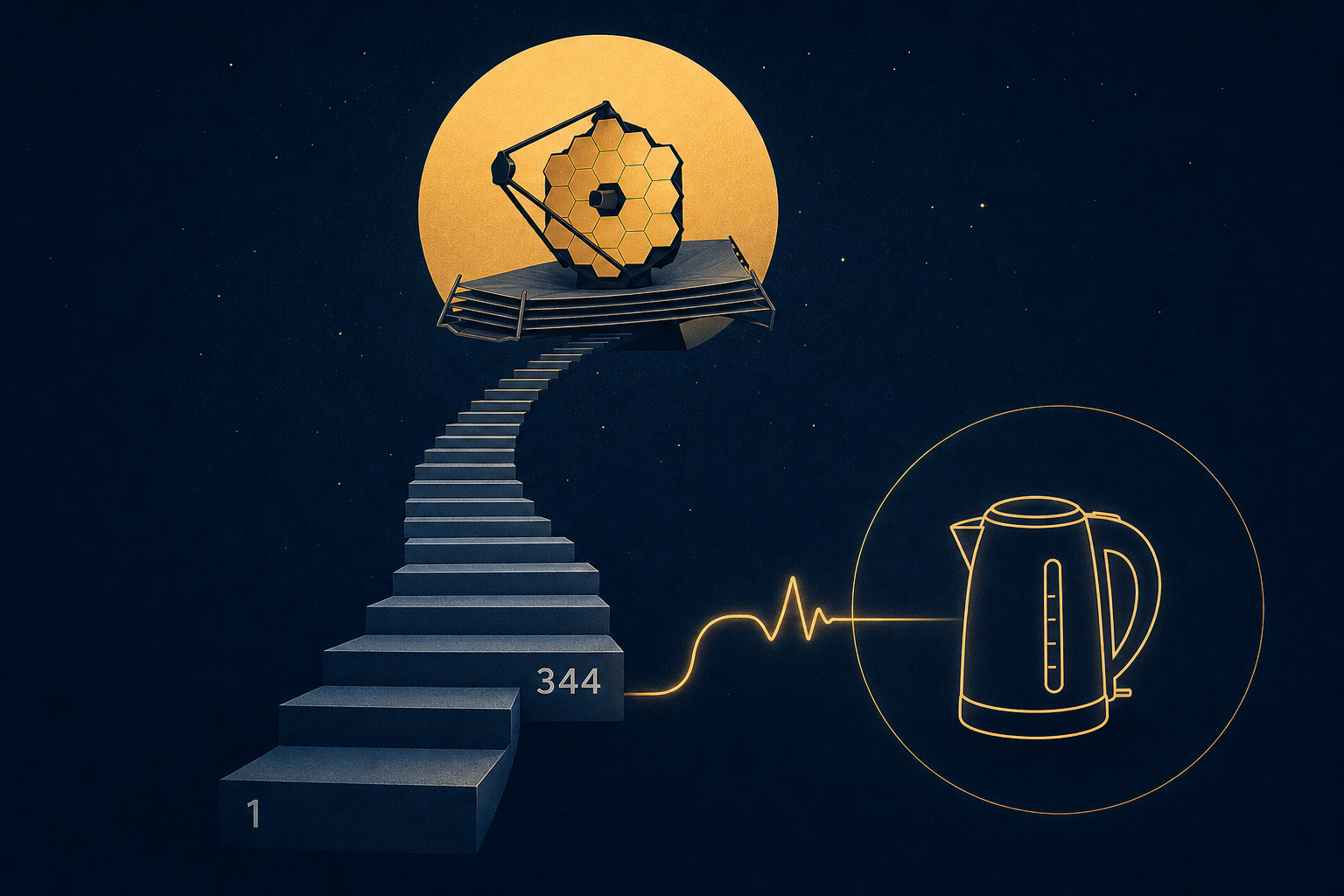
344 steps stood between the James Webb Space Telescope and total failure — any one could have ended it — and the telescope that survived them all now runs on less power than a household kettle, a mill
Space Daily • • science
Key Points:
- The James Webb Space Telescope launched on 25 December 2021 with 344 single points of failure—critical steps or components where any fault would have ended the mission irreparably, with no possibility of repair due to its distant orbit.
- About 80% of these risks were related to the complex deployment process, especially the sunshield, a five-layer tennis-court-sized screen that had to unfold perfectly to enable the telescope’s cooling and operation.
- The sunshield deployment, completed ten days after launch, eliminated around 70-75% of the single points of failure, with the rest resolved as the mirror segments locked into place, marking the successful completion of the most complex spacecraft unfolding ever attempted.
- The telescope operates on roughly one kilowatt of power—less than a typical household kettle—thanks to its sunshield that passively cools its instruments by blocking sunlight, avoiding energy-intensive refrigeration.
- Positioned about 1.5 million kilometers from Earth at the Sun-Earth L2 point, Webb functions autonomously without any possibility of repair, and it has been successfully returning scientific data since July 2022.


