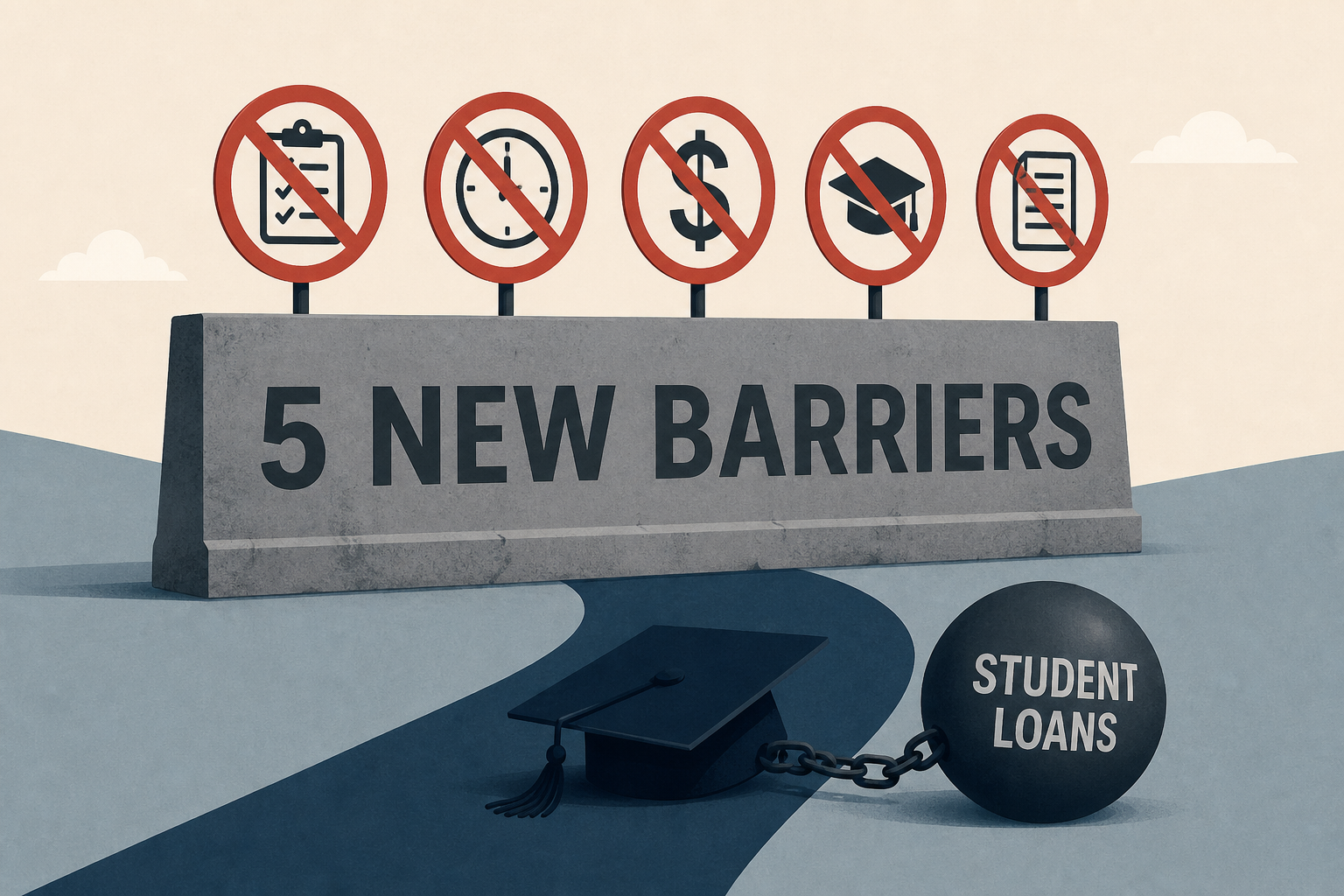
AI Generated Image
5 New Barriers To Getting Student Loans Forgiven Just Went Into Effect
Forbes • • business
Key Points:
- The Education Department has introduced new restrictions on student loan forgiveness, particularly tied to the Repayment Assistance Plan (RAP), which requires borrowers to make on-time payments to qualify for interest benefits and loan forgiveness, with forgiveness only available after 30 years of repayment.
- RAP payments must be made on or before the due date to count toward Public Service Loan Forgiveness (PSLF), eliminating the previous grace period for late payments, a change that will also apply to the Income-Based Repayment (IBR) plan starting in 2027.
- Ambiguities in the updated PSLF Buyback program suggest that borrowers in RAP may face limitations on counting deferment or forbearance periods toward forgiveness, potentially restricting eligibility for loan forgiveness credits during non-payment periods.
- Borrowers who switch from RAP to other income-driven repayment plans will not be able to transfer RAP payments toward forgiveness under those plans, effectively resetting their repayment term and potentially extending the time needed for loan discharge.
- Parent PLUS borrowers who did not consolidate their loans before July 1, 2026, or who take out new loans or consolidate after that date, will lose access to income-driven repayment plans and PSLF eligibility, limiting their options to the Tiered Standard Plan which does not qualify for loan forgiveness.


