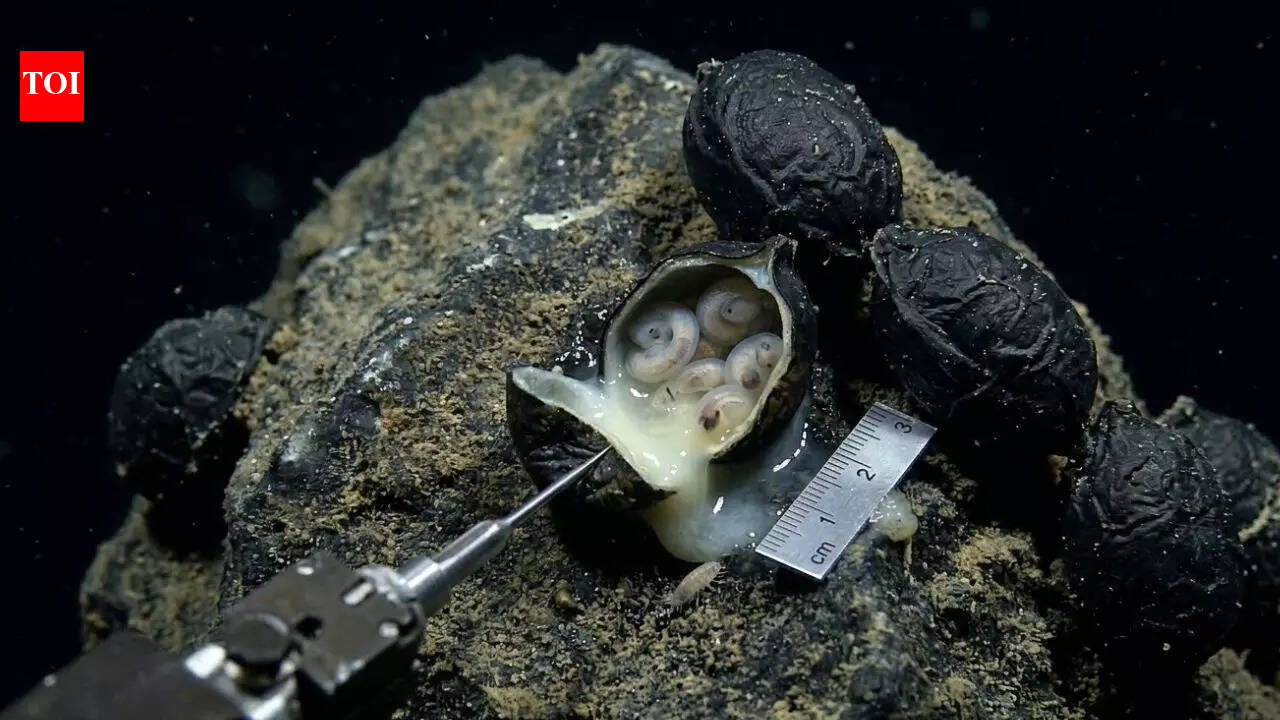
6,200 meters under the Pacific Ocean: Scientists open black ‘eggs’ and make a shocking discovery
The Times of India • • science
Key Points:
- A Japanese research team from Hokkaido University discovered leathery black cocoons containing flatworm embryos at a record depth of 6,200 meters in the Kuril-Kamchatka Trench, nearly twice as deep as the previous record.
- The cocoons, about 3 millimeters wide, contained nutrient-rich yolk that protected developing flatworm embryos from extreme pressure, marking the deepest known habitat for free-living flatworms.
- The study reveals that flatworms with simple body plans have evolved complex reproductive strategies, such as yolk-buffered cocoons, enabling them to survive and reproduce in the harsh conditions of the hadal zone.
- This discovery provides new insights into how some species have migrated from shallow coastal waters to the deep ocean over geological time by using protective "time capsules" around their eggs.
- The findings open avenues for further research into deep-sea biology and the evolutionary adaptations that allow simple organisms to thrive in extreme environments.


