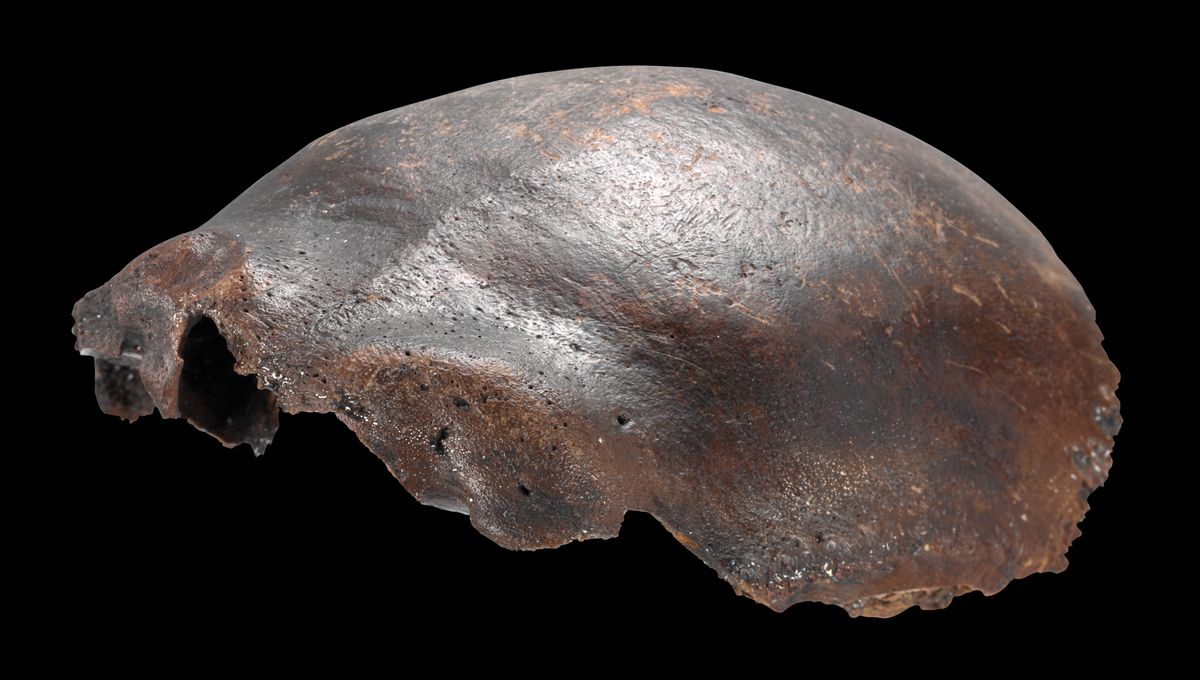
7,500-Year-Old "Neanderthal-Human Hybrid" Skull Turns Out To Be Something Different
IFLScience • • science
Key Points:
- The Hahnöfersand frontal bone, initially dated to 36,000 years and thought to be a Neanderthal-Homo sapiens hybrid, has been re-dated to about 7,500 years old, placing it in the Mesolithic period long after Neanderthals went extinct.
- New three-dimensional comparative analysis shows the bone's morphology aligns clearly with modern humans, contradicting earlier claims of it being a hybrid specimen.
- Previous suggestions that the bone had "extreme" modern human features resembling a mix with Neanderthals are refuted by findings that similar skull proportions exist in medieval modern humans.
- The study concludes that the Hahnöfersand bone does not exhibit intermediate traits between Neanderthals and Homo sapiens, consistent with its revised younger age.
- Genuine Neanderthal-modern human hybrids are found in much older contexts, such as 100,000-year-old Middle Eastern hominins and Western European populations from up to 30,000 years ago, when the two species coexisted.


