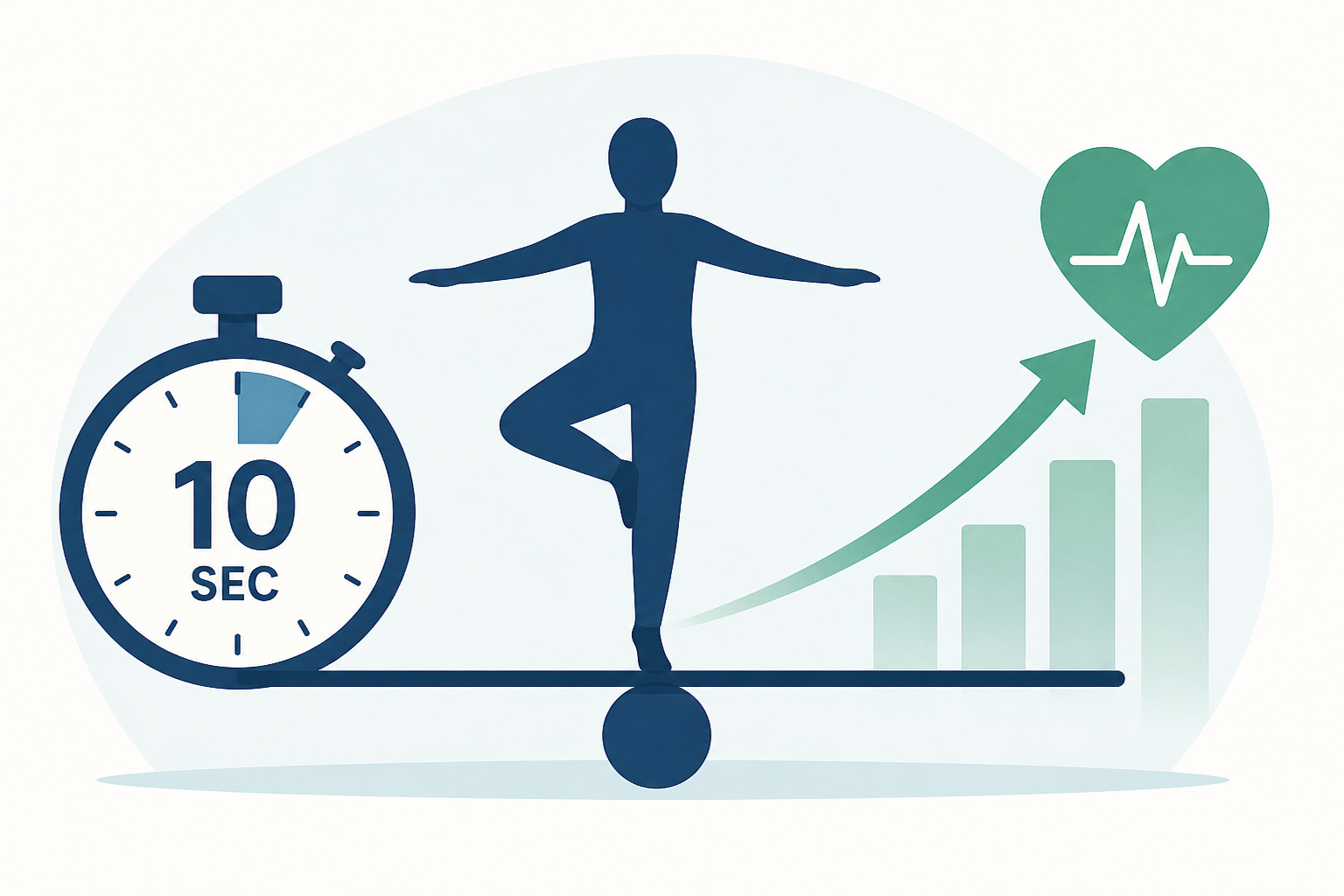
AI Generated Image
A 10-Second Balance Test to Predict Your Lifespan, Backed by Research
TODAY.com • • health
Key Points:
- Research indicates that grip strength, bone density, and genetics influence quality of life as people age, with balance ability also playing a crucial role in mobility and independence.
- The National Institute on Aging notes that balance tends to decline with age, increasing fall risk, but maintaining good balance helps older adults stay active and perform daily tasks.
- A simple 10-second one-leg stand test can estimate lifespan and future mobility; inability to hold the position correlates with an 84% higher risk of death over 10 years in adults aged 51 to 75.
- Balance reflects the coordination of multiple body systems including muscle strength, neuromuscular control, vision, proprioception, and brain health, but it can be improved through consistent training.
- Beginners are advised to start with shorter holds, use support if needed, and gradually increase difficulty, with steady practice leading to better balance and associated anti-aging benefits.


