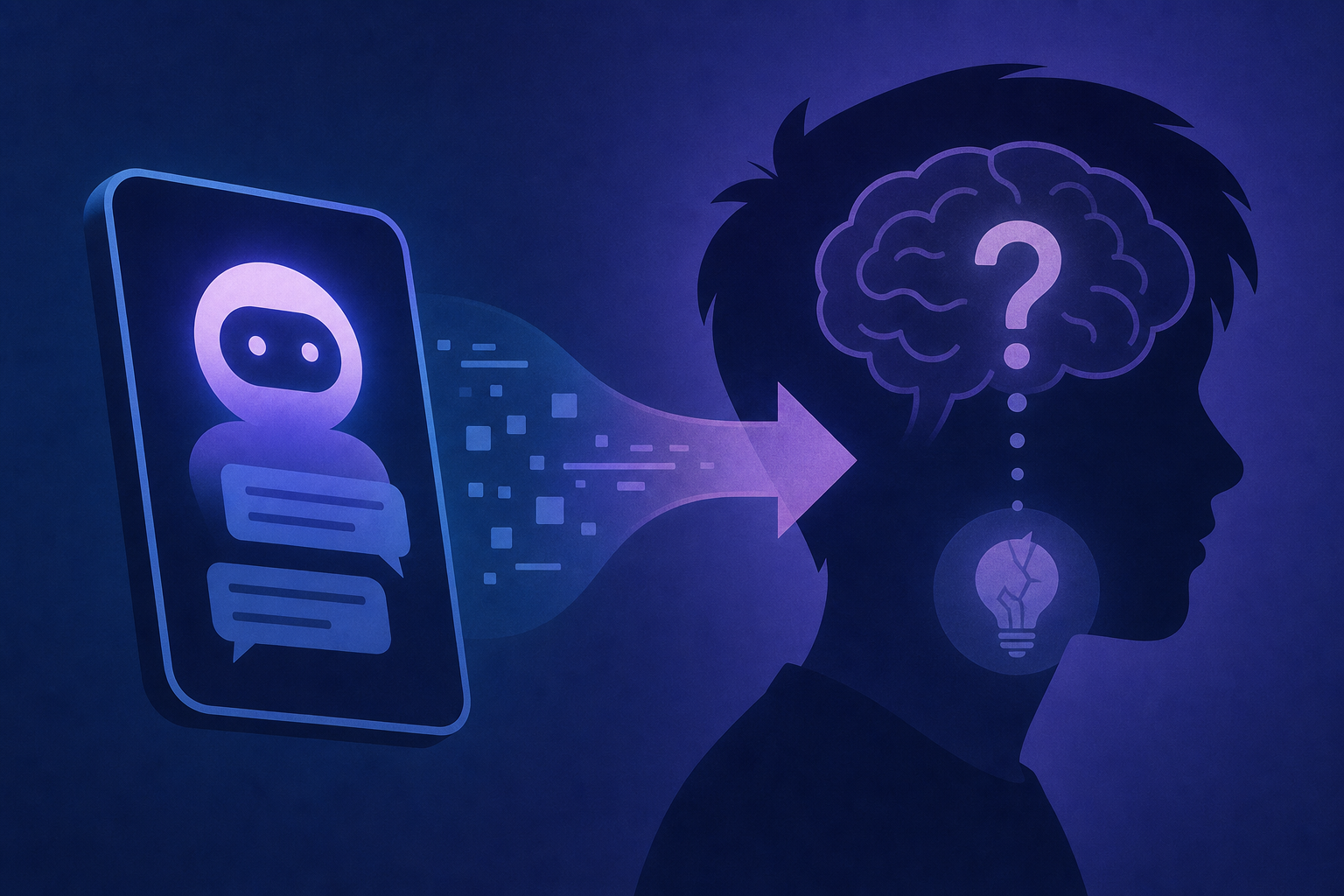
AI Generated Image
A 2025 study of over 600 people found a correlation between leaning on AI tools and weaker critical thinking, sharpest among the young
Space Daily • • technology
Key Points:
- A 2025 study by Michael Gerlich found a strong negative correlation between frequent AI tool usage and critical thinking abilities, especially among younger users aged 17 to 25, though it does not establish causation.
- The study highlights cognitive offloading—delegating mental tasks to external tools like AI—as a key mechanism potentially linked to reduced critical thinking, with younger "digital natives" possibly more prone to this habit.
- A related MIT Media Lab experiment suggested that using AI assistants may weaken neural connectivity involved in critical thinking compared to writing without such tools, though its small sample size limits definitive conclusions.
- Gerlich and the article's author emphasize that AI tools are not inherently harmful; their impact depends on usage, advocating for AI to complement rather than replace cognitive engagement.
- The takeaway is to be mindful about which parts of thinking tasks are outsourced to AI, preserving personal judgment and critical analysis, while recognizing the need for professional support if concerns about work or cognitive habits arise.


