AI Generated Image
A 650ft Mega-Tsunami Blasted Greenland and Rang the Earth Like a Bell for 9 Days
Yahoo • • science
Key Points:
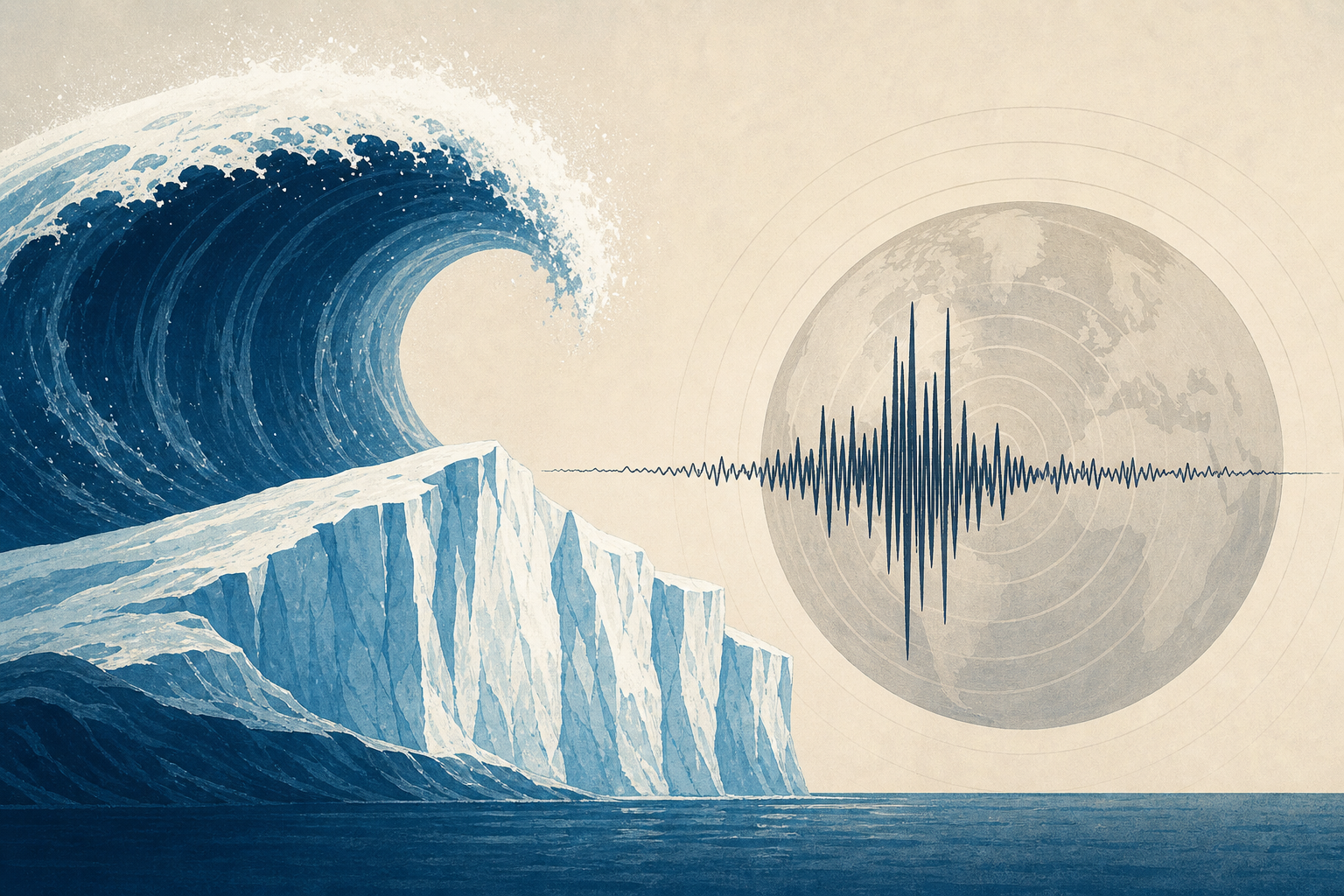
- In September 2023, a massive rock and ice avalanche in East Greenland's Dickson Fjord triggered a 650-foot mega-tsunami, caused by the collapse of approximately 880 million cubic feet of mountain rock and glacial ice, accelerated by warming polar temperatures.
- The tsunami, while smaller than the 1958 Lituya Bay event, was significant enough to produce waves high enough to engulf multiple high-rise buildings.
- Uniquely, the wave became trapped within the narrow fjord, forming a seiche—a continuous sloshing wave that persisted for nine days with nearly 30-foot waves.
- This persistent wave generated an ultra-low frequency hum detected by seismic stations worldwide every 92 seconds, initially baffling scientists who termed it an "unidentified seismic object."
- The event highlights the increasing impact of climate change on glacial stability and ocean boundaries, with experts warning that similar large-scale natural disasters may occur more frequently in the future.


