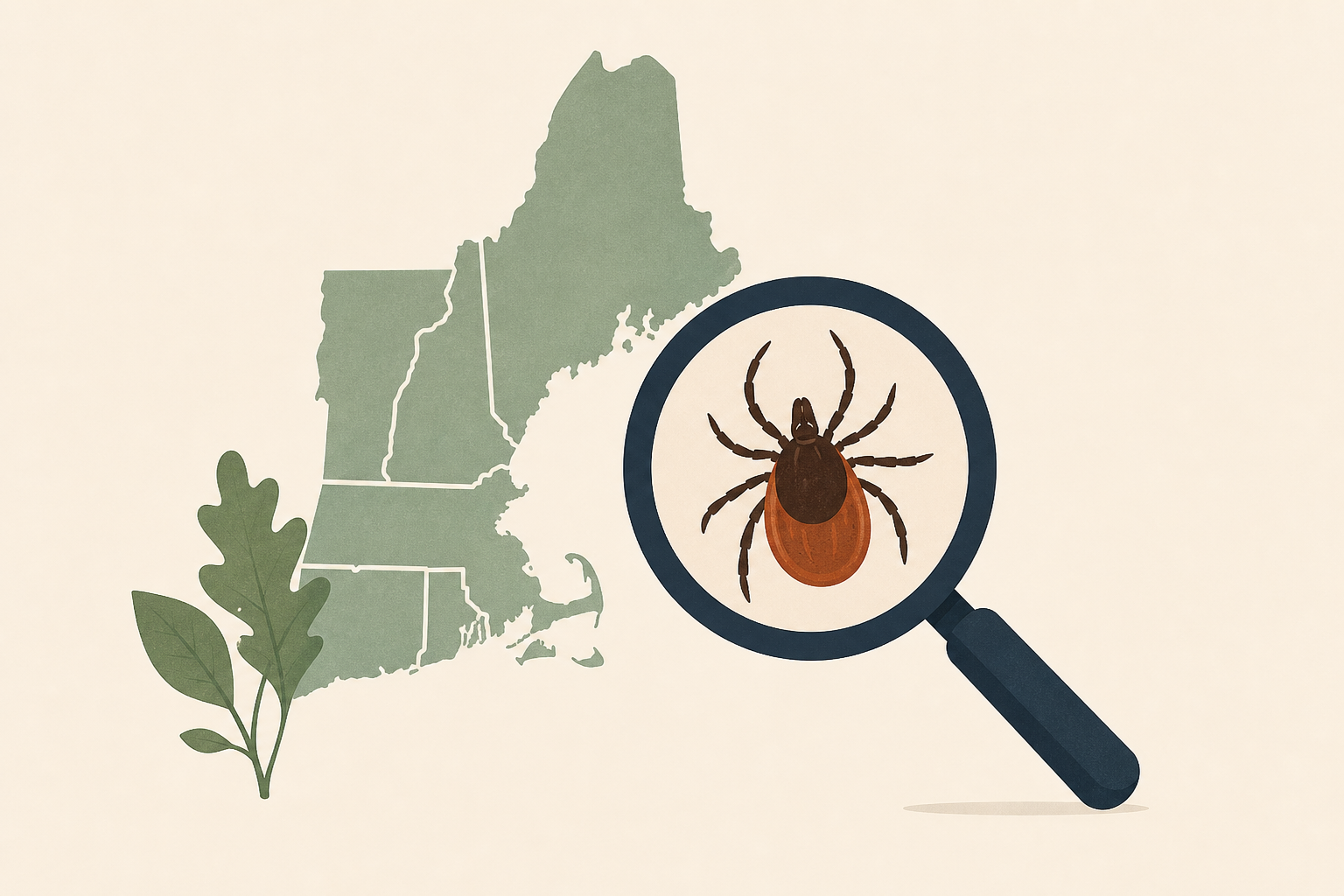
AI Generated Image
A guide to ticks in New England
The Boston Globe • • health
Key Points:
- Blacklegged ticks, also known as deer ticks, pose the greatest health risk in New England as they transmit Lyme disease, Anaplasmosis, Babesiosis, Powassan virus, and hard tick relapsing fever; nymphal blacklegged ticks are particularly dangerous due to their small size and difficulty to detect.
- American dog ticks are less risky to humans, rarely carrying Rocky Mountain Fever bacteria, and are primarily a nuisance; they thrive in sunny, grassy areas and are active during the day.
- Lone star ticks, increasingly found in New England, can cause alpha-gal syndrome leading to red meat allergies and transmit Ehrlichiosis and Tularemia; they tolerate dry, sunny environments and are highly active in coastal and grassy areas.
- Longhorned ticks mainly threaten livestock and pets by attaching in large numbers and causing blood loss; although they reproduce rapidly and spread quickly, they currently pose minimal health risk to humans in the U.S.
- Awareness of tick species, their habitats, and behavior is crucial for prevention, with recommendations including using repellents, wearing protective clothing, and avoiding high-risk areas like wooded edges and tall grasses.


