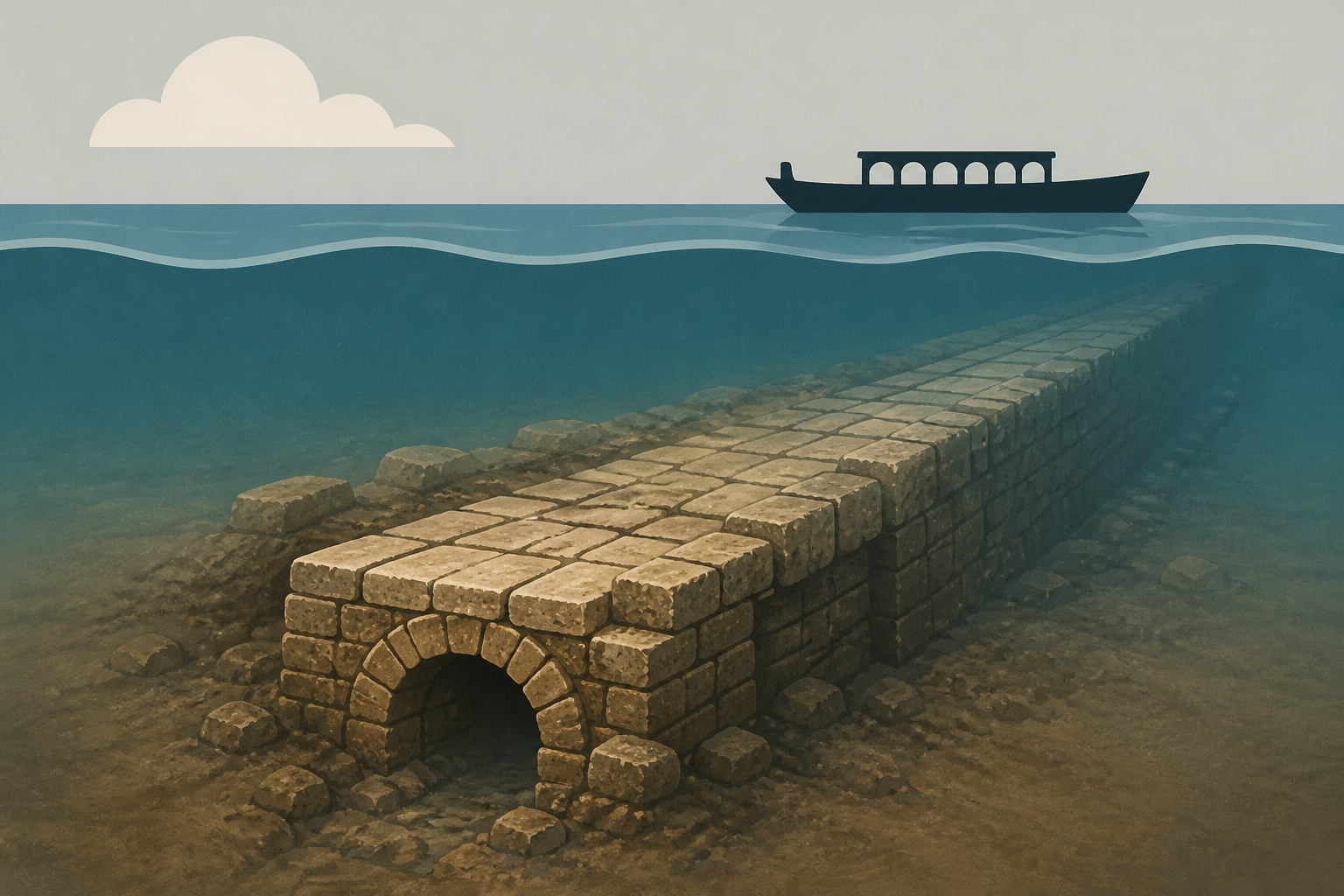
AI Generated Image
A Mile-Long Ancient Roman Engineering Marvel Has Suddenly Surfaced from Beneath This Famous Waterway
The Debrief • • world
Key Points:
- Archaeologists have uncovered the remains of Constantine’s Bridge, a mile-long Roman structure built in A.D. 328, which has resurfaced due to a major summer drought causing the Danube River's water levels to drop.
- The bridge, once the longest Roman-built bridge in the ancient world, connected modern-day Romania and Bulgaria and was likely destroyed by around A.D. 367.
- Its construction was inspired by Trajan’s bridge and commemorated by rare gold medallions minted in Rome, marking the bridge's completion.
- Drones were used to map the bridge's foundations near Gigen, Bulgaria, providing valuable data on the structure's scale and design.
- The bridge's rare reappearance offers a unique opportunity for researchers to study this ancient Roman engineering marvel, which has been submerged for centuries.


