AI Generated Image
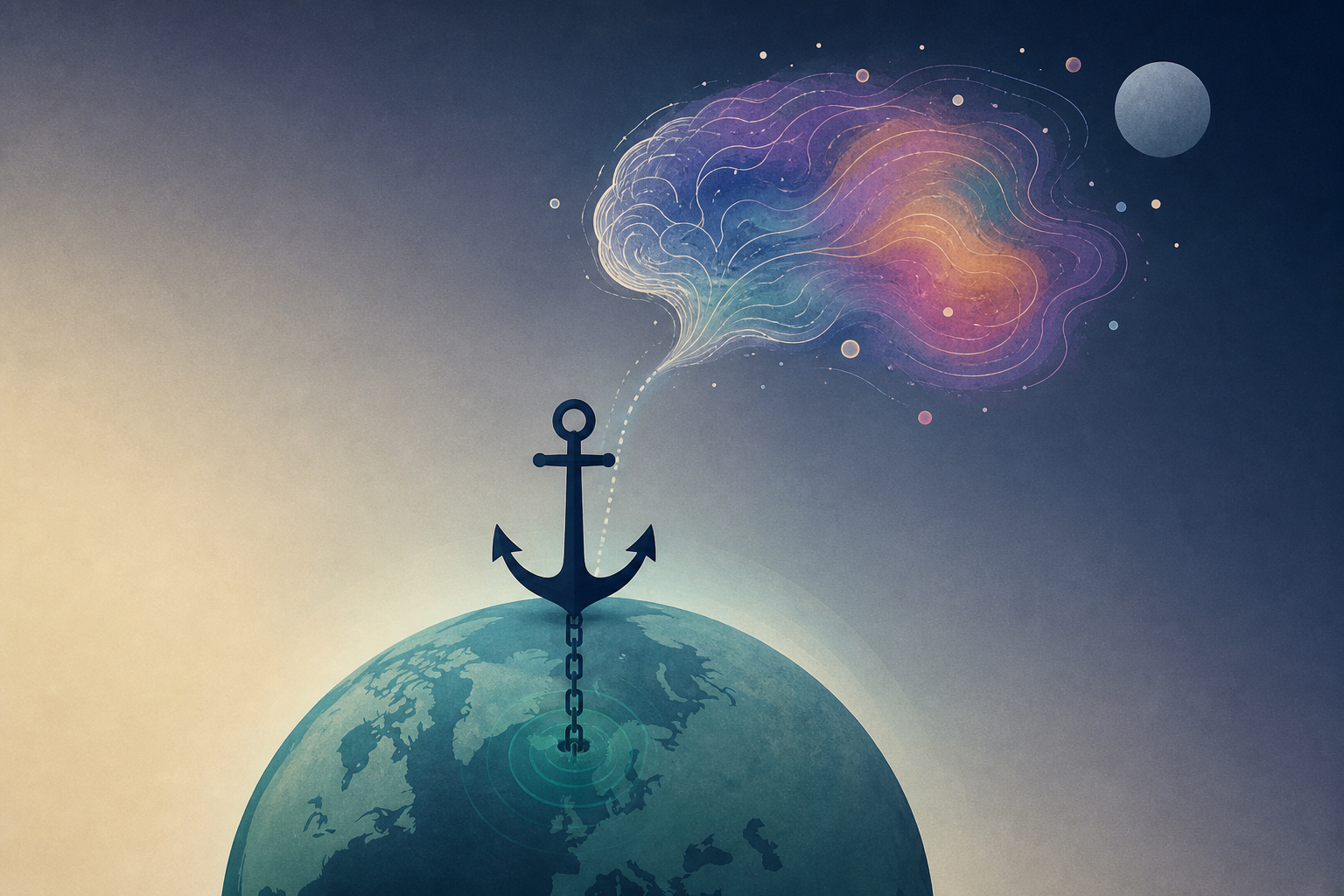
A new paper argues that Earth's gravity is a hidden anchor for consciousness - and that losing it in orbit loosens the mind in a way that echoes psychedelics
Space Daily • • science
Key Points:
- A new Perspective paper in Frontiers in Psychology proposes that astronauts’ altered sense of self after spaceflight is due to the brain recalibrating to the absence of gravity, which acts as a fundamental, lifelong sensory assumption or "1G super-prior."
- The authors argue that gravity’s constant pull shapes the brain’s model of reality, and its removal in orbit causes prediction errors that force the brain to rebuild its sense of body position and self, supported by observed brain structural and connectivity changes in astronauts.
- They draw a computational parallel between the brain’s response to weightlessness and the effects of psychedelics, suggesting both conditions relax high-level brain priors and loosen self-boundaries, though they emphasize this similarity is conceptual, not mechanistic.
- The paper is a theoretical synthesis without new experimental data, relying on previous studies and astronaut reports, and calls for empirical testing to confirm whether weightlessness truly induces these cognitive and neural changes.
- While intriguing, the authors caution that other factors like the overwhelming view of Earth or general adaptation to spaceflight may also influence astronauts’ experiences, and the hypothesis requires careful scientific validation.


