AI Image
'A potential glimpse into the future': Climate change has triggered 'permafrost landslides' with house-size blocks of ice in Canada
Live Science • • science
Key Points:
- Researchers have identified a new type of landslide called permafrost detachment slides occurring in northern latitudes with relatively thin permafrost, linked to long-term wildfire impacts and warming temperatures.
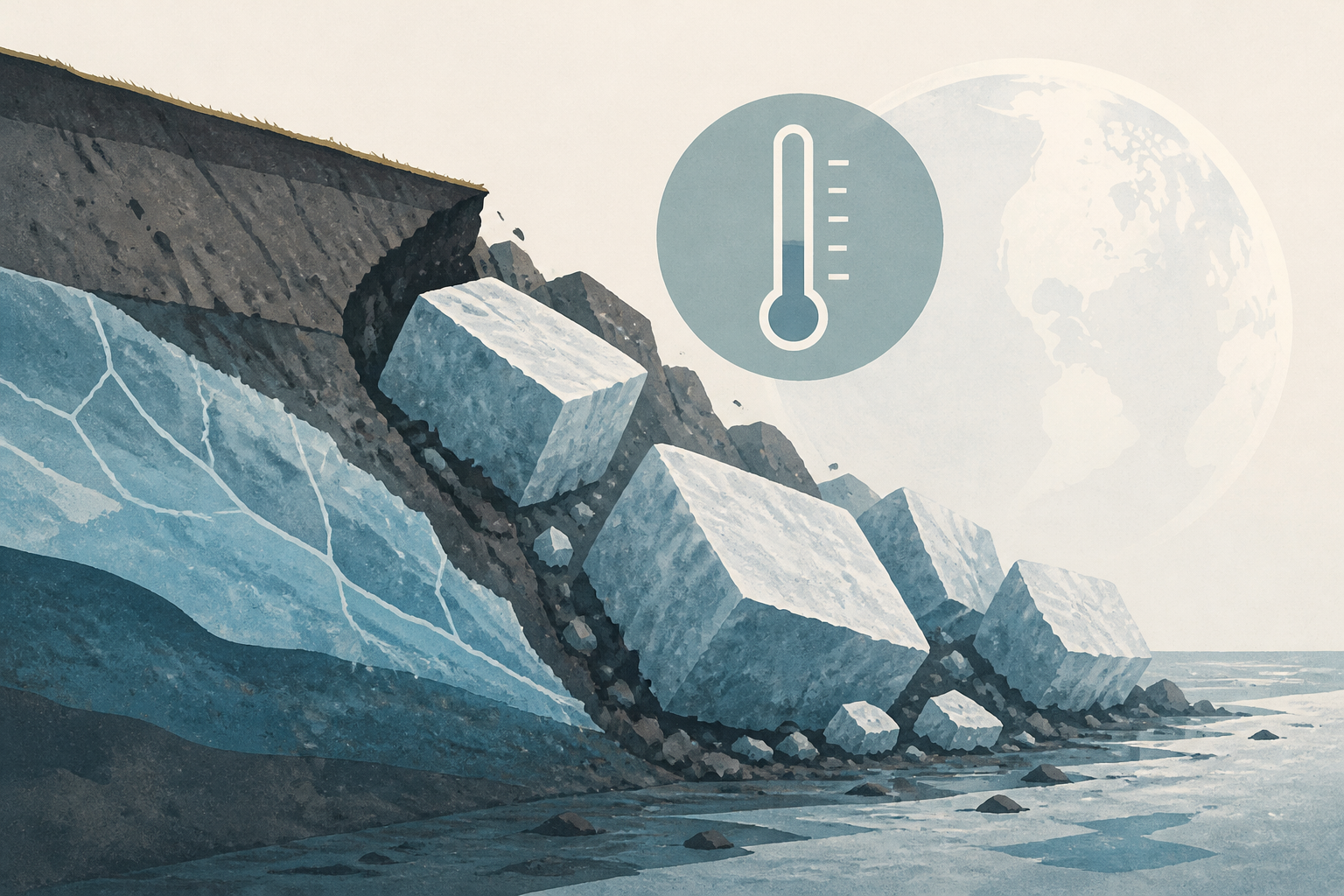
- These slides differ from typical permafrost thaw by involving large blocks of frozen material detaching and moving downslope, with some blocks reaching up to 33 feet tall.
- Two major slides studied in Canada’s Northwest Territories moved massive amounts of soil and rock, creating new lakes by damming rivers and significantly altering the landscape.
- The process involves fire-related thaw combined with gradual warming, causing cracks that allow thaw to penetrate deeply over decades, as seen following a 1995 wildfire.
- With increasing wildfire intensity and warming in northern regions, similar landslides may become more widespread, potentially affecting other parts of Canada and Alaska with vulnerable permafrost layers.


