AI Image
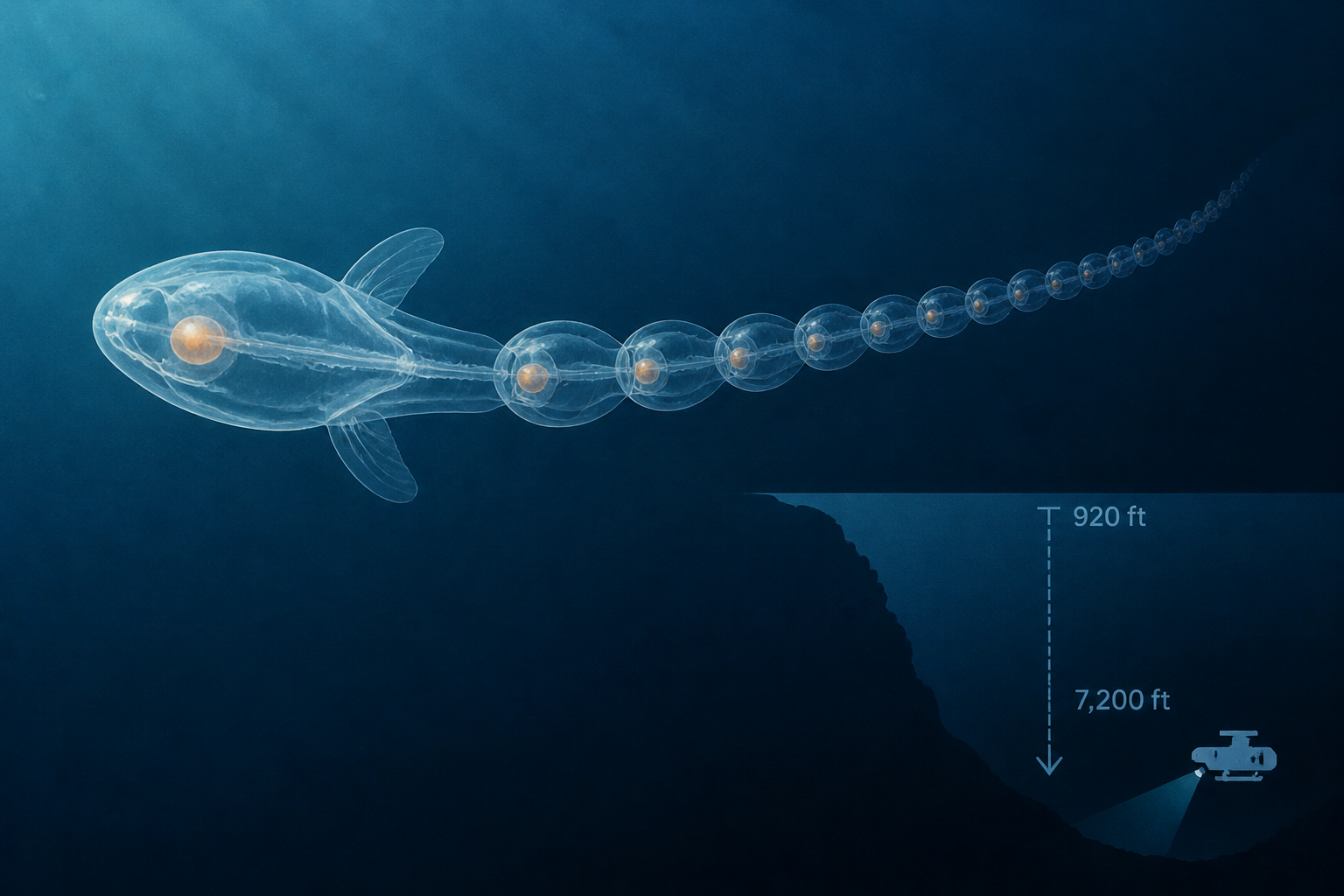
A see-through animal that tows a chain of up to 20 clones of itself has been drifting 920 to 7,200 feet down off California for more than two decades, and after thousands of remote-controlled sub sigh
Autonocion • • science
Key Points:
- MBARI has officially named a new deep-sea salp species, Vitreosalpa gemini, known as the glass salp, which lives exclusively between 920 and 7,200 feet below the ocean surface and was first observed over 20 years ago.
- Unlike shallow-water salps, the glass salp produces twin embryos, a rare reproductive trait possibly adapted to its sparse deep-sea environment, and forms chains of up to 20 individuals to reproduce.
- The glass salp is fragile and watery, making it difficult to study; advances in remotely operated vehicles (ROVs) have been crucial for observing and collecting intact specimens for detailed morphological and genetic analysis.
- This species has a slow metabolism and survives by feeding on detritus and protozoans rather than phytoplankton, indicating a different ecological role from surface-dwelling salps, which contribute significantly to carbon cycling.
- The discovery highlights how much remains unknown about deep-sea biodiversity, with MBARI’s ongoing use of advanced underwater robotics expected to uncover more undiscovered species in the vast ocean depths.


