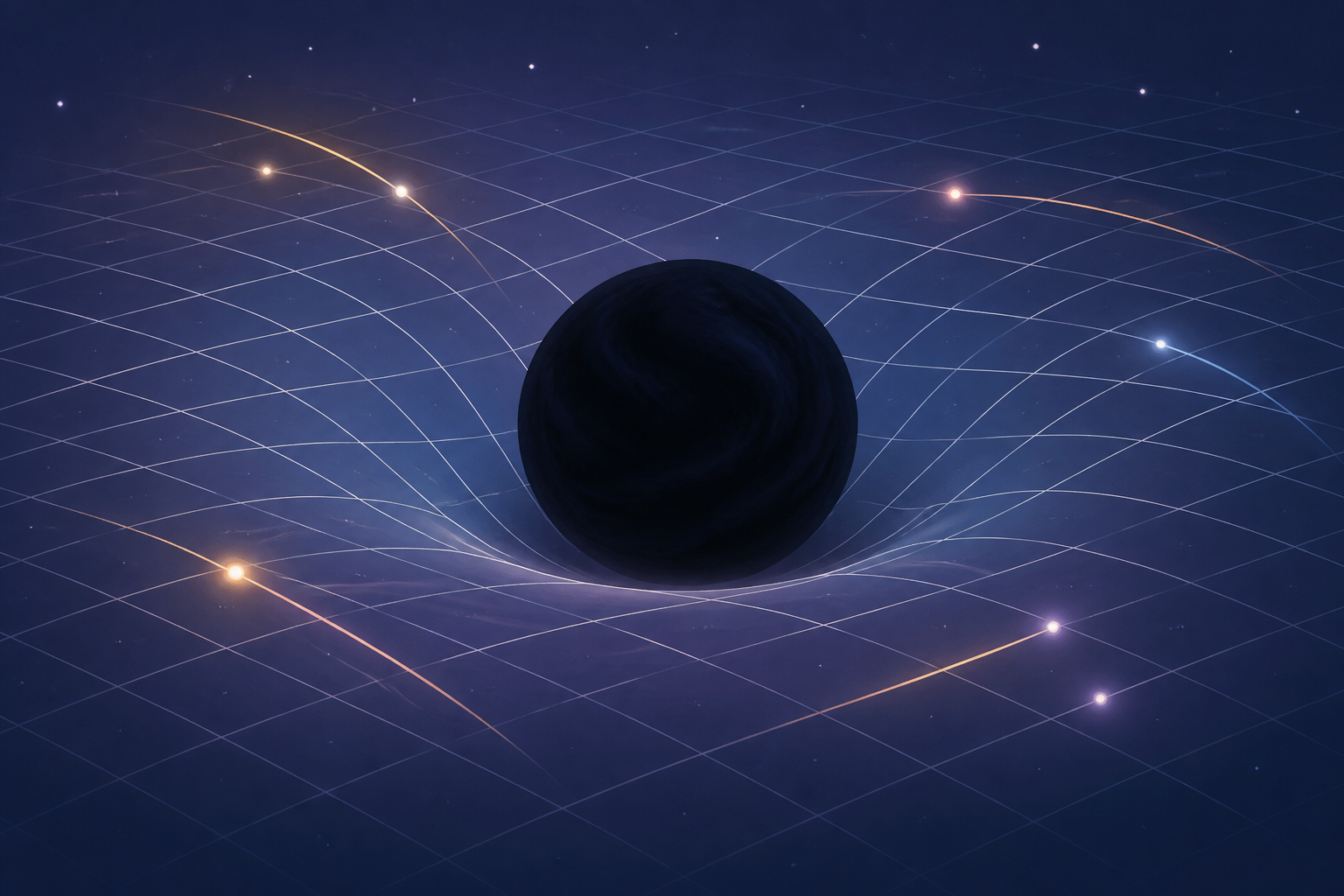
AI Generated Image
A strange, dark object is warping the Universe. Scientists still don’t know what it is
BBC Sky at Night Magazine • • science
Key Points:
- Astronomers have discovered the lowest-mass dark object ever detected in the Universe, with a mass about 1 million times that of the Sun, identified through gravitational lensing using a global network of powerful telescopes.
- The object emits no light or radiation, and its gravity distorts space, allowing detection by the way it bends background light, suggesting it could be a tiny clump of dark matter or a compact, inactive dwarf galaxy.
- This discovery supports the cold dark matter theory, which posits that invisible dark matter holds galaxies together despite insufficient visible matter to explain their rotation.
- The detection was made possible by combining data from telescopes worldwide, effectively creating an Earth-sized super-telescope capable of capturing subtle spacetime distortions.
- Researchers aim to find more such low-mass objects to better understand the nature of dark matter and verify if their numbers align with current cosmological models.


