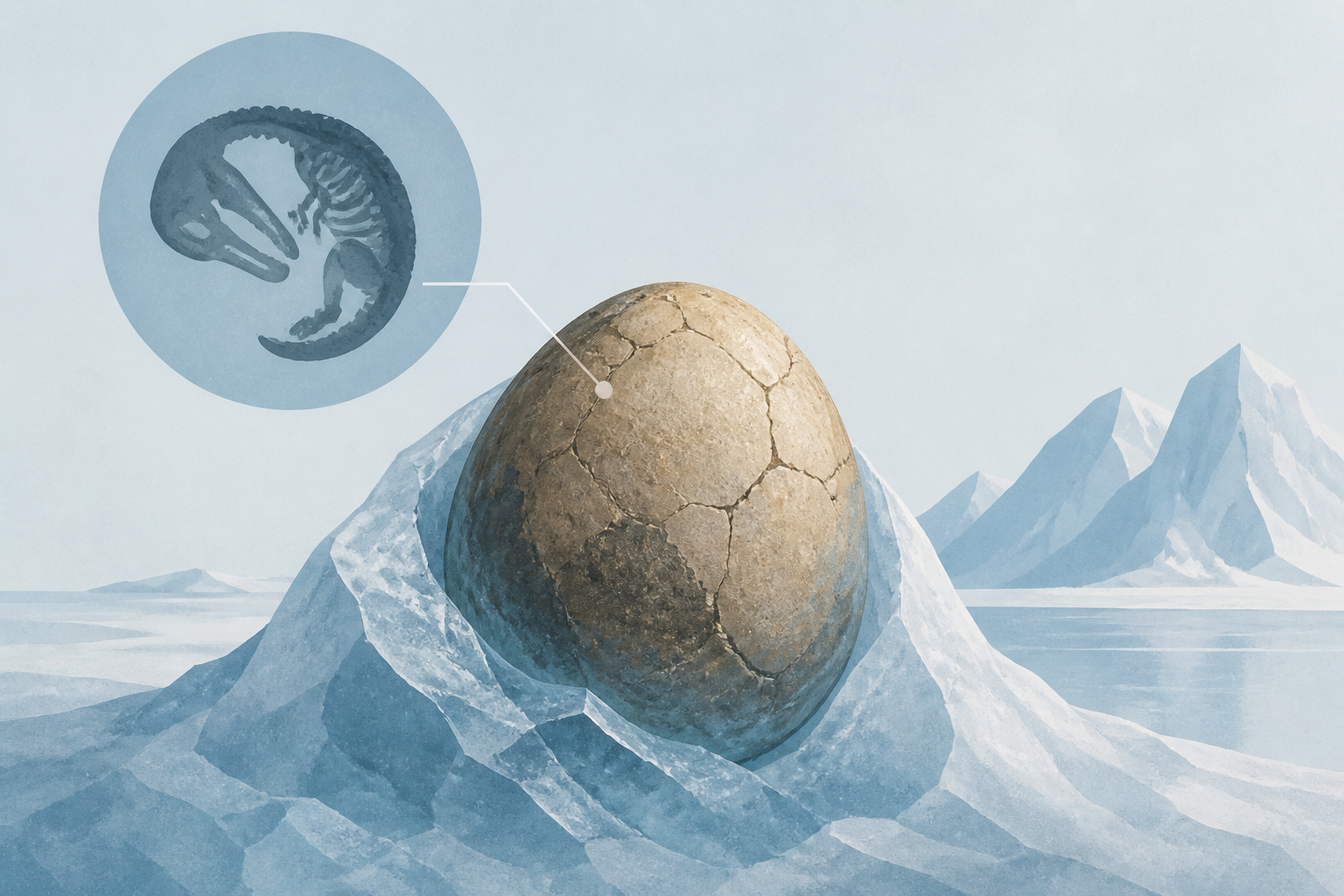
AI Generated Image
A Strange Fossilized Egg Has Surfaced from the Frozen Depths of Antarctica
Yahoo • • science
Key Points:
- A fossilized soft-shelled egg discovered in Antarctica from the Late Cretaceous period is the largest soft-shell egg and second largest egg ever found, measuring 11.4 by 7.9 inches (29 by 20 cm).
- The egg likely belonged to a mosasaur, a massive marine reptile and ancestor of modern lepidosaurs (lizards and snakes), based on its size and structural similarities to lepidosaur eggs.
- Researchers created a new taxon, Antarcticoolithus bradyi, for the eggshell due to the absence of skeletal remains, supporting theories that mosasaurs may have been viviparous or laid soft-shelled eggs.
- The fossilization occurred under anoxic conditions beneath the ocean floor, preserving the egg with minimal oxidation, which is rare for soft-shelled eggs that typically degrade easily.
- This discovery sheds light on reproductive strategies of large marine reptiles and suggests mosasaurs might have combined gigantism, streamlined body plans, and viviparity uniquely among lepidosaurs.


