AI Generated Image
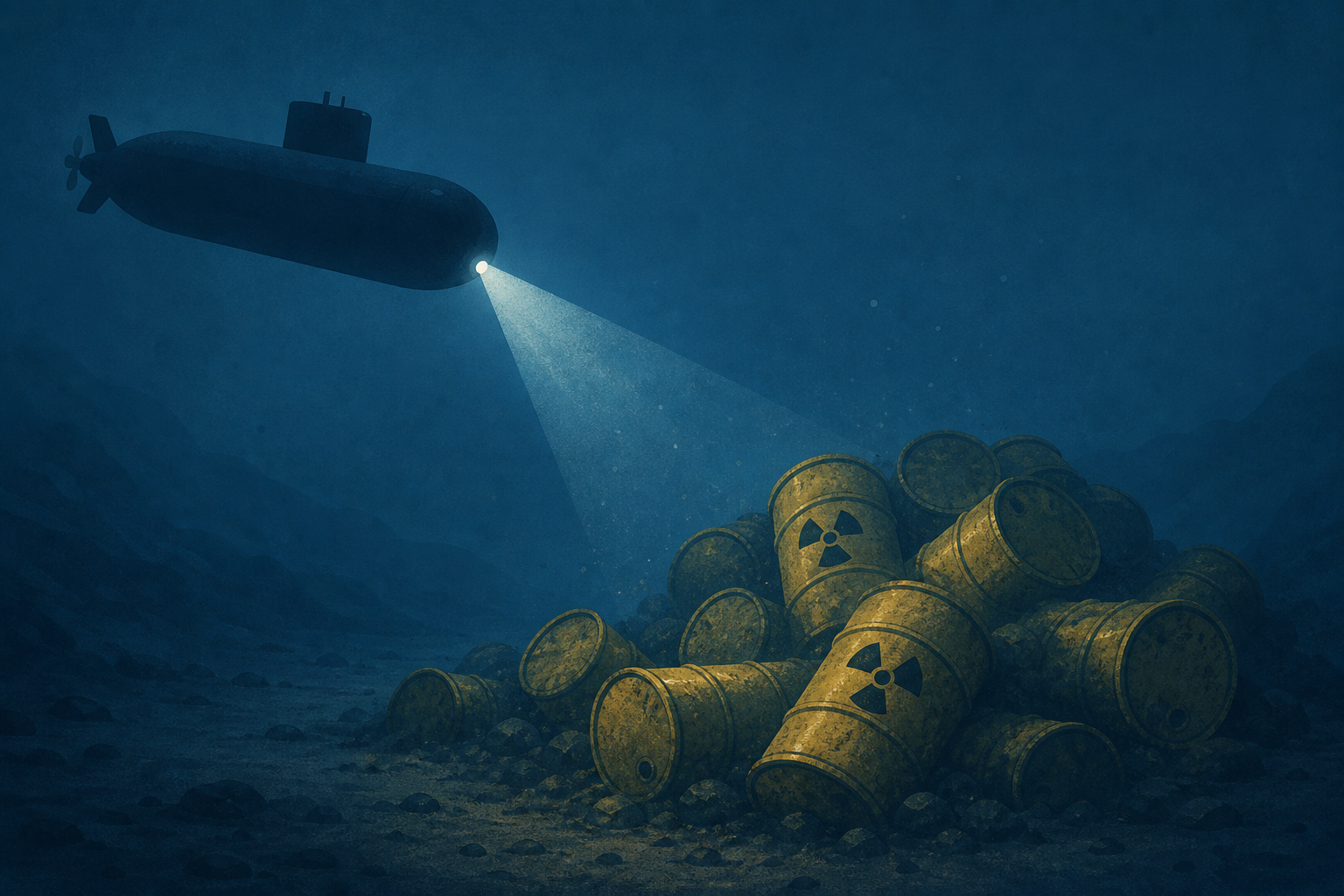
A Submarine Explores a Remote Atlantic Site and Finds 200,000 Radioactive Waste Barrels Hidden for Decades
The Daily Galaxy • • science
Key Points:
- Scientists aboard the NODSSUM missions used the Nautile submersible to directly observe thousands of radioactive waste barrels on the Northeast Atlantic ocean floor, revealing many containers severely corroded and leaking radioactive material into surrounding sediments.
- The research, conducted from May to June 2026, included 20 deep dives reaching depths over 15,400 feet, uncovering a variety of deep-sea life such as anemones, sponges, and crabs living near the barrels, indicating the ocean floor ecosystem is not lifeless despite contamination.
- Instruments detected elevated levels of radionuclides including cobalt-60, niobium-94, cesium-137, and americium-241 near the barrels, though scientists caution some radioactivity may originate from other sources like nuclear weapons tests, necessitating further analysis.
- The barrels, part of a legacy of postwar radioactive waste disposal by several countries including France, were originally intended to release and dilute waste gradually, but the current condition and environmental impact remain unclear and are under ongoing investigation.
- Researchers collected extensive sediment, water, and biological samples to study the spread and absorption of radioactive materials in deep-sea ecosystems, with future laboratory work aimed at understanding the full environmental consequences of the ocean dumping.


