AI Image
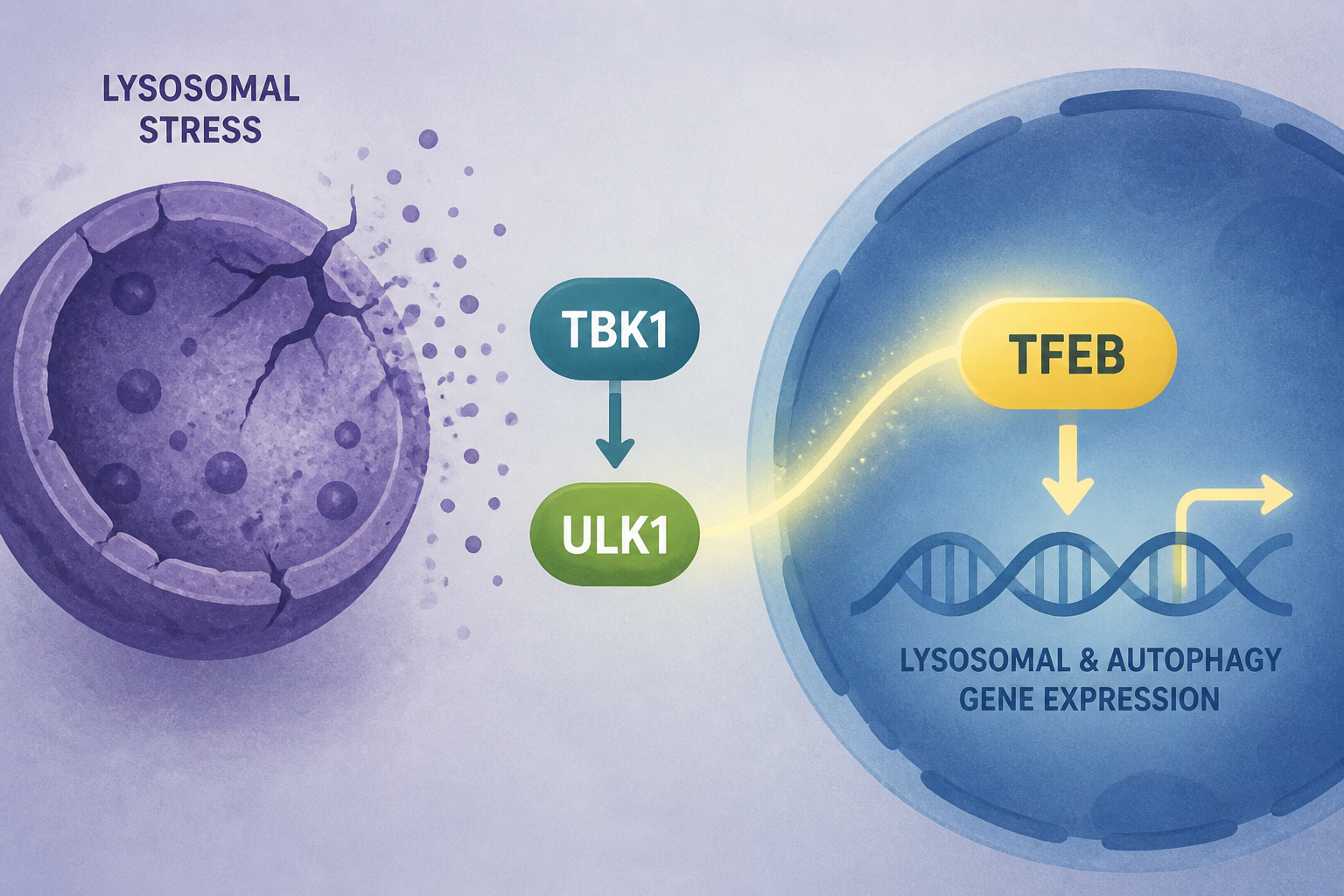
A TBK1/ULK1 signalling axis couples lysosomal stress to TFEB activation
Nature • • science
Key Points:
- HEK293T cells expressing WT, Y371C, or R400Q HA-ATP6V1B2 variants showed altered mRNA levels of lysosomal and autophagy-related genes, with significant changes observed particularly in R400Q and Y371C mutants, indicating their impact on lysosomal function and gene regulation.
- Immunofluorescence and colocalization analyses revealed differences in mTOR lysosomal localization and TFEB nuclear translocation between WT and mutant ATP6V1B2-expressing cells, suggesting mutations affect mTOR signaling and lysosomal positioning.
- Treatment with ionophores such as monensin, nigericin, and salinomycin induced TFEB nuclear translocation and disrupted mTOR lysosomal localization, effects that were modulated by TBK1 and ULK1 kinase activities, highlighting their roles in lysosomal stress responses.
- Knockout or knockdown of TBK1 and ULK1 impaired TFEB nuclear translocation and lysosomal localization under stress conditions, demonstrating that these kinases are critical regulators of lysosomal biogenesis and autophagy pathways.
- Phosphorylation studies identified FNIP1 as a TBK1 substrate, with specific phosphorylation sites influencing TFEB nuclear localization, linking TBK1-mediated phosphorylation events to the regulation of lysosomal function and autophagy signaling.


