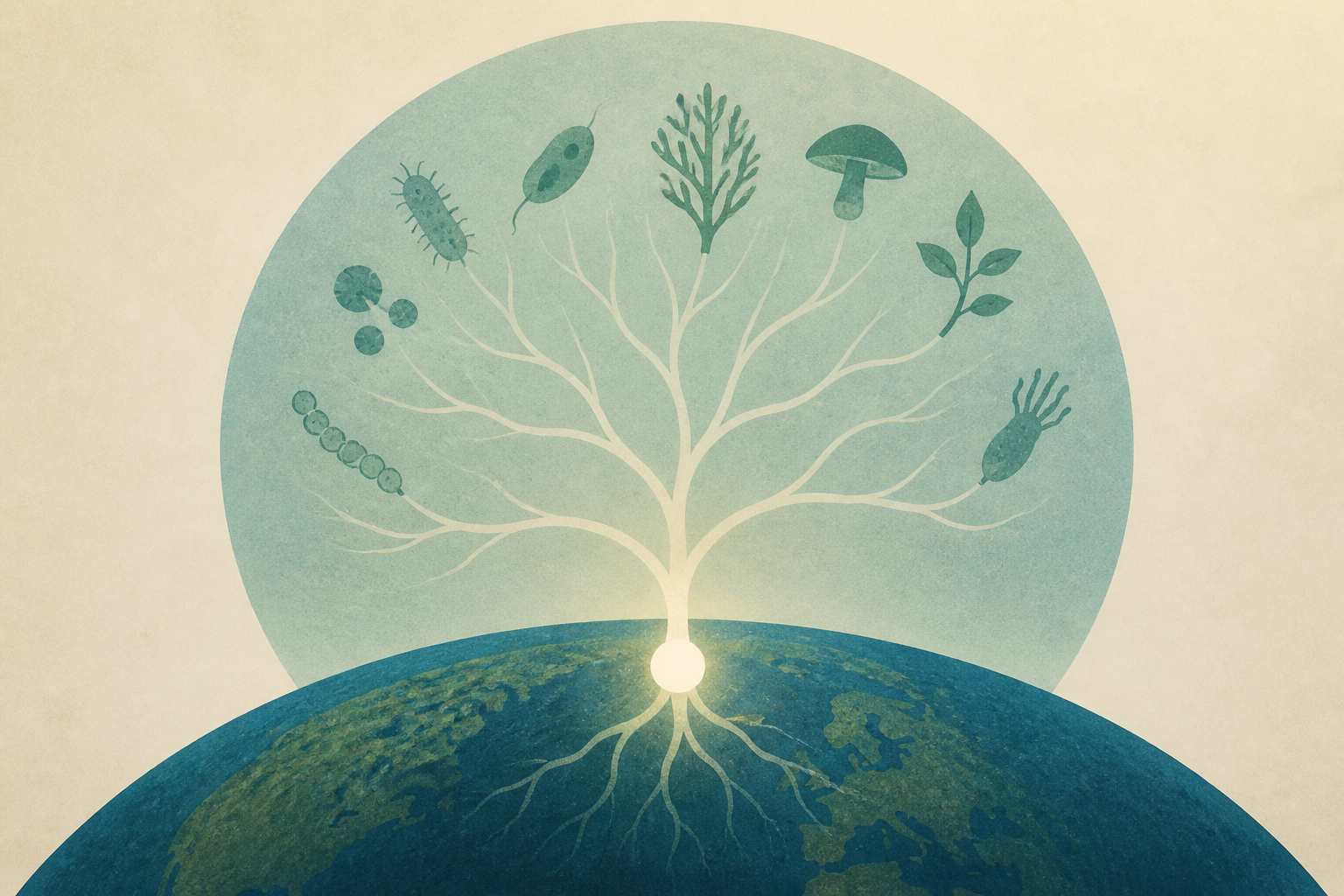
AI Generated Image
All Life on Earth Comes From One Single Ancestor. And It's So Much Older Than We Thought.
Yahoo • • science
Key Points:
- A new study published in Nature Ecology & Evolution suggests that the Last Universal Common Ancestor (LUCA) lived on Earth about 4.2 billion years ago, roughly 400 million years after the planet's formation, pushing back previous estimates.
- LUCA is considered the ancestor of all life on Earth, from bacteria to blue whales, and likely existed during the Hadean Eon, a period characterized by extreme geological conditions.
- Researchers used genetic analysis comparing mutations across species to estimate LUCA's age and found evidence that it was a simple prokaryote with an early immune system, indicating it was combating primordial viruses.
- The study also suggests LUCA played a role in early ecosystems by interacting with other microbes, contributing to nutrient recycling through its waste products.
- Despite these findings, the exact origins of life before LUCA remain unclear, and further research is needed to understand the transition from the earliest life forms to complex biological communities.


