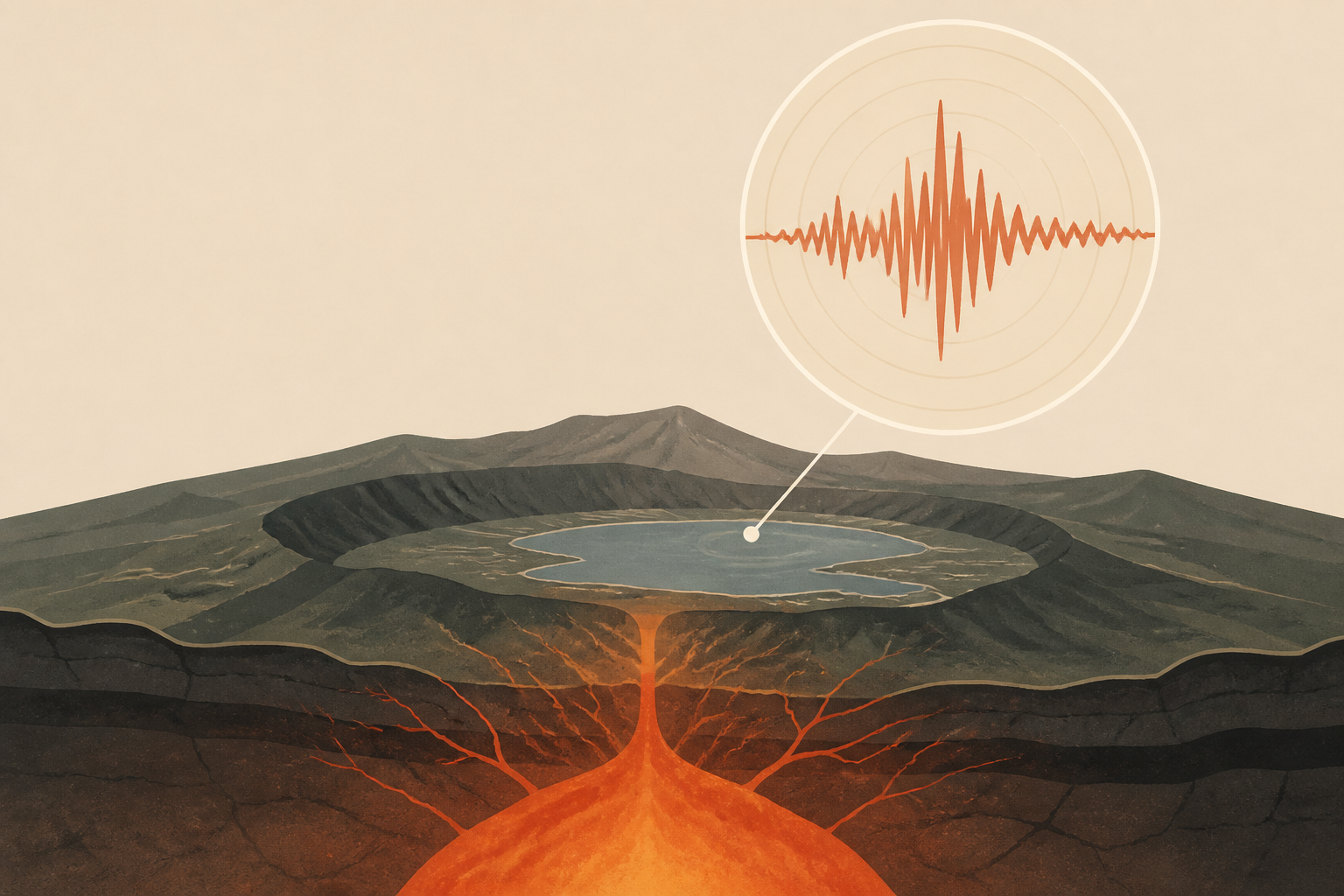
AI Generated Image
Almost 500 years after its last eruption, Italy’s supervolcano is growing restless
The Brighter Side of News • • science
Key Points:
- Decades of uplift, earthquakes, and gas release have progressively weakened the shallow crust beneath Italy’s Campi Flegrei caldera, pushing it into an inelastic deformation stage where fractures and fault movements dominate over simple bending.
- Despite ongoing unrest characterized by ground uplift, seismic swarms, and increased gas emissions, Campi Flegrei remains at yellow alert with no signs of imminent eruption, according to Italy’s volcano observatory.
- Researchers from University College London and Italy’s INGV developed models showing that repeated deformation since the 1950s has reduced the crust’s tensile strength by a factor of 2.5 to 3, potentially making future magma ascent easier but less detectable due to pre-existing fractures.
- Recent studies reveal a complex volcanic system involving magma rising from depths of 8 kilometers, pressurized magmatic gases at around 3 kilometers, and a gas-rich reservoir beneath 2 kilometers, with seismic activity and hydrothermal processes closely interconnected.
- The evolving structural changes at Campi Flegrei mean that future volcanic crises may differ significantly from past events, underscoring the importance of continuous monitoring to better anticipate and understand potential hazards.


