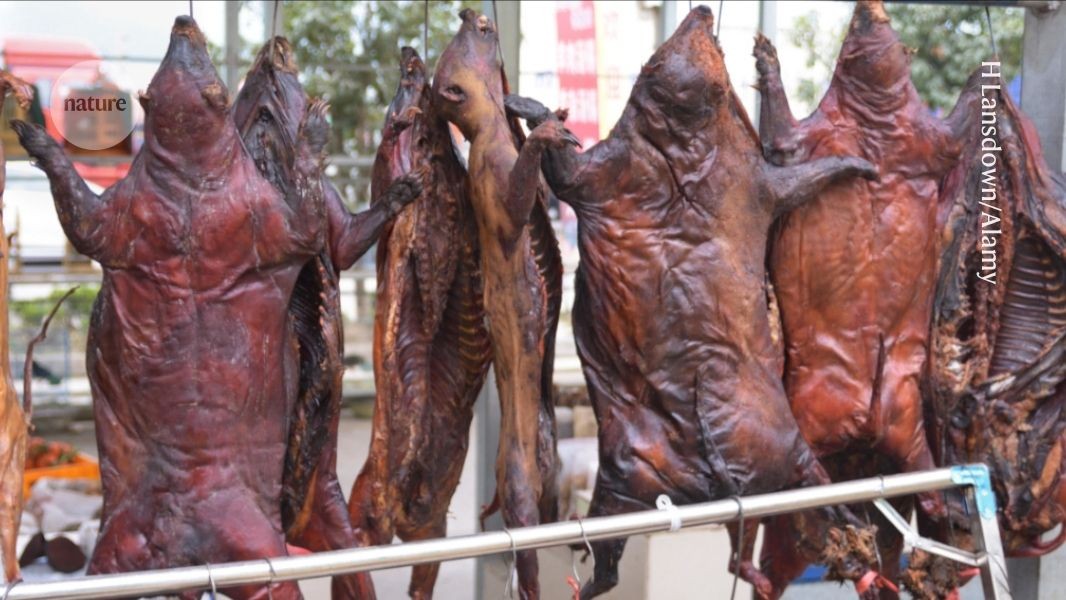
Almost half of traded wildlife carry disease-causing pathogens
Nature • • general
Key Points:
- A study published in Science estimates that nearly half (41%) of wild mammal species traded for food, fur, research, and traditional medicines carry at least one pathogen that can cause disease in humans, highlighting the significant role of global wildlife trade in pathogen transmission.
- The research analyzed 40 years of wildlife trade data alongside a pathogen-host database developed during COVID-19 research, focusing on mammals due to their prevalence in trade and history of transmitting diseases like HIV, Ebola, and COVID-19 to humans.
- Findings show that traded mammals are much more likely to share pathogens with humans (41%) compared to non-traded species (6.4%), with live animal trade posing a higher risk than trade in animal products, while illegal trade had a modest impact on transmission risk.
- The study also found that the longer a species is present in the wildlife trade, the more pathogens it tends to share with humans, suggesting that longevity in trade increases the potential for zoonotic spillover.
- Researchers hope these insights will inform the development of trade regulations aimed at reducing wildlife-associated disease risks and preventing future pandemics.


