AI Image
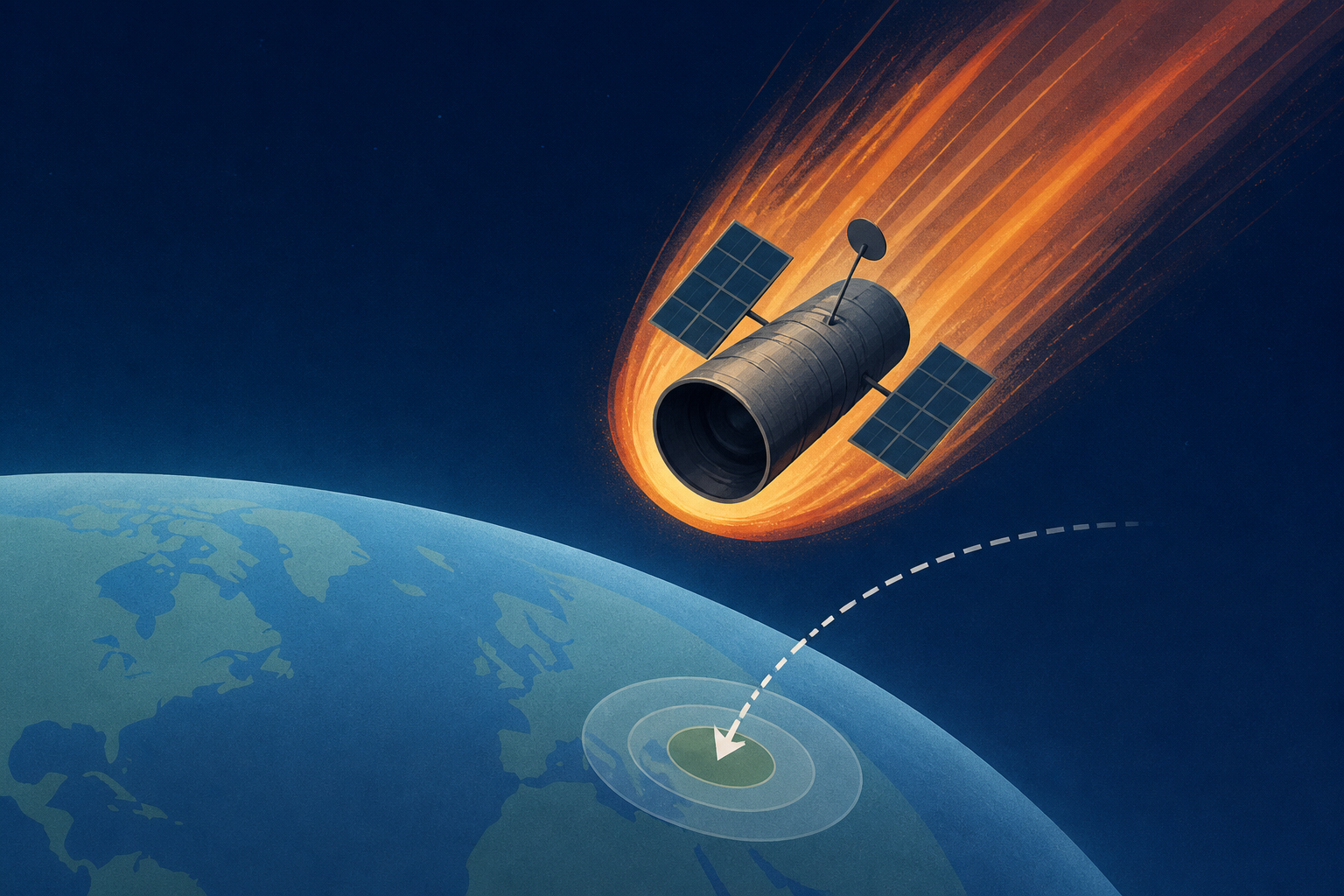
An aging 1.5-ton space telescope is plunging back to Earth. NASA has calculated the risk of harm to people.
CBS News • • science
Key Points:
- NASA's aging Swift Observatory is predicted to re-enter Earth's atmosphere around 3:30 a.m. EST on November 4, with most of its 1.5-ton structure burning up, though some dense components may survive reentry.
- The U.S. Space Force is tracking the spacecraft's descent, with debris likely falling into the ocean but potentially impacting regions across Africa, Australia, India, Southeast Asia, and the Americas; the risk to people is estimated at about 1 in 2,100.
- Swift, launched in 2004 to study gamma-ray bursts and supernovas, has operated for 22 years, detecting over 2,000 gamma-ray bursts and 1,400 exploding stars, and was known for its rapid ability to focus on sudden cosmic events.
- A rescue mission by Katalyst Space using the robotic Link failed to capture Swift, leading to the telescope's eventual shutdown as its orbit decayed due to increased solar activity.
- NASA regards Swift as a crucial early-warning system for cosmic explosions, supporting follow-up observations by telescopes like Hubble and Webb, and is currently working to find ways to fill the observational gap left by its loss.


