Ancient DNA reveals pervasive directional selection across West Eurasia
Nature • • general
Key Points:
- The provided references encompass extensive research on ancient human genomics, revealing insights into human history, migration, adaptation, and natural selection over thousands of years across Eurasia and beyond.
- Multiple studies utilize ancient DNA to trace population movements, admixture events, and social structures from the Paleolithic, Neolithic, Bronze Age, Iron Age, and medieval periods, highlighting genetic continuity and transformation in diverse regions such as Europe, the Near East, Central Asia, and North Africa.
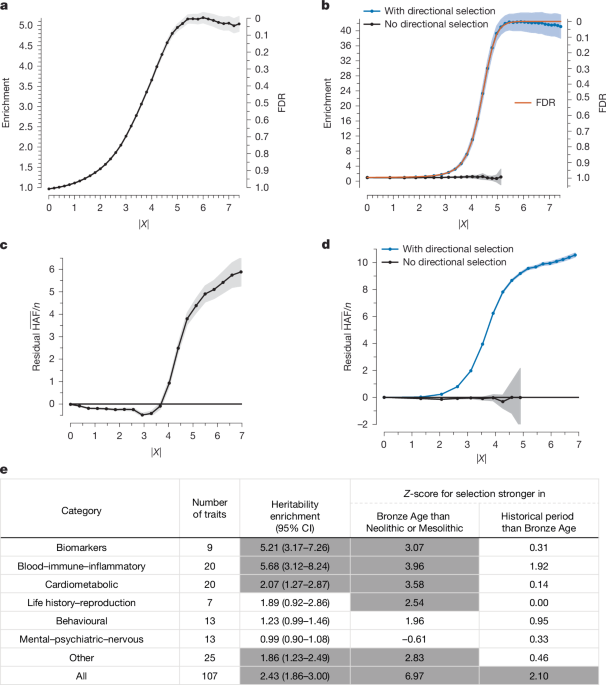
- Research on natural selection and genetic adaptation explores responses to pathogens, environmental changes, and cultural shifts, including the genetic legacy of diseases, immune system evolution, and traits like lactase persistence and skin pigmentation.
- Advances in genomic methodologies, including imputation, phasing, and mixed-model association analyses, have enhanced the resolution and accuracy of ancient DNA studies, enabling reconstruction of fine-scale kinship, population dynamics, and the genetic architecture of complex traits.
- The collective findings contribute to understanding the interplay between genetics, environment, and culture in shaping human evolution, health, and diversity, with implications for medical research and the study of polygenic traits and diseases.


