AI Image
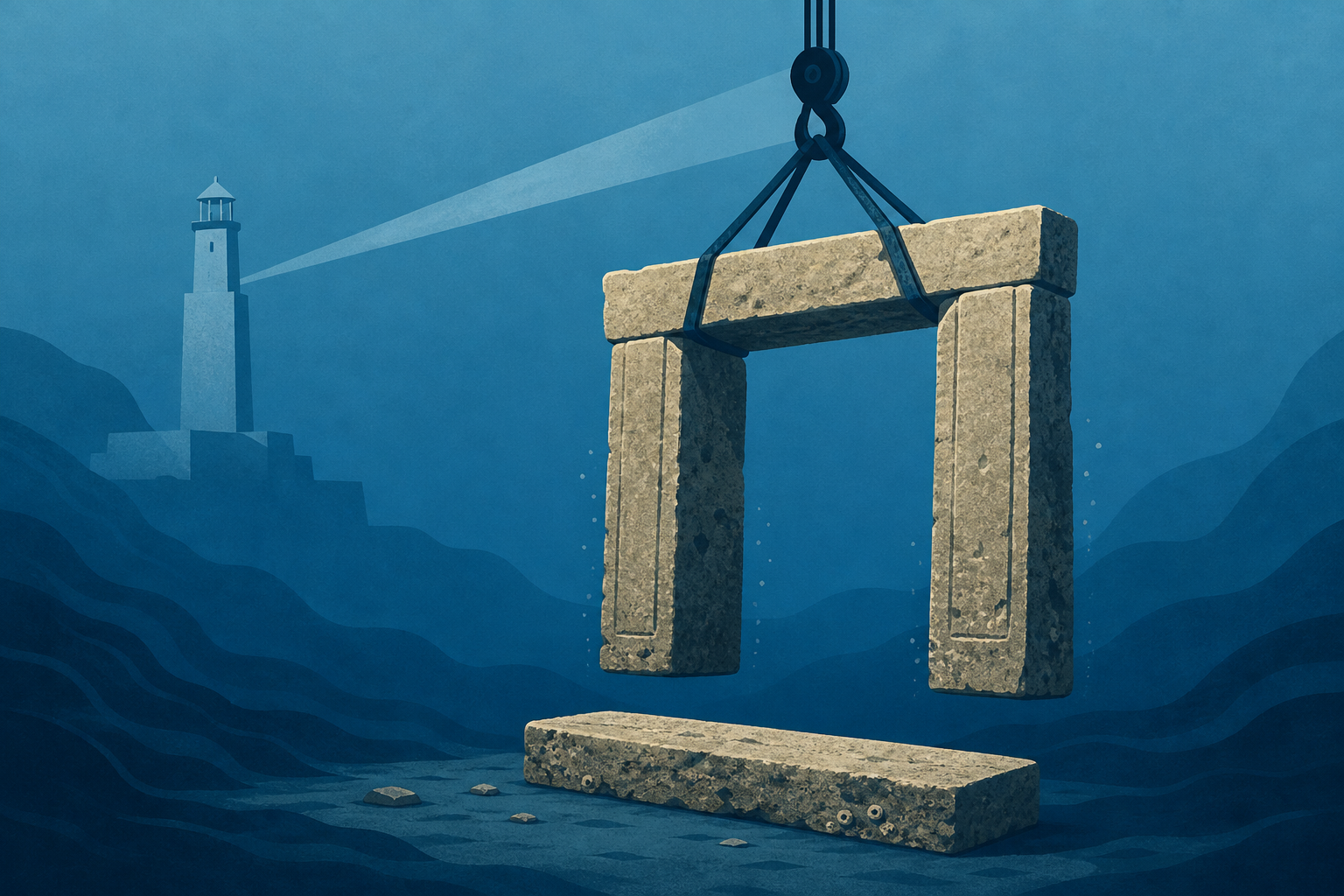
Archaeologists raised 22 blocks of up to 80 tons from the sea off Alexandria. Door jambs, a threshold and lintels point to the lighthouse's lost entrance
Futura, le média qui explore le monde • • world
Key Points:
- The Pharos Project has recovered 22 monumental stone blocks from the submerged remains of the ancient Lighthouse of Alexandria, some weighing up to 80 metric tons, marking a significant milestone after nearly 30 years of underwater exploration.
- These massive architectural elements, including lintels and door jambs, likely formed the lighthouse’s grand entrance, showcasing a blend of Egyptian and Greek styles.
- Using high-precision photogrammetry, the team is digitally scanning and modeling the recovered stones to virtually reconstruct the lighthouse, treating the process as a complex puzzle informed by physical remains and historical records.
- Built in the early third century BCE under Ptolemy I Soter, the lighthouse stood over 328 feet tall and served as a crucial navigational aid for more than a millennium before its destruction by earthquakes in the 14th century.
- The project not only preserves these ancient artifacts but also gradually restores the lighthouse’s silhouette, enhancing understanding of one of the ancient world’s most iconic structures.


