AI Image
Artemis II mission tore GPS-disrupting holes in atmosphere
New York Post • • science
Key Points:
- The Artemis II spacecraft's April 2026 launch caused unprecedented disruptions in Earth's ionosphere, temporarily affecting GPS systems and potentially endangering self-driving cars and drone navigation, according to a study published in Geophysical Research Letters.
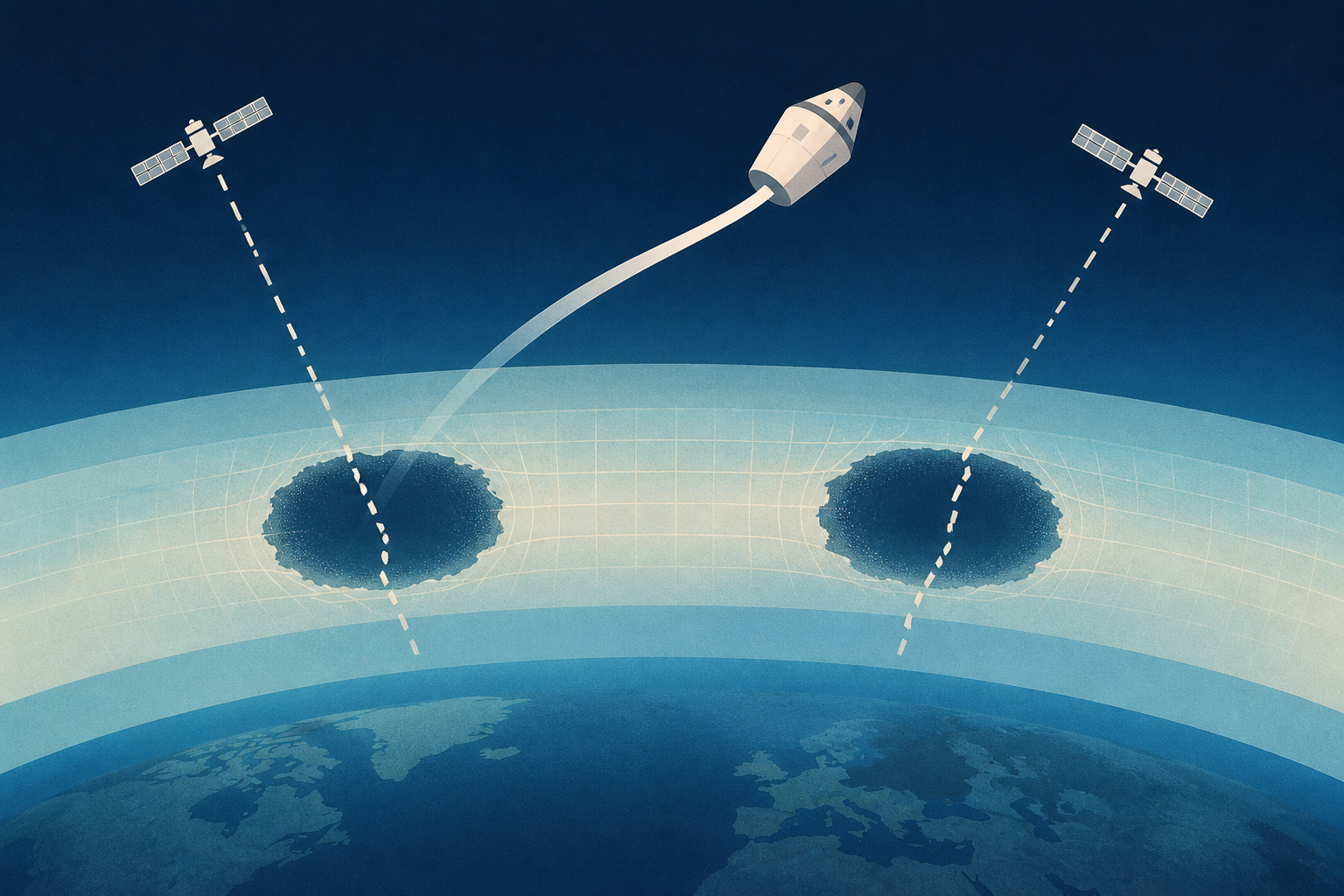
- Researchers observed two massive 3,100-mile-wide holes in the ionosphere over the American continent, caused by the spacecraft's core stage and upper stage engine burns 115 miles above Earth.
- The rocket's exhaust reacted with charged particles in the ionosphere, creating disturbances comparable to a short-lived solar storm and resulting in GPS positioning errors of several feet, enough to impact autonomous vehicle navigation.
- This ionospheric disruption was more powerful than any previously recorded rocket launch effects, attributed to the upper stage engines firing directly within the ionosphere—a maneuver expected to increase with more interplanetary missions.
- The study highlights growing concerns about space weather effects on Earth's navigation infrastructure as humanity pursues more frequent lunar and Martian missions in the future.


