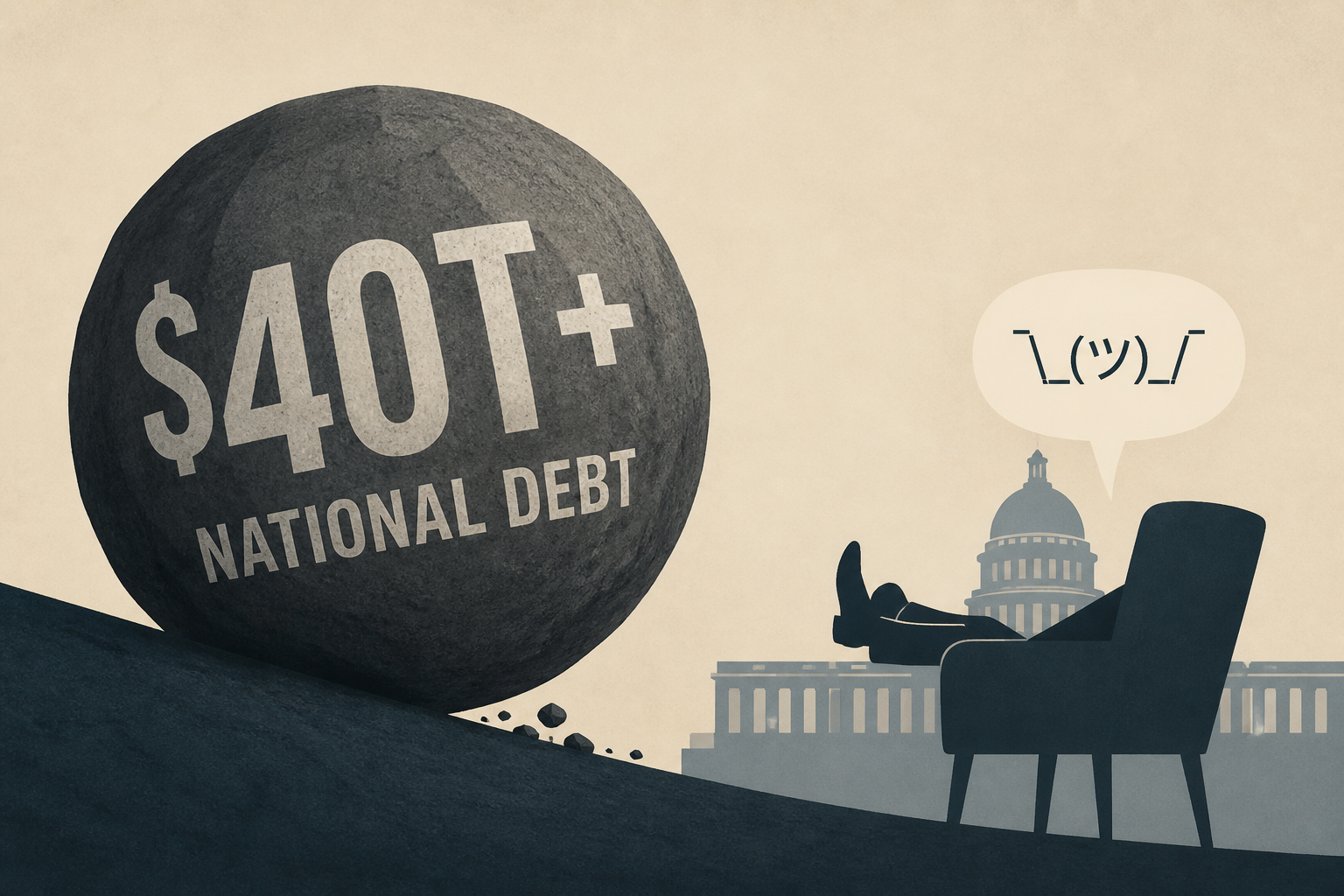
AI Generated Image
As National Debt Surges Past $40T, Washington Shrugs
Newser • • business
Key Points:
- The U.S. national debt recently surpassed $40 trillion, yet political leaders from both parties have largely reacted with indifference, shifting focus back to other issues like campaigns and culture wars.
- Economists are increasingly alarmed as debt held by the public equals the entire U.S. economy and is projected to reach 120% of GDP by 2036, with annual deficits approaching $3.1 trillion and interest payments already exceeding Pentagon spending.
- The last major bipartisan effort to address the deficit occurred 15 years ago under President Obama, and current political polarization makes similar initiatives unlikely under the Trump administration or Congress.
- Deficit hawks warn that rising debt will increase borrowing costs and limit funding for other priorities, while deficit doves argue that past warnings of fiscal disaster have not materialized and that deficits can stimulate private sector growth.
- Despite concern among voters, the national debt ranks low on their priority list, leading to a political "ostrich" approach where leaders acknowledge the debt but avoid taking substantive action.


