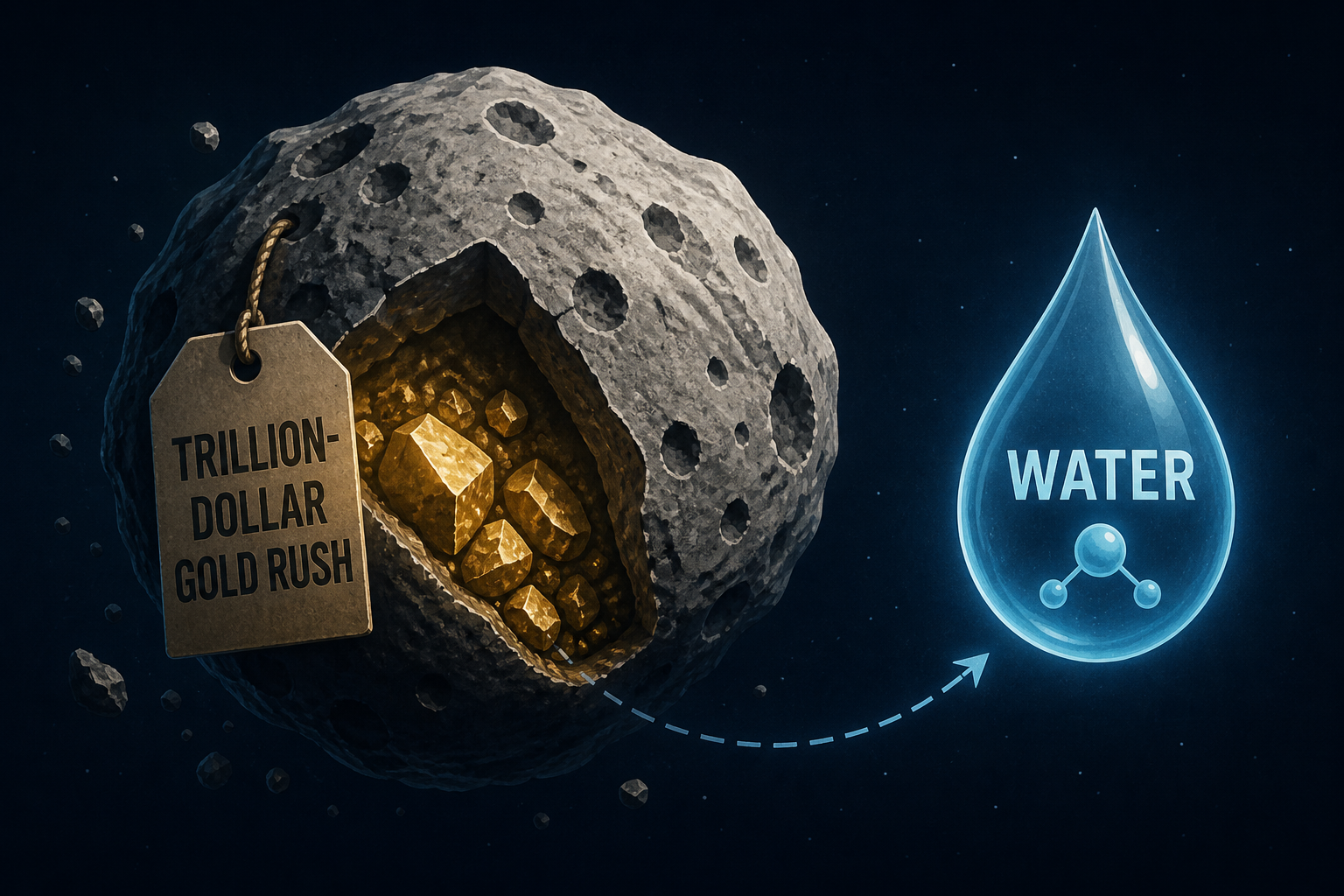
AI Generated Image
Asteroid mining gets sold as a trillion-dollar gold rush, but the economics point the other way: hauling platinum back to Earth would crash its price, so the only prize that adds up is mining water an
Space Daily • • technology
Key Points:
- Previous attempts at asteroid mining by companies like Planetary Resources and Deep Space Industries failed due to high development costs, long timelines, and investor impatience, despite the presence of valuable resources.
- Headlines quoting asteroids worth trillions of dollars are misleading because they ignore the enormous costs of transporting materials to Earth and the market collapse that would result from flooding precious metals.
- The more realistic and economically viable goal of asteroid mining is extracting water from asteroids to use as rocket fuel and life support in space, avoiding costly launches from Earth.
- Current efforts, such as those by startup AstroForge, focus on near-Earth asteroids for their accessibility, but technical challenges remain, exemplified by the loss of contact with AstroForge's Odin spacecraft.
- The future of asteroid mining likely hinges on the ability to supply water and materials in space rather than bringing precious metals back to Earth, which could fundamentally change space operations.


