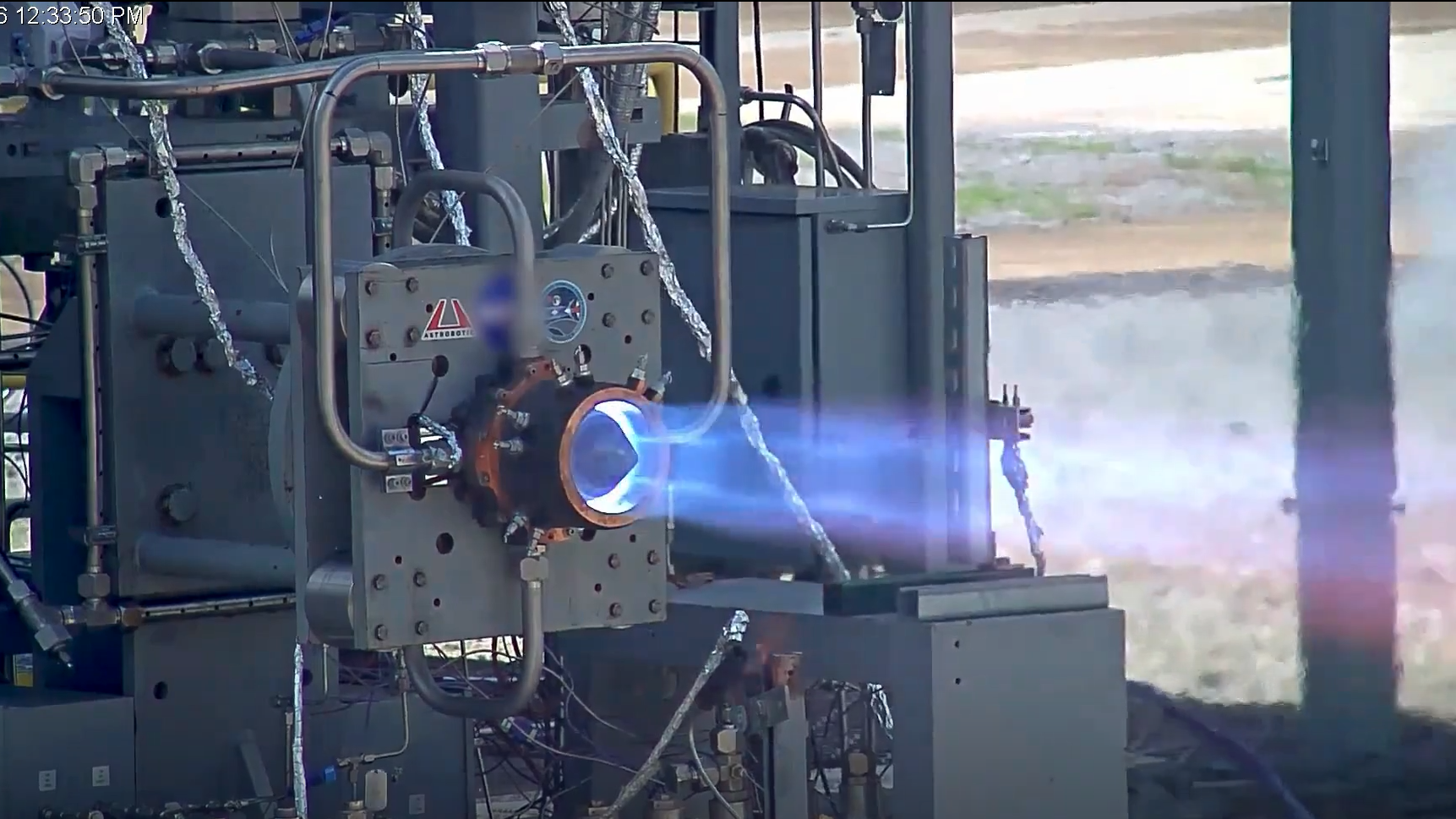
Astrobotic fires next-generation 'rotating detonation rocket engine' in record-breaking test (video)
Space • • science
Key Points:
- Pittsburgh-based Astrobotic successfully completed hot-fire tests of its rotating detonation rocket engine (RDRE) prototype, Chakram, marking a significant milestone toward flight readiness for this experimental propulsion technology.
- RDREs use continuous circular detonation waves to achieve higher pressure and efficiency, potentially improving rocket engine efficiency by 10–15% while reducing size and weight, which is critical for spacecraft applications.
- The Chakram engines accumulated over 470 seconds of firing time, including a continuous 300-second burn—the longest sustained firing of an RDRE to date—with no visible damage, demonstrating stable and durable operation.
- Each Chakram engine produced more than 4,000 pounds of thrust and reached thermal steady state, indicating reliable performance suitable for spacecraft propulsion, including potential use on lunar landers, reusable rockets, and orbital transfer vehicles.
- Development of Chakram has been supported by NASA contracts and features advanced manufacturing techniques like tunable porosity metal additive manufacturing to improve thermal management and combustion stability, with ongoing work focused on enhancing throttling, cooling, and weight reduction.


