Astrocytes connect specific brain regions through plastic networks
Nature • • health
Key Points:
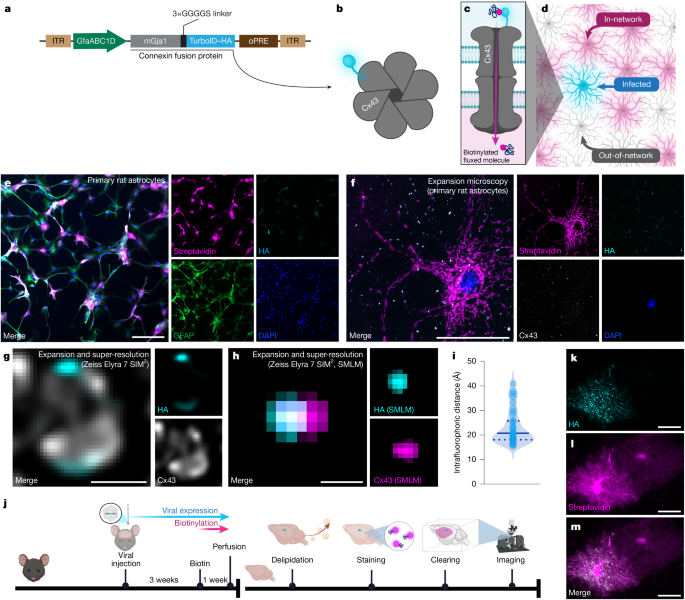
- Multiple distinct astrocyte networks traverse the mouse brain, selectively connecting specific brain regions rather than diffusing indiscriminately; these networks vary in size, organization, and connectivity patterns, including local and long-range interhemispheric links.
- Astrocyte networks can connect brain regions not linked by neurons, suggesting a novel form of interregional communication potentially involved in redistributing metabolic and antioxidant support under physiological conditions and dissipating harmful molecules during pathology.
- Some astrocyte networks exhibit rare connexin-mediated molecular transfer to specific neurons, notably motor neurons, indicating possible astrocyte-to-neuron communication that may supply neurotransmitters or antioxidants to meet neuronal metabolic demands.
- Astrocyte networks demonstrate plasticity, as shown by the shrinkage of barrel cortex astrocyte networks following whisker trimming, implying that astrocyte connectivity can remodel in response to sensory experience and possibly other acute perturbations.
- The study provides a methodological foundation for mapping astrocyte networks in vivo, highlighting considerations for experimental design due to bilateral astrocyte connectivity and suggesting future research directions to elucidate the molecular dynamics and functional roles of these networks in health and disease.


