AI Image
Astronomers detect mysterious burst of energy from a galaxy far, far away
The Guardian • • science
Key Points:
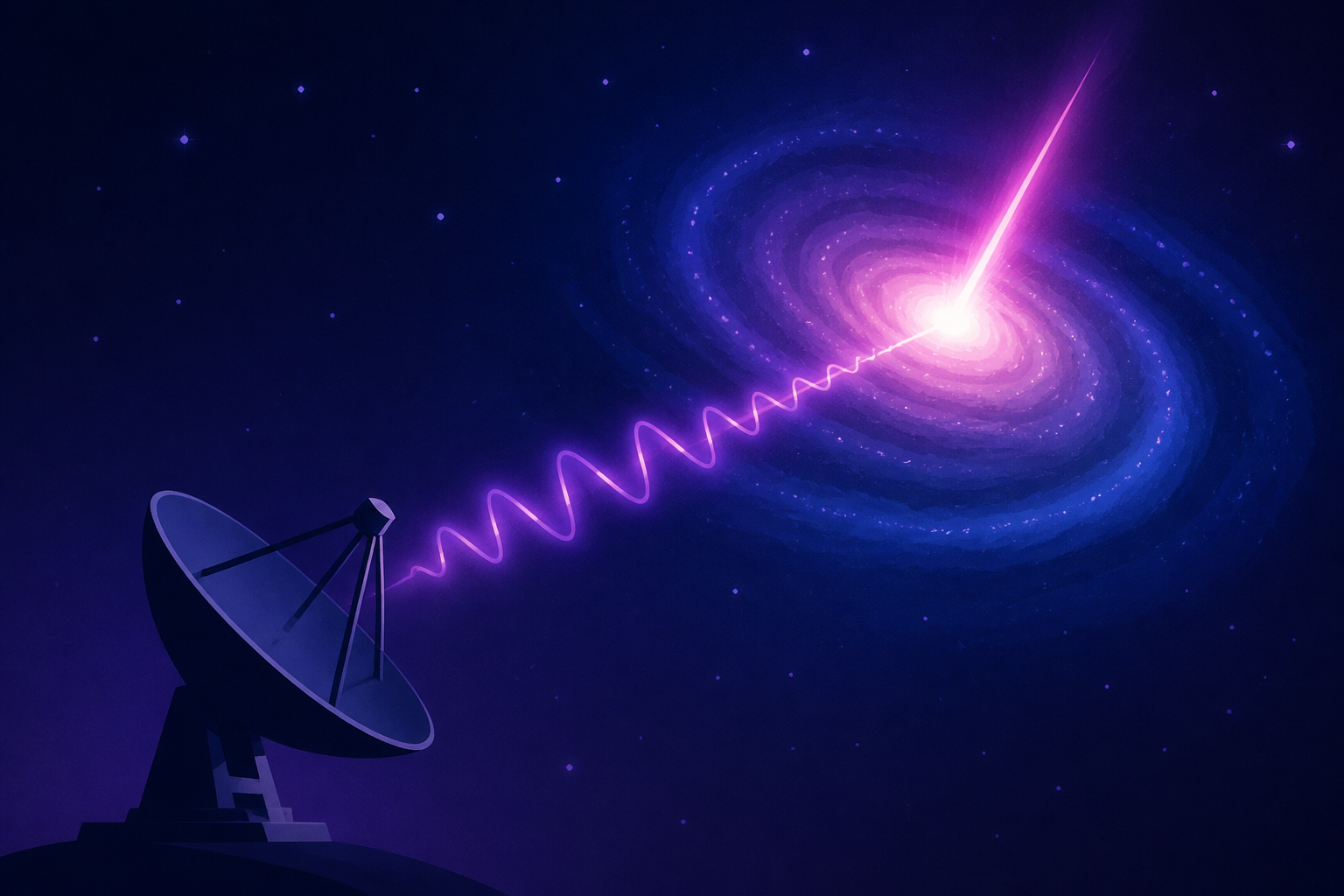
- Astronomers have detected the most distant fast radio burst (FRB) ever recorded, named FRB 20240304B, originating from a galaxy about 10 billion light-years away when the universe was roughly 3 billion years old.
- The burst was identified using South Africa’s MeerKAT radio telescope and its host galaxy was observed with NASA’s James Webb Space Telescope, revealing a young, small galaxy with rapid star formation and low metal content.
- FRBs are intense, millisecond-long bursts of radio waves thought to originate from sources like magnetars, and this discovery challenges theories by showing such bursts can occur in very young, metal-poor galaxies.
- This FRB has traveled through approximately 80% of cosmic history, and further detections could help scientists map unseen matter in the universe by analyzing how FRBs are affected by particles along their path.
- Experts highlight that FRBs serve as powerful tools for probing the universe’s structure and matter distribution, suggesting these bursts may have been common in the early universe.


