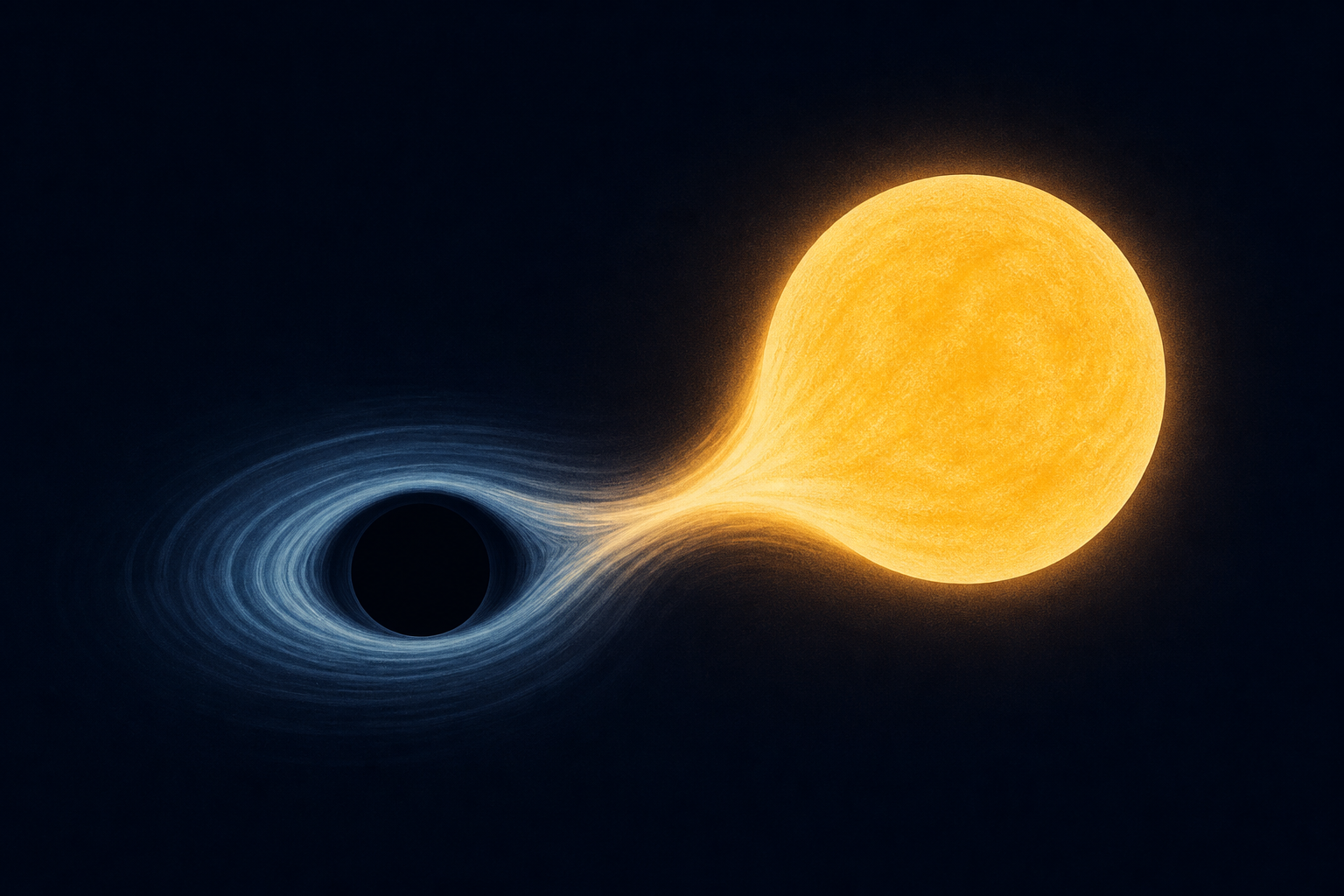
AI Generated Image
Astronomers find 'one in a billion' black hole-star: new research
New York Post • • general
Key Points:
- Astronomers have discovered a new cosmic entity called a black-hole star, a hybrid between a black hole and a star, detailed in a study published in Nature.
- The object, named MoM-BH*-1, was found accidentally during the James Webb Space Telescope's survey of the oldest galaxies and is characterized by a star-like gas cloud the size of our solar system and a black hole 100,000 times the sun's mass.
- MoM-BH*-1 emits 100 times more energy than any known stellar formation and is 100 billion times brighter than an average star, outshining its host galaxy with pure black hole light.
- This discovery may explain the mysterious "little red dots" observed by JWST in the early universe, suggesting these are black hole stars with gas-induced red hues rather than dust, offering insights into the formation of supermassive black holes.
- Researchers plan to continue studying black-hole stars using JWST to determine their size and atmospheric composition, potentially revealing new types of stellar atmospheres on a grand scale.


