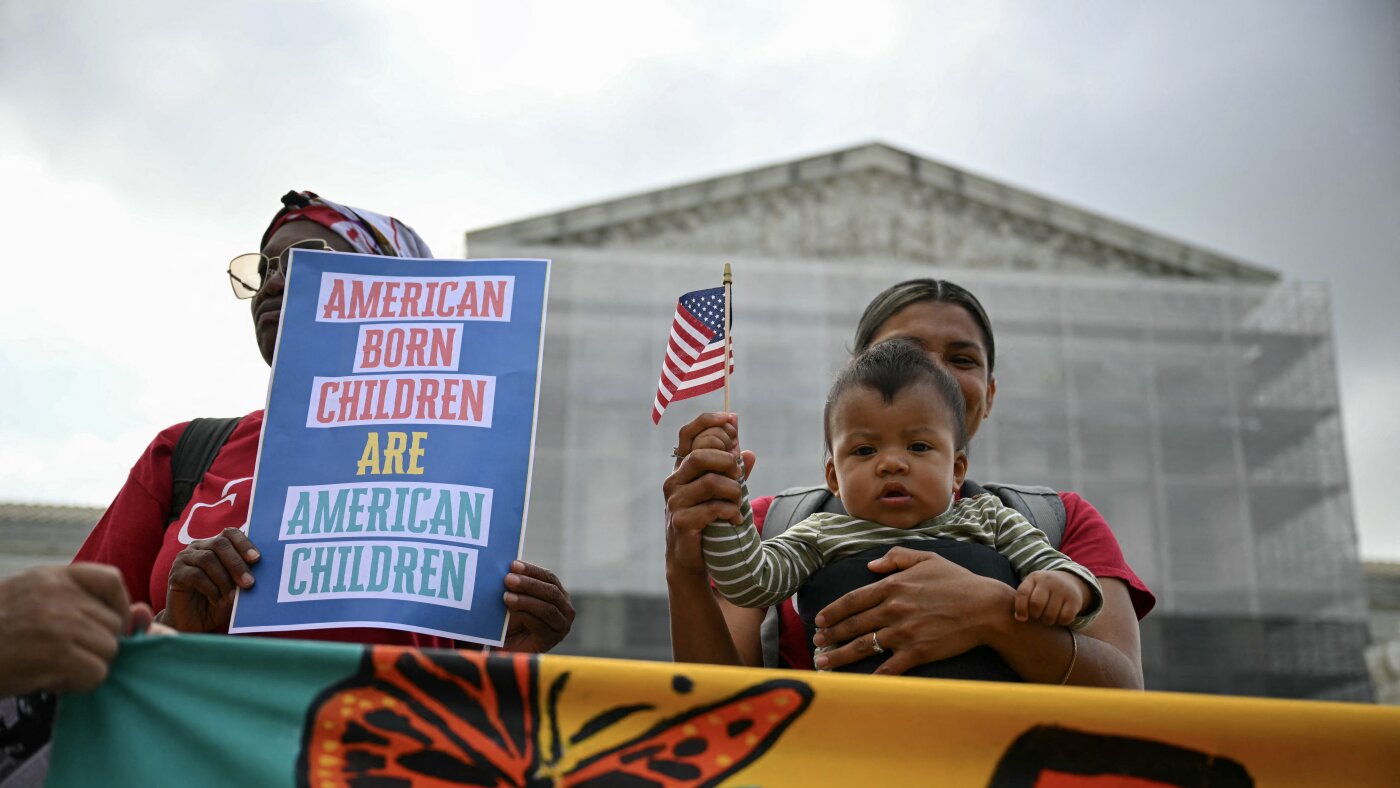
Babies are an afterthought in the birthright citizenship case, advocates say
NPR • • general
Key Points:
- Bruce Lesley, president of First Focus on Children, emphasizes that the birthright citizenship debate overlooks its direct impact on newborn babies, who currently receive automatic citizenship and access to essential health and social services.
- Under current law, babies born in the U.S. gain immediate citizenship, enabling access to Medicaid, immunizations, and support programs, but overturning birthright citizenship would require parents to prove their status, disrupting care and potentially leaving many infants without coverage.
- Approximately 3.6 million babies are born annually in the U.S., including 300,000 to parents without legal status; changes to citizenship rules could complicate documentation, especially for children with unknown or unverified parentage, same-sex couples, surrogates, or those using assisted reproductive technology.
- Legal experts warn that removing birthright citizenship would create bureaucratic hurdles and undermine established systems designed to support infants, potentially harming vulnerable populations and increasing maternal and infant health risks.
- Experts also note that fear stemming from immigration policies has already led some pregnant women to avoid prenatal care, contributing to adverse birth outcomes such as low birth weight, which can have lasting health consequences for children.


