AI Generated Image
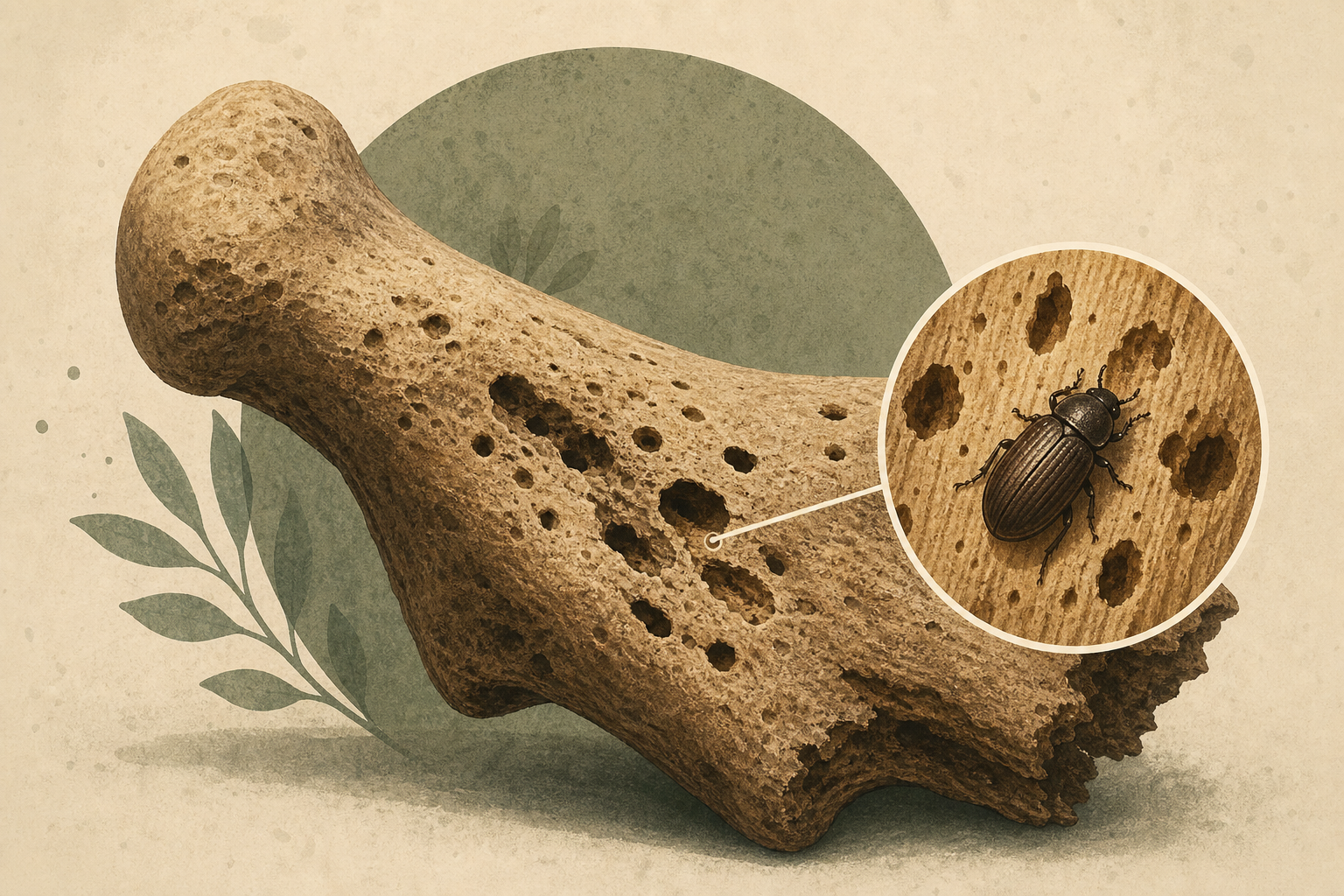
Beetle holes in dinosaur bones reveal what happened to titanosaurs' bodies after death
Earth.com • • science
Key Points:
- A new study led by Professor Zain Belaústegui reveals that titanosaur carcasses at the Late Cretaceous Lo Hueco fossil site in central Spain were exposed on the surface for an extended period, allowing dermestid beetles to bore into their bones and armor plating.
- The discovery of bioerosion structures, including hemispherical boreholes in both bones and osteoderms, challenges previous assumptions that the dinosaur remains were rapidly buried, indicating instead a prolonged exposure before sediment coverage.
- Experiments with modern beetle larvae suggest that the insect borings developed over at least 240 hours, supporting the conclusion that a complex scavenger community processed the carcasses before burial.
- This research highlights the importance of insect trace fossils as diagnostic tools for reconstructing paleoenvironmental conditions, demonstrating that carcass exposure duration can be inferred from bioerosion patterns.
- The study also addresses a notable gap in the Iberian Peninsula's fossil record regarding insect bioerosion, emphasizing the broader significance of such traces in understanding fossil site formation and preservation; findings are published in Earth-Science Reviews.


