AI Image
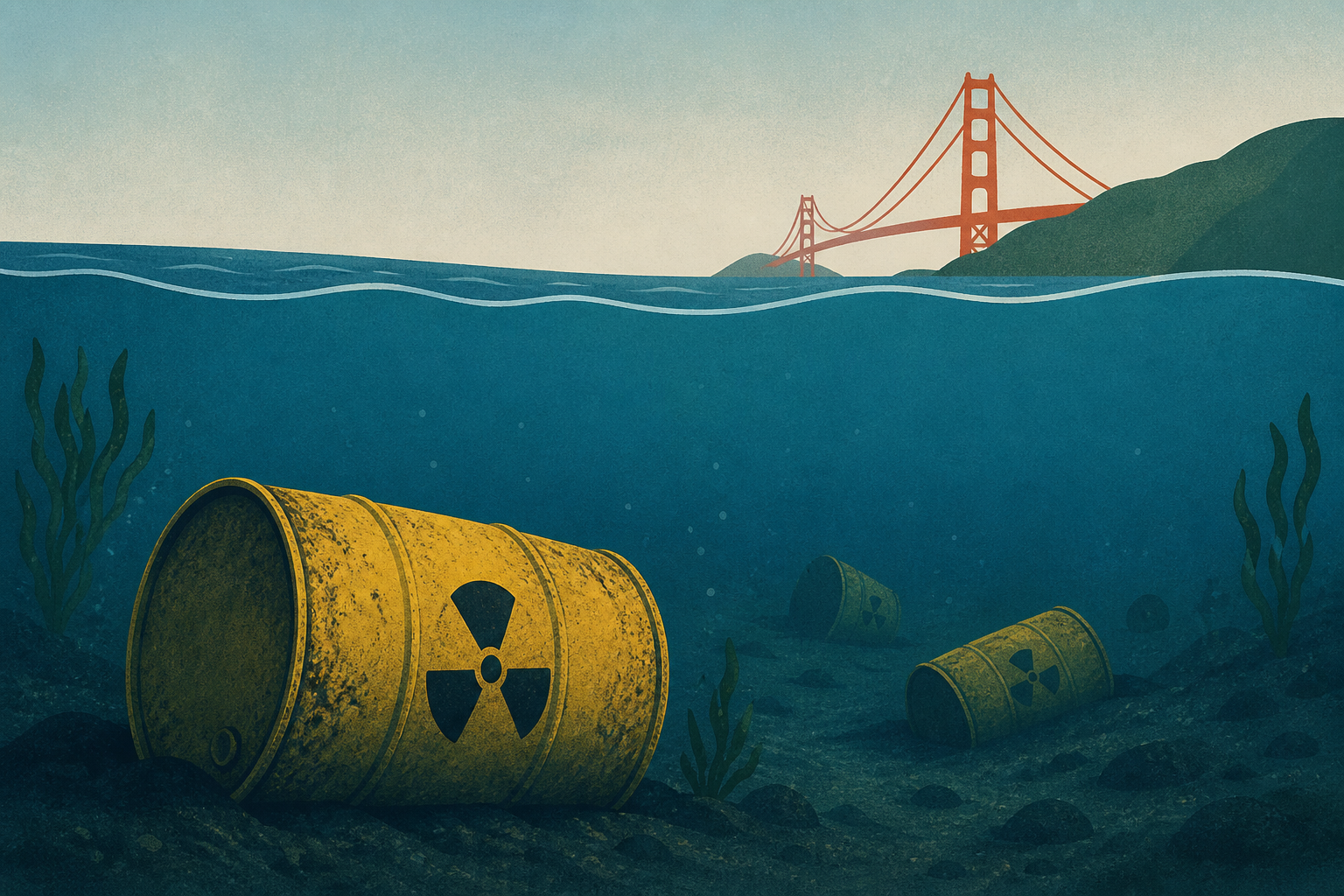
Between 1946 and 1970, the United States dumped roughly 47,800 containers of radioactive waste into the ocean west of San Francisco — many missed the designated sites, and the drums now lie scattered
Space Daily • • science
Key Points:
- Between 1946 and 1970, approximately 47,800 steel drums containing low-level radioactive laboratory waste were dumped off the coast of San Francisco, primarily between 25 to 60 miles offshore at various depths.
- The drums were not designed for long-term containment but to sink and dilute the radioactive material, which included thorium, uranium, transuranic elements, and mixed fission products, though exact isotope breakdowns remain unknown.
- Surveys in the 1990s found a mix of intact and disintegrated drums scattered across about 1,400 square kilometers of seafloor within the Greater Farallones National Marine Sanctuary, with some evidence of radionuclide presence in local marine life but generally low radiation doses to humans.
- Ocean dumping of radioactive waste was banned globally in 1994 under the London Convention, but no efforts have been made to retrieve the barrels due to cost and low perceived risk, leading to a policy of monitoring and leaving the waste undisturbed.
- In addition to radioactive waste, other hazardous materials such as cyanides, mercury, and explosives were dumped in the area, with scientific panels recommending greater regulatory focus on chemical toxins rather than radioactivity.


