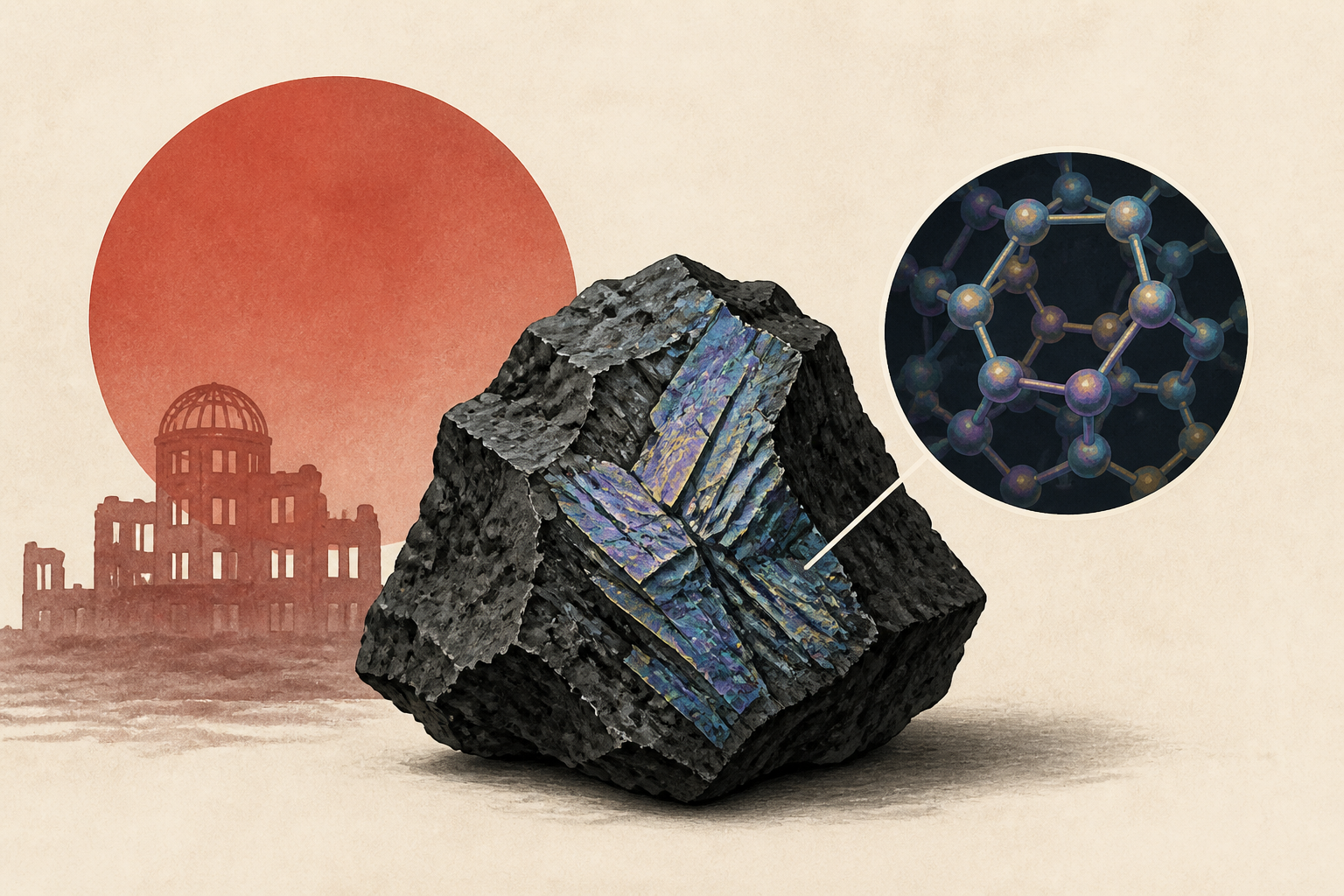
AI Generated Image
Bizarre new material discovered in Hiroshima bombing debris
Yahoo • • science
Key Points:
- Researchers discovered a previously unknown metallic alloy in microscopic debris collected from Hiroshima Bay, formed by the 1945 atomic bombing's extreme conditions.
- The alloy consists mainly of iron, chromium, nickel, manganese, molybdenum, silicon, and aluminum arranged in a unique homogeneous cubic lattice never before observed in nature or labs.
- Nuclear explosions create ultra-high temperatures and rapid cooling, causing vaporized metals to form novel materials as independent microexperiments, resulting in unusual atomic structures.
- This finding, published in Science Advances, suggests that extreme events like atomic blasts, meteorite impacts, and lightning strikes may produce a broader class of novel materials, offering insights into matter formation.
- Similar rare materials, such as trinitite and quasicrystals, have been found from other nuclear events and meteorites, and the Hiroshima alloy's structure may help deepen understanding of these complex atomic arrangements.


