Brain Circuit That "Invents" Chronic Pain Identified
Neuroscience News • • health
Key Points:
- Researchers at Stanford have identified a specific neural circuit loop responsible for chronic pain, distinct from the pathway for acute, protective pain, offering new treatment possibilities for 60 million Americans suffering persistent pain.
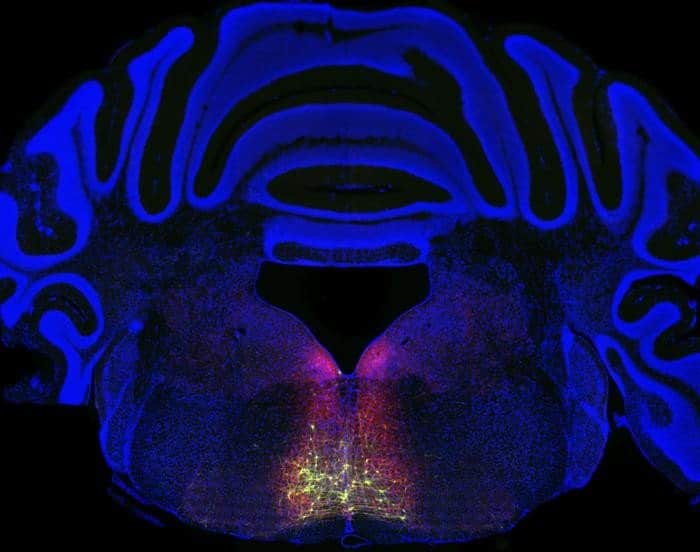
- The circuit originates in the spinal cord, passes through the thalamus, cortex, and brainstem (RVM), then loops back to the spinal cord; silencing this loop in mice eliminated chronic pain hypersensitivity while preserving normal acute pain responses.
- Activating this circuit artificially in healthy mice induced long-lasting chronic pain states, confirming its specific role in chronic pain development and maintenance.
- The discovery suggests chronic pain and acute pain are neurologically separate, enabling targeted therapies that could alleviate chronic pain without impairing the body's ability to detect immediate danger.
- Ongoing research aims to identify molecular changes in this circuit for drug development and to verify if similar mechanisms exist in humans, potentially leading to non-opioid treatments for chronic pain.


