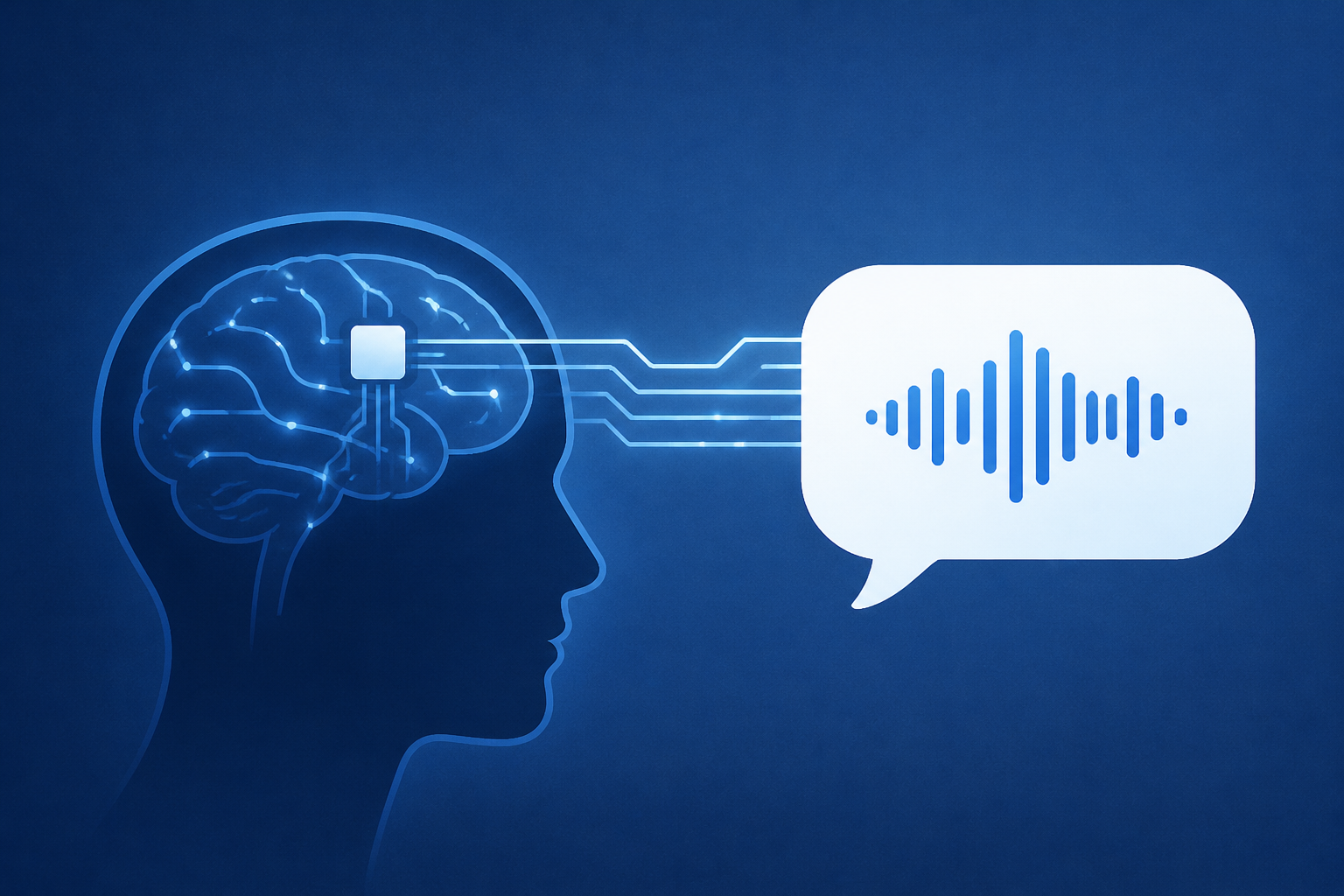
AI Image
Brain-computer interfaces: A new voice for people with paralysis
Medical Xpress • • health
Key Points:
- Recent advancements in brain-computer interfaces (BCIs) are enabling communication restoration for individuals who have lost the ability to speak or move voluntarily, with new findings presented at Neuroscience 2026.
- BCIs translate brain signals into commands to control devices, showing promise for patients with ALS, stroke, and other neurological disorders, with the global market expected to grow from $1.7 billion in 2022 to $6.2 billion by 2030.
- Key research highlights include a synthetic voice BCI that captures pitch variations for expressive communication, a BCI enabling independent communication for over a year in a completely locked-in patient, and a portable brain-to-text BCI that works efficiently even on an iPhone.
- Experts emphasize the transformative potential of decoding brain activity into speech or text for people with paralysis, moving these technologies closer to real-world applications beyond clinical trials.


