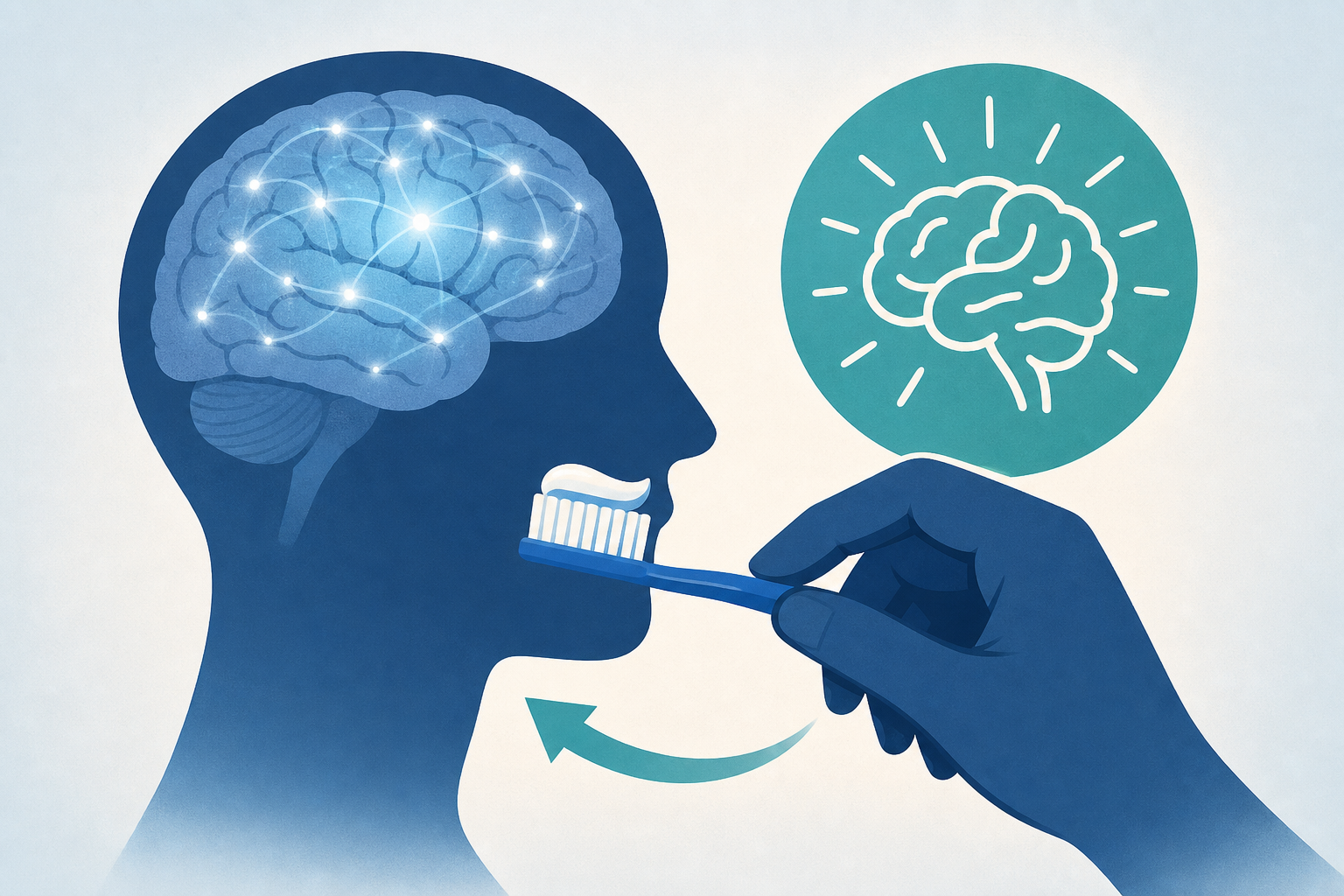
AI Generated Image
Brush Teeth Non-Dominant Hand Neuroplasticity
Dallas Express • • health
Key Points:
- Many Americans are adopting the habit of brushing their teeth with their non-dominant hand to stimulate neuroplasticity, aiming to enhance brain adaptability by engaging different neural pathways.
- While this practice may increase cognitive engagement and focus by requiring more attention and coordination, scientific evidence supporting broad cognitive benefits or dementia prevention remains limited.
- Experts stress that overall brain health depends more on comprehensive lifestyle factors such as physical exercise, social interaction, and cardiovascular health rather than isolated habits like using the non-dominant hand.
- Standard oral hygiene guidelines from the American Dental Association and Mayo Clinic recommend brushing twice daily with fluoride toothpaste for two minutes, daily flossing, and regular toothbrush replacement, regardless of which hand is used.
- Although trying the non-dominant hand method is low-cost and may improve coordination over time, individuals with motor or oral health issues should consult healthcare professionals before changing their routines.


