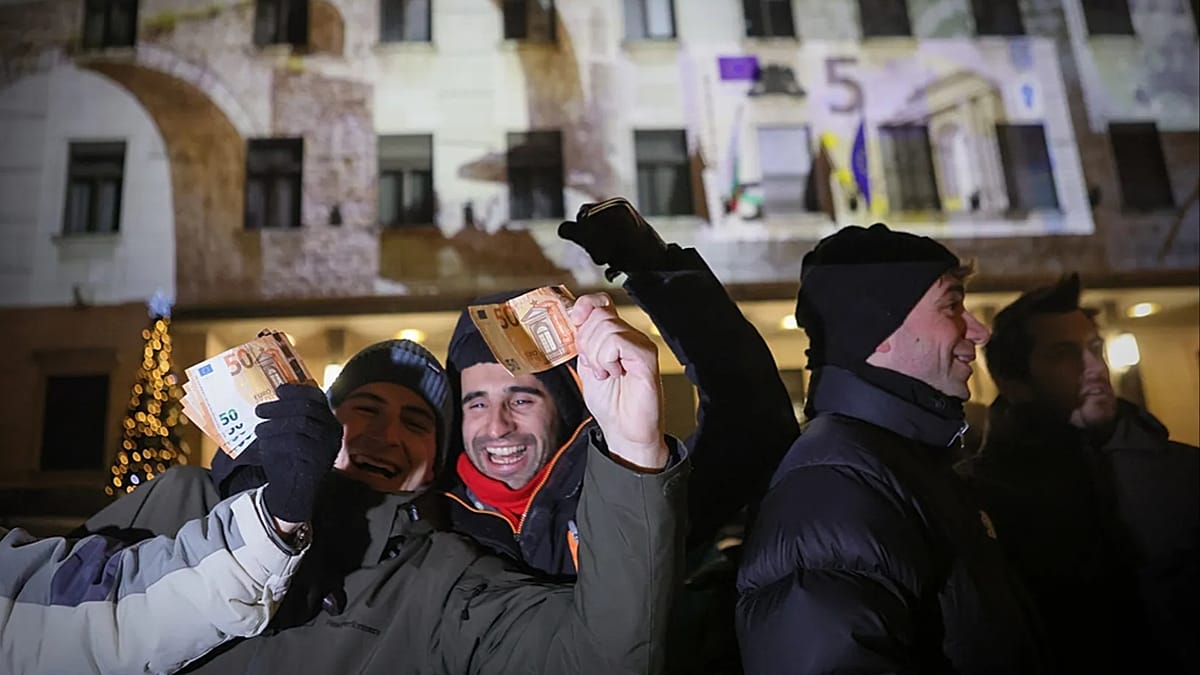
Bulgaria switches to the euro amid mixed reactions from its citizens
Euronews.com••world
Key Points:
- Bulgaria became the 21st country to adopt the euro on January 1, replacing its lev currency after nearly two decades in the European Union, marking a significant step in its EU integration.
- The move was welcomed by EU leaders as a symbol of shared values and economic strength, though many Bulgarians remain divided, with concerns about potential price hikes and political instability.
- Inflation worries persist, with food prices rising faster than the eurozone average, and some citizens and businesses expressing difficulty in accessing euros and skepticism about the timing of the switch.
- The new Bulgarian euro coins feature national historical and cultural symbols, including the Madara Rider and notable religious figures, reflecting the country's heritage.
- Bulgaria's euro adoption is expected to boost investor confidence, facilitate