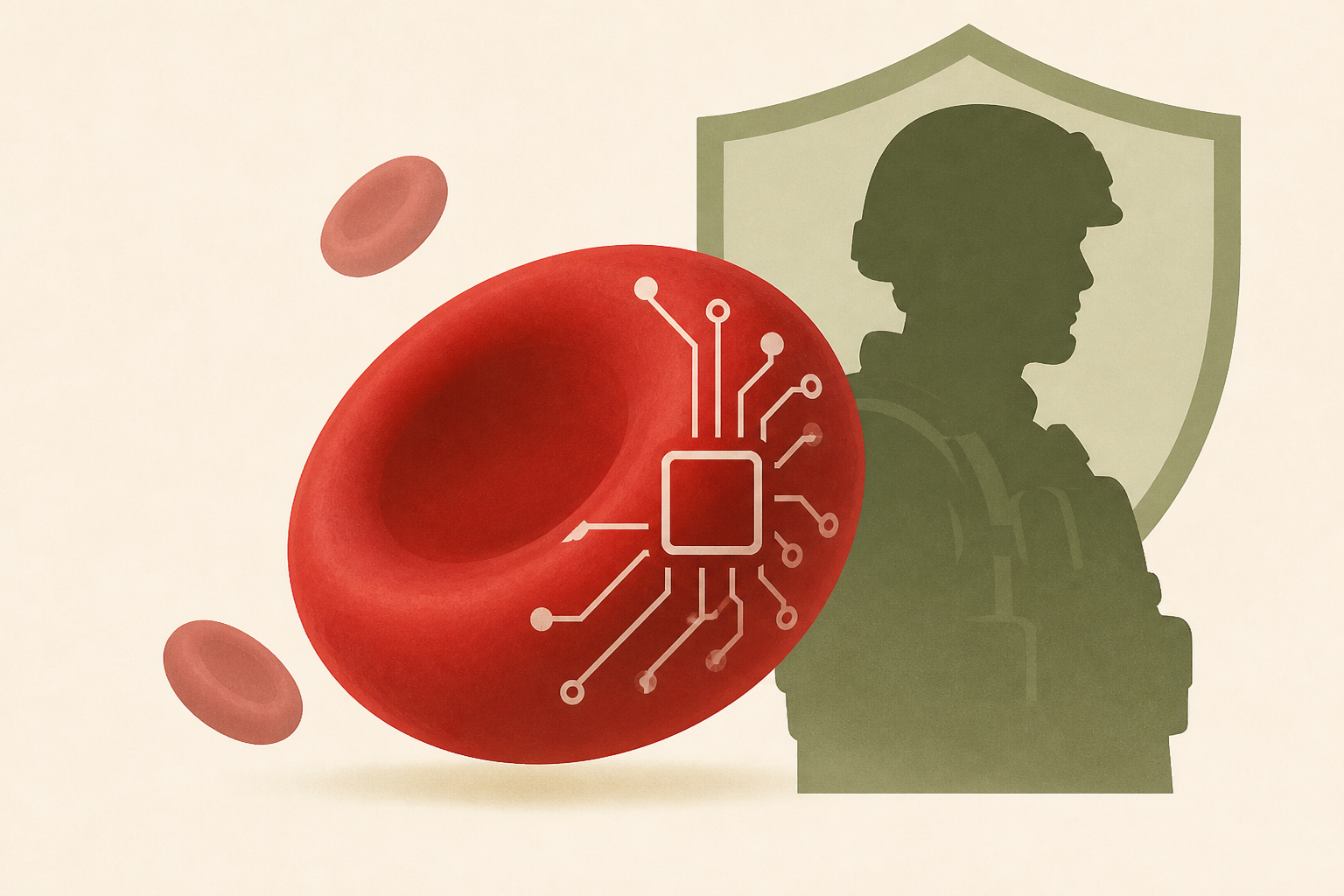
AI Generated Image
California scientists get $11M to develop ‘smart’ blood cells for soldiers
New York Post • • health
Key Points:
- UC San Diego scientists received over $11 million in DARPA funding to develop "smart" red blood cells engineered to enhance soldiers' endurance and physical performance by increasing oxygen delivery during exertion.
- The three-year project aims to use gene-editing techniques to create red blood cells that respond to physical activity by producing proteins that improve oxygen transport, potentially reducing fatigue and boosting overall health.
- While focused on military applications, researchers believe this technology could also benefit athletic performance and medical treatments for conditions like heart attacks, strokes, vascular diseases, diabetic ulcers, and cancer detection and therapy.
- The project involves collaboration with Northeastern University, the University of Pennsylvania, and MIT, and will utilize a hollow-fiber bioreactor for testing and optimization, following DARPA's "moonshot" model of high-risk, high-impact research.
- No human testing is planned at this stage, with researchers emphasizing the broader potential of red blood cell engineering to revolutionize biomedical science beyond the initial military focus.


