AI Image
Catalytic transfer of carbon atoms enables spirofusion of C-C σ-bonds
Nature • • science
Key Points:
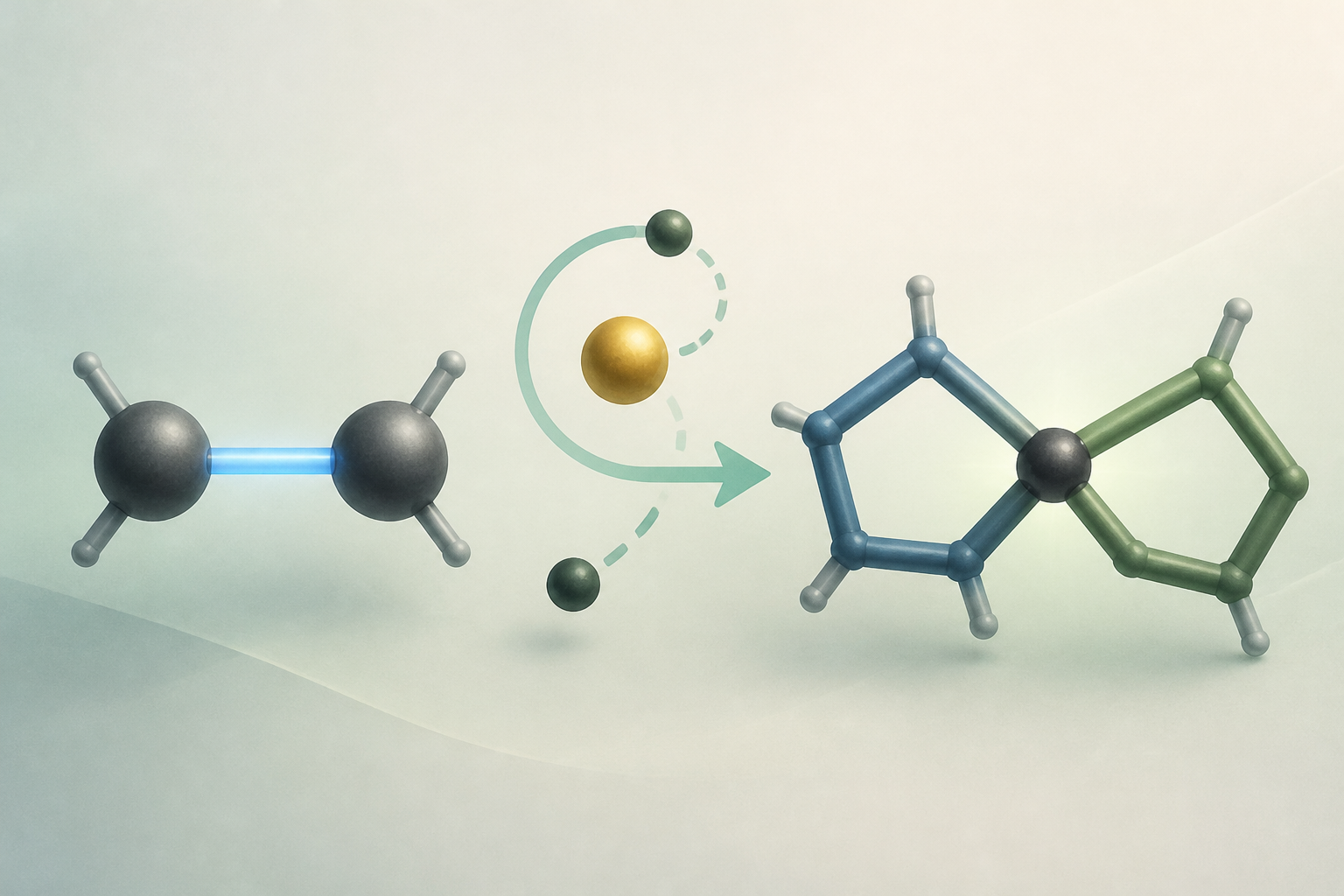
- Researchers have developed a rhodium-catalysed spiro-carbon-atom insertion reaction that transforms biphenylene substrates into spirocyclic structures by sequentially activating C–C bonds.
- The method uses N-isocyanoiminophosphorane (PINC) as an atomic carbon equivalent to form four new C–C bonds at a spiro centre, creating rigid three-dimensional frameworks.
- This approach enables both homo- and cross-spirofusion of biphenylenes and can combine activation of σ- and π-bonds, expanding the scope of spirocyclic synthesis.
- The strategy represents a significant advancement in constructing complex spirocyclic frameworks by controlled insertion of a single carbon atom into C–C σ-bonds, a previously challenging transformation.


