AI Image
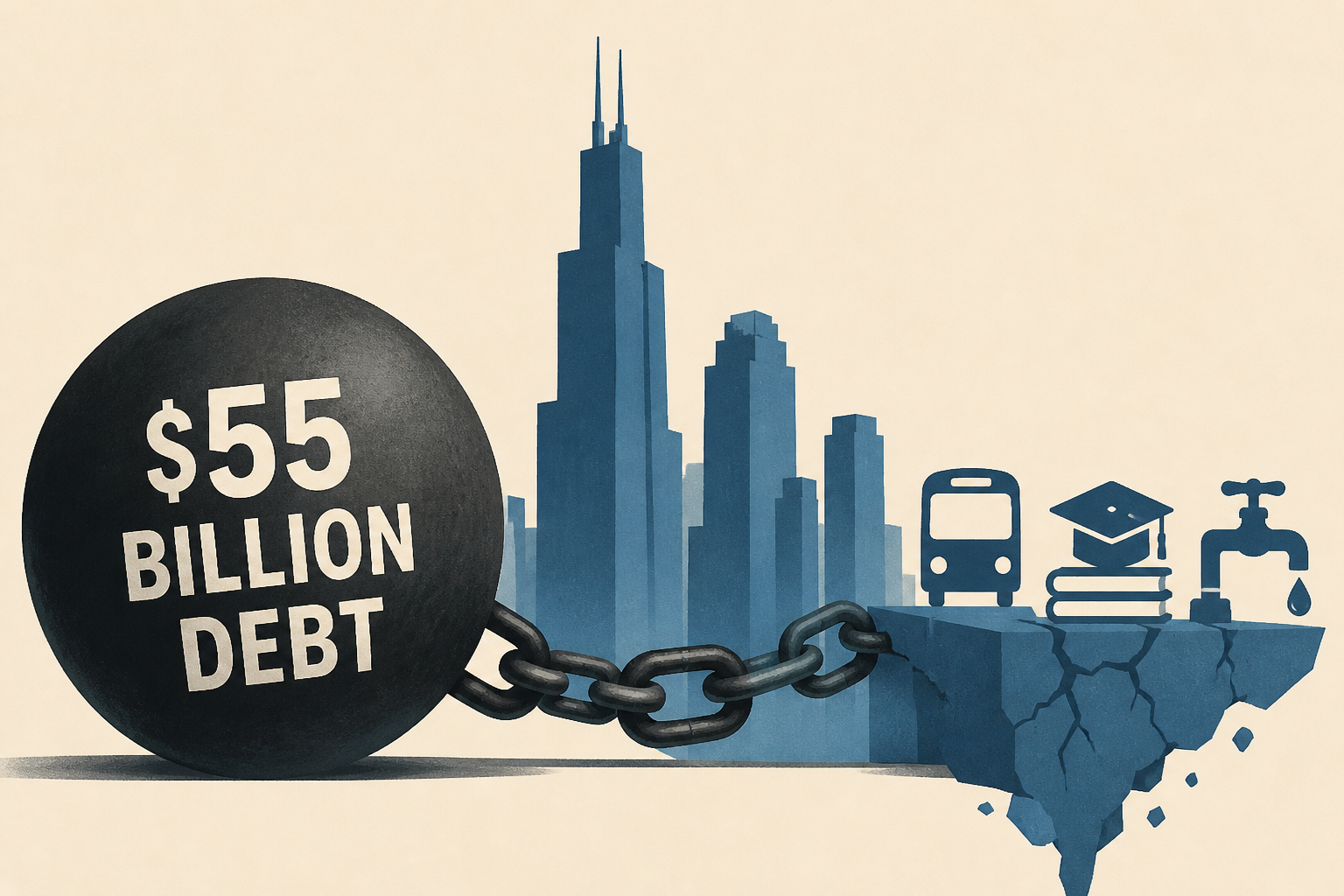
Chicago’s $55 Billion of Debt Is a Threat to City Services
ProPublica • • nation
Key Points:
- Chicago faces a severe financial crisis, with $3.9 billion in its 2027 budget allocated to debt payments, leaving little funding for essential city services like pothole repairs, public safety, and lead poisoning interventions.
- The city’s $55 billion debt burden, worsened by past administrations’ underfunding of pensions, has led to a credit rating near junk status, increasing borrowing costs and limiting financial flexibility.
- Mayor Brandon Johnson’s administration has relied heavily on borrowing—adding $1.9 billion in new debt since 2023—to fund economic development and cover operational shortfalls, despite limited political appetite for tax increases or service cuts.
- Budget constraints have led to deteriorating public services, including inadequate restaurant inspections, delayed sidewalk repairs, and insufficient resources for addressing childhood lead poisoning, exacerbating health and safety risks for residents.
- The resignation of Chicago’s chief financial officer amid disputes over financial transparency highlights internal tensions, while city leaders debate the sustainability of ongoing borrowing and struggle to find long-term fiscal solutions.


