Chinese lander reveals giant 'cavity' of radiation between Earth and the moon - and it could change how lunar exploration is done
Live Science • • general
Key Points:
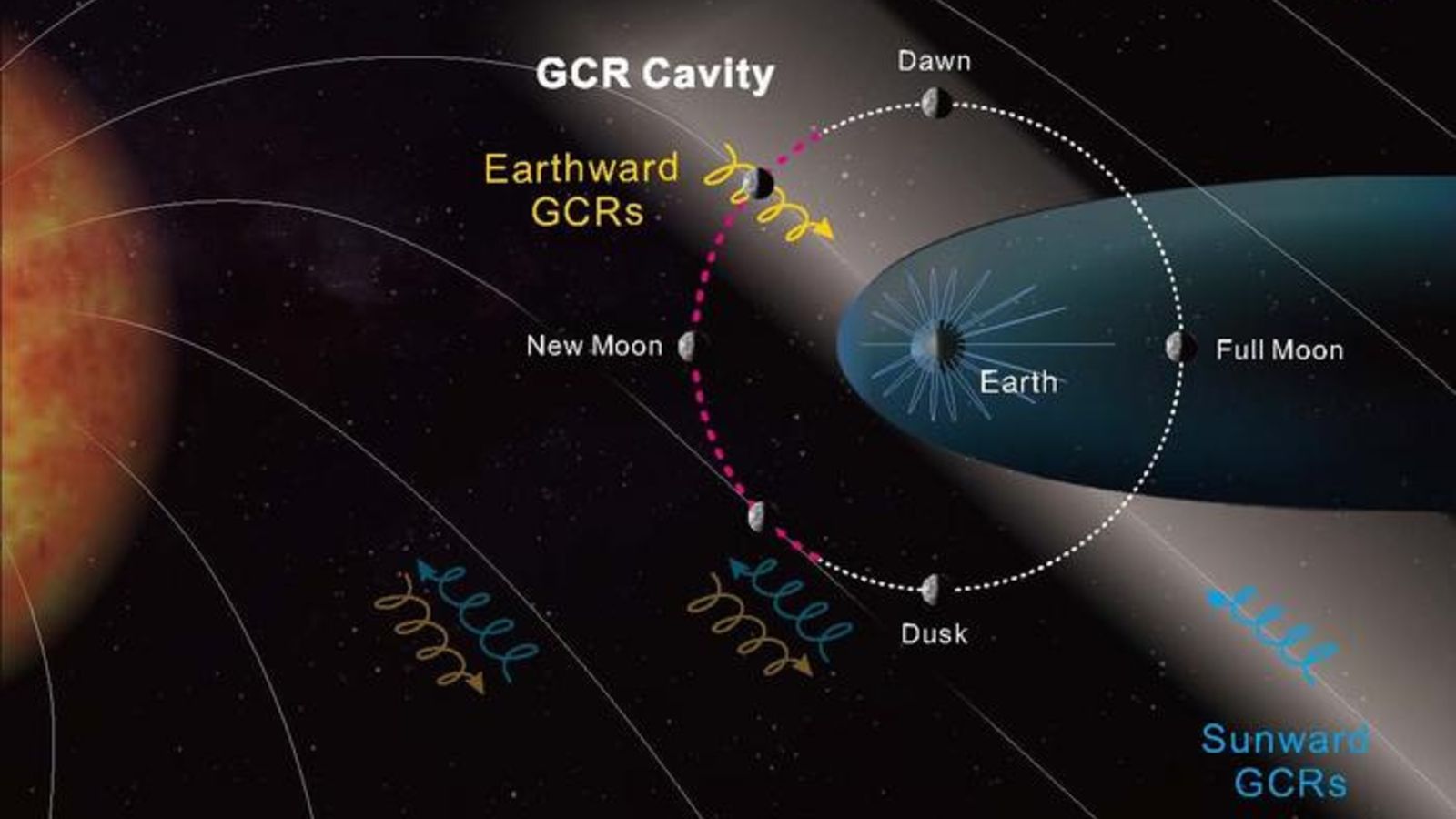
- Scientists discovered a "cavity" of reduced cosmic radiation near the moon, based on data from China's Chang'e-4 lander, which could help reduce astronauts' radiation exposure during lunar missions by scheduling surface activities in the moon's local morning.
- The finding suggests Earth's magnetic field influences space farther than previously thought, challenging the assumption that galactic cosmic rays are uniformly distributed between Earth and the moon outside Earth's magnetosphere.
- Analysis showed a 20% decrease in lower-energy galactic cosmic ray protons during the moon's local morning in the waxing gibbous phase, attributed to Earth's magnetic field blocking some high-energy protons and creating a radiation "shadow."
- This discovery has implications for future crewed lunar missions, such as NASA's Artemis II, by providing a better understanding of radiation patterns and suggesting that lunar morning is the safest time for astronauts to conduct surface explorations.
- Researchers emphasize that Earth's magnetosphere affects space beyond its known boundaries, and further studies with larger datasets could refine knowledge of this radiation cavity to improve lunar mission safety.


.jpg%3Fwidth%3D1200%26height%3D630%26fit%3Dcrop%26enable%3Dupscale%26auto%3Dwebp?format=webp&w=120&h=80)


