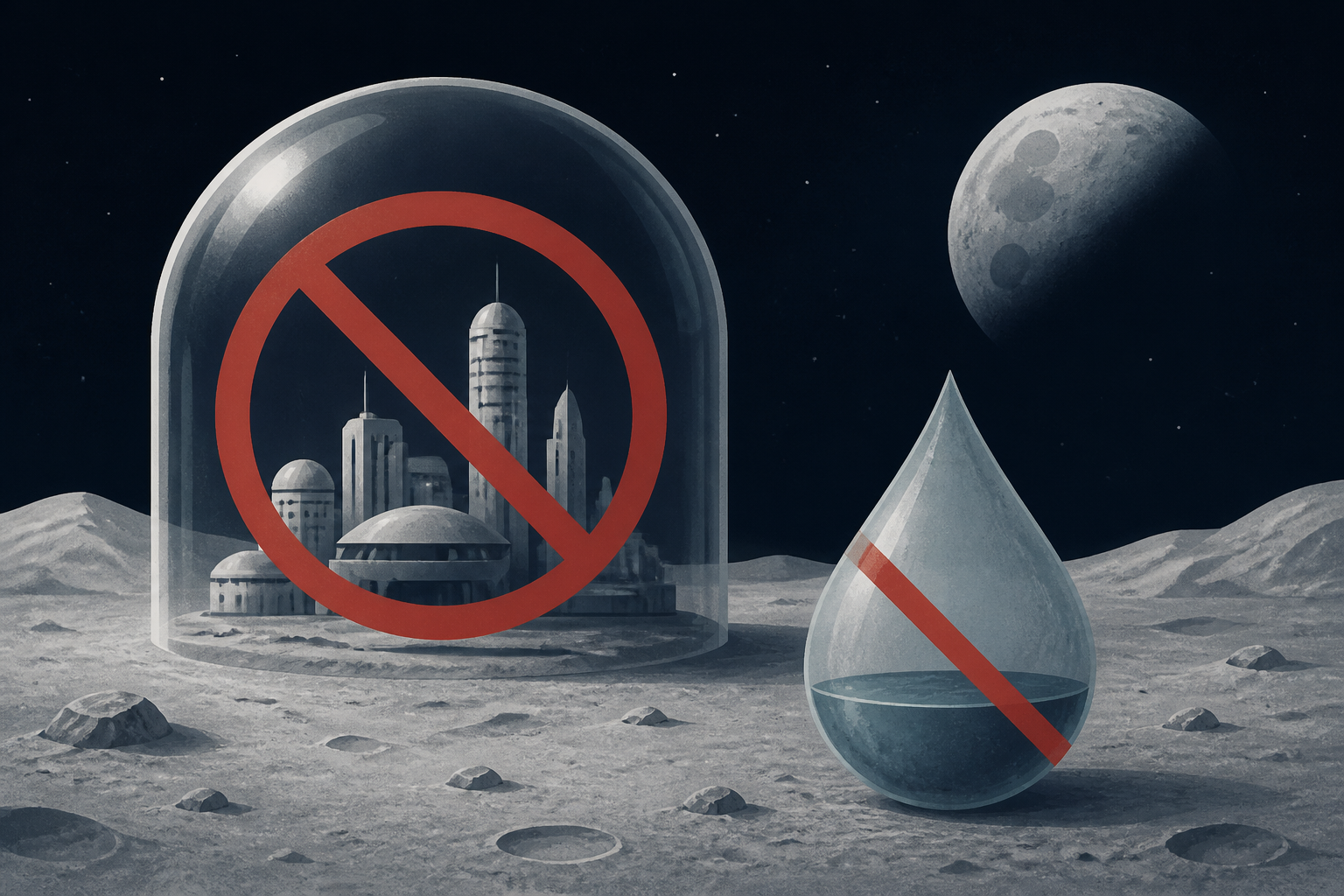
AI Image
Cities won't survive on the moon as there isn't enough water, scientists say
KSL News • • science
Key Points:
- A recent study in Frontiers in Space Technologies estimates that lunar water reserves, trapped in tiny glass beads, are insufficient to sustain large human cities on the moon for extended periods, challenging Elon Musk's vision of a million-person lunar city within 10 years.
- Researchers found that a population of 1 million would exhaust the lunar water supply in under 2.5 years without recycling, and even with a 98% recycling rate, it would last only about 100 years, making such large settlements unsustainable long-term.
- Smaller communities of around 100,000 people could survive for about 1,000 years, while a town of 10,000 might have enough water for 10,000 years, suggesting that modest-sized lunar settlements are more feasible initially.
- Experts emphasize that lunar water is scientifically valuable and challenging to extract due to its location in cold, dark craters often mixed with toxic chemicals, advocating for careful study and international regulation to prevent resource depletion.
- The study suggests that importing water from other solar system sources may be necessary for larger populations, and realistic timelines for lunar settlements are likely closer to 30 years for small towns rather than a large city in 10 years.


