AI Image
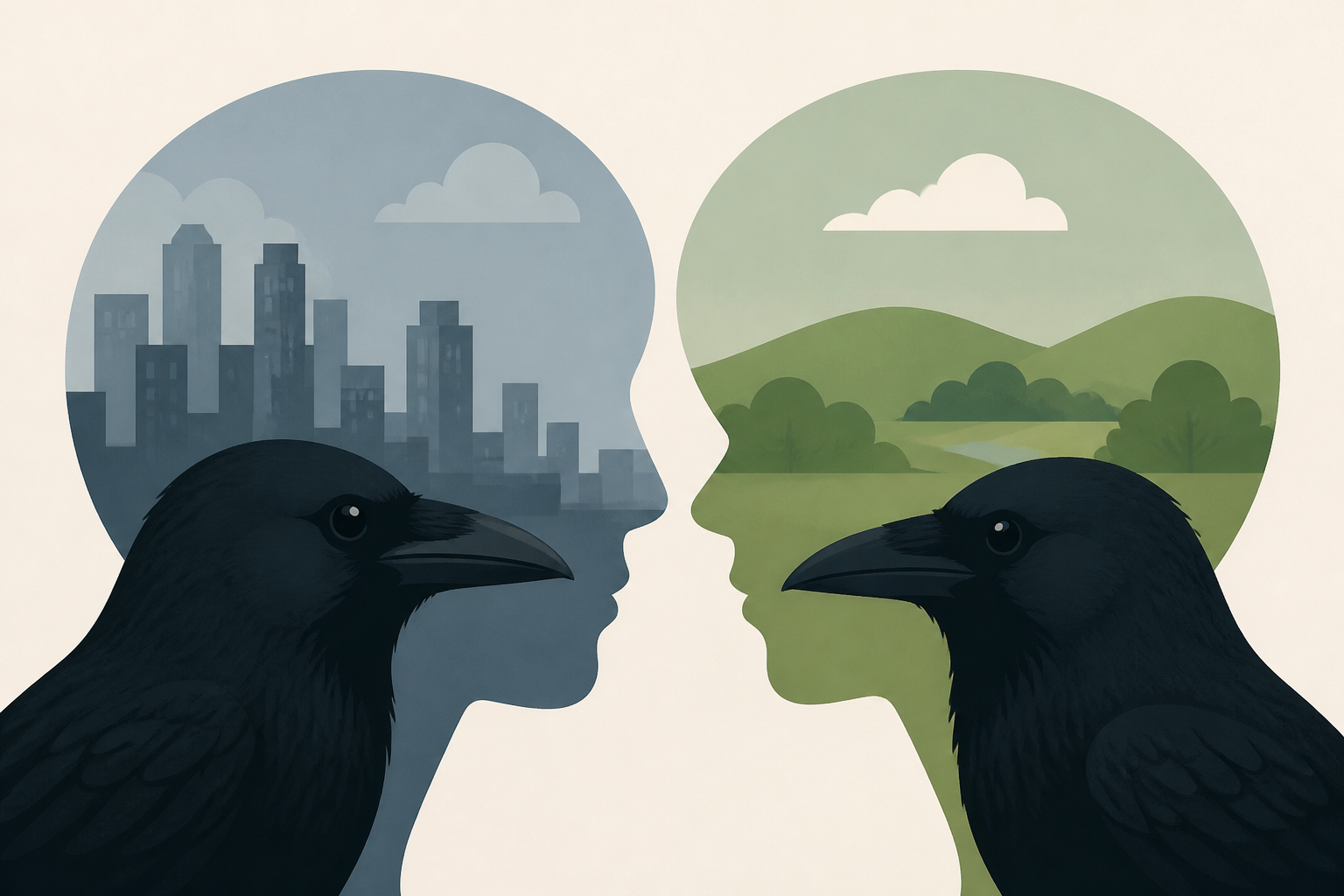
City crows and country crows don't see the world the same way
Phys.org • • health
Key Points:
- A new study published in Behavioral Ecology examined neophobia—the hesitation to approach new objects—in urban and rural crows, revealing that experience shapes their responses to novel stimuli.
- Urban crows showed more neophobia toward unfamiliar objects than rural crows, a surprising finding that contrasts with previous studies, likely because this study controlled for prior experience with the objects.
- Rural crows were generally less fearful of new objects but exhibited greater fear of humans overall, often fleeing regardless of human gaze direction, likely due to higher risks of persecution in rural areas.
- Urban crows paid close attention to human gaze direction, fleeing less when not directly observed, reflecting their adaptation to frequent human presence and the need to assess threats carefully.
- The research highlights how both urban and rural crows balance curiosity and caution, demonstrating that animals' lived experiences and social behaviors influence their adaptation to changing environments without altering their fundamental survival strategies.


