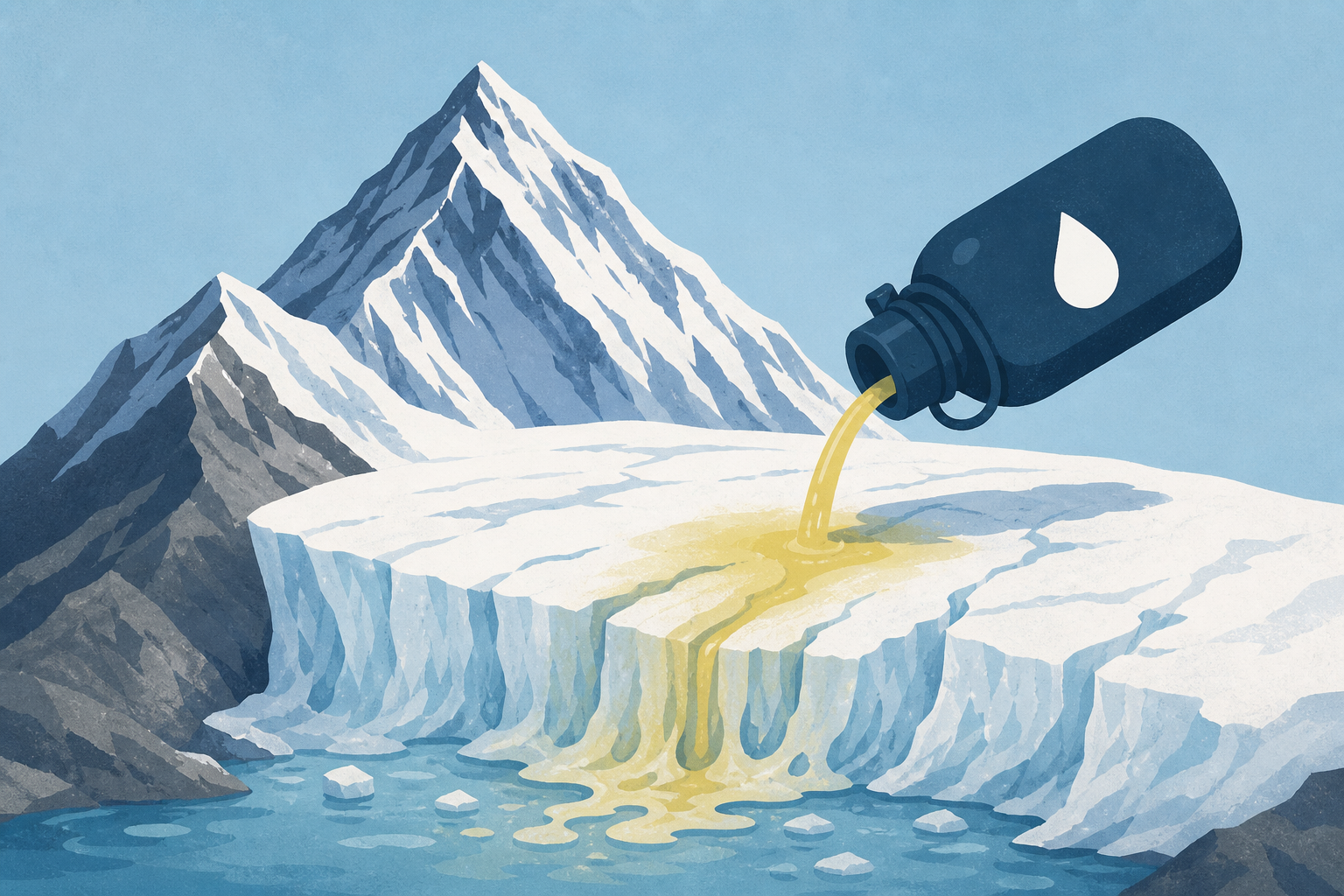
AI Generated Image
Climbers are melting Everest’s glacier with their urine, study warns
The Independent • • world
Key Points:
- Research shows that heat from fuel combustion and urine at Everest Base Camp melts approximately 2,500 tonnes of ice and snow annually on the Khumbu Glacier.
- The camp's 1,600 tents consumed large amounts of liquefied petroleum gas, kerosene, and petrol during the 2023 spring climbing season, generating 849,174 megajoules of energy.
- Urine discharged directly onto the glacier contributes significantly to melting, with about 6,000 litres produced daily and responsible for melting an estimated 154 tonnes of ice each season.
- Satellite data reveals that surface temperatures at the base camp have increased by 0.28°C per year since 1991, nearly double the warming rate of the surrounding glacier.
- Researchers suggest that while climate change is the main cause of glacial melt, the concentrated human activity at the base camp is unsustainable and recommend relocating the camp to a more stable area.


