AI Image
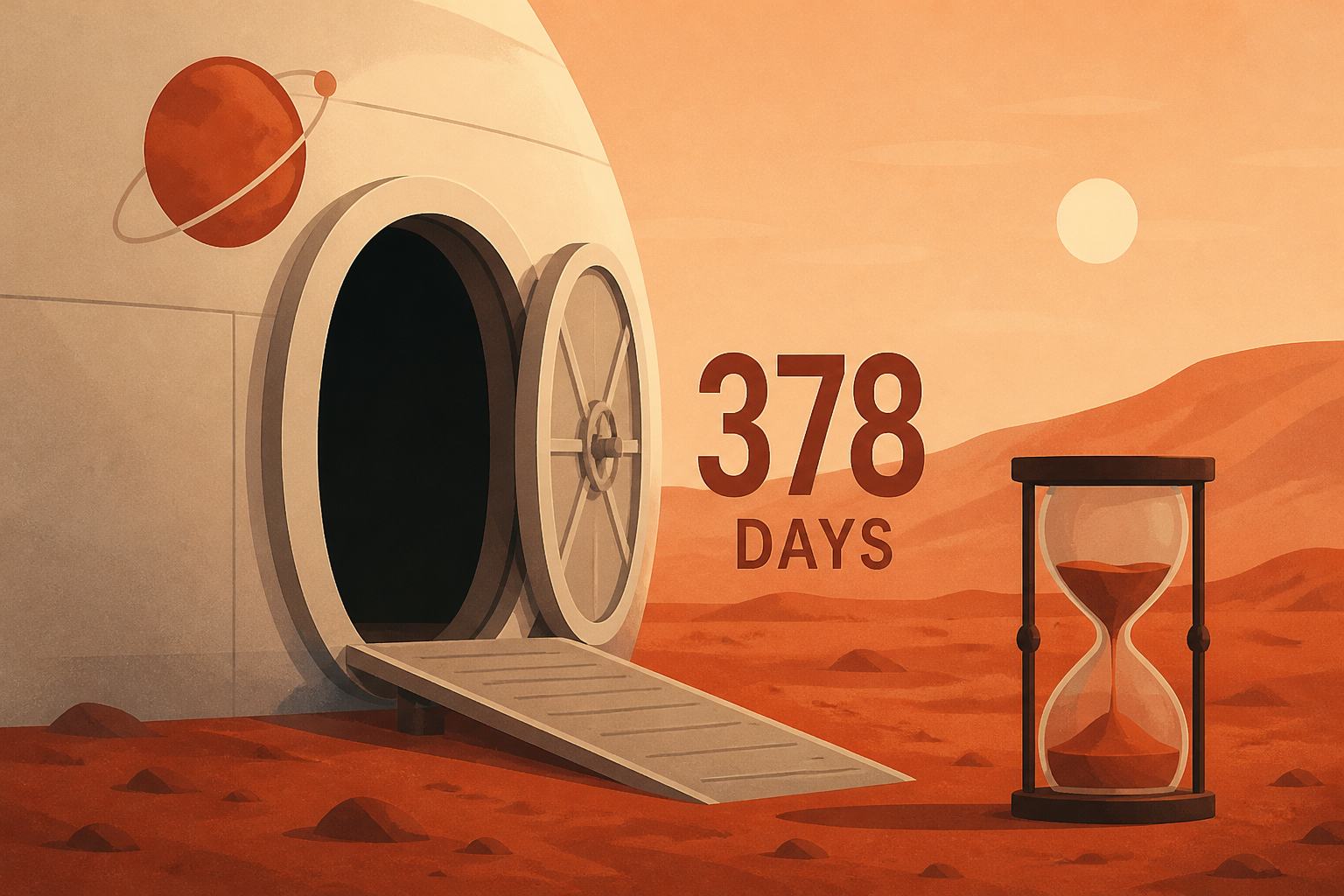
Crew from NASA's simulated Mars mission emerges after 378 days in isolation
Ground News • • science
Key Points:
- Four NASA volunteers completed a 378-day isolation inside a 1,700-square-foot simulated Mars habitat at Johnson Space Center in Houston, testing human endurance for long-duration space missions.
- The CHAPEA (Crew Health and Performance Exploration Analog) mission involved managing crops, limited resources, and communication delays to mimic conditions on Mars.
- This year-long simulation aimed to study the psychological and physiological effects of isolation and confinement, helping NASA prepare for future manned missions to Mars.
- The habitat was a 3D-printed module designed to replicate the spatial constraints and living conditions astronauts would face on a Mars expedition.
- The successful completion of this analog mission provides valuable data on crew health, performance, and mission logistics for prolonged space travel.


