AI Image
Dinosaur Blood Cells Detected in 115-Million-Year-Old Fossil
ScienceAlert • • science
Key Points:
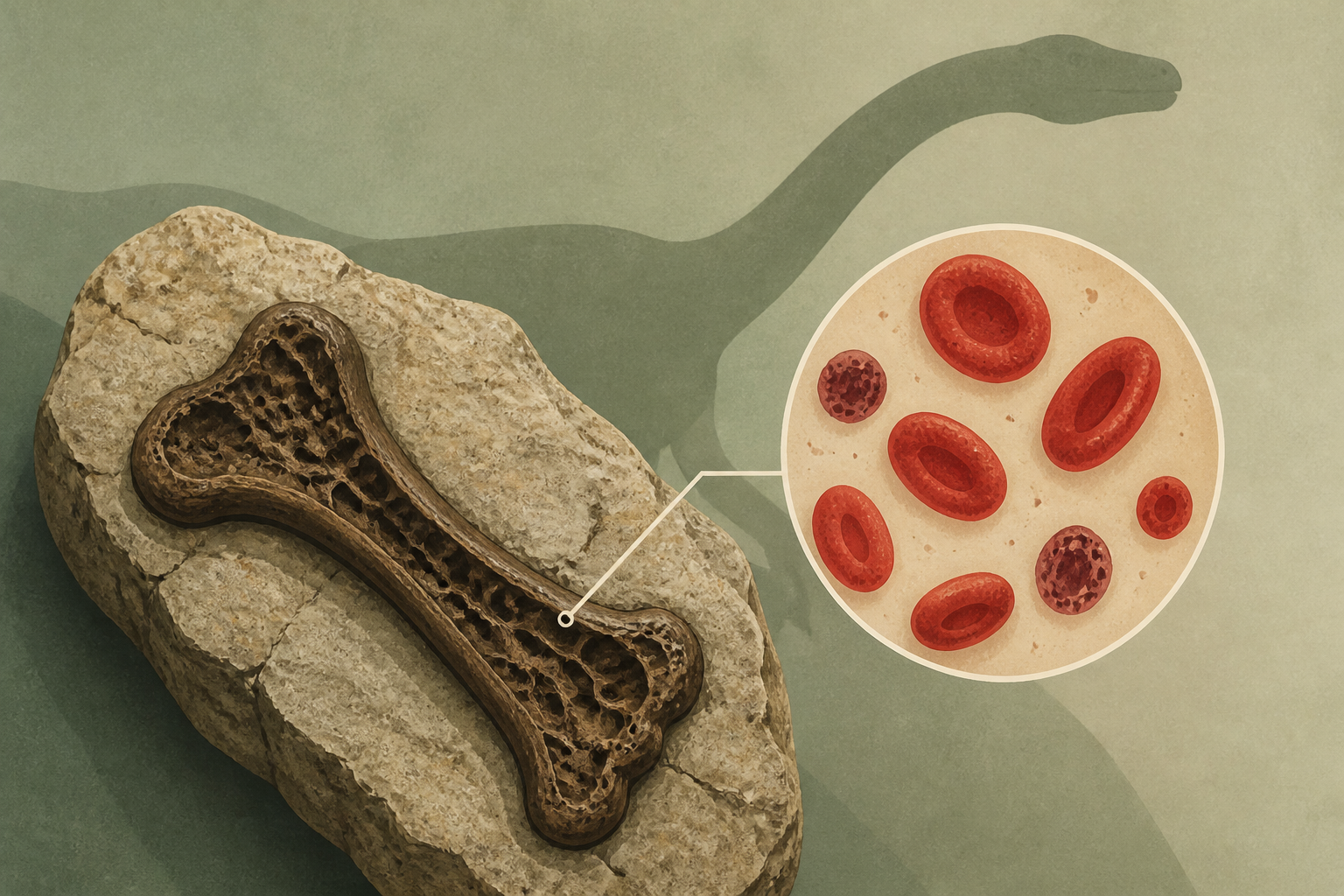
- Scientists at Curtin University have identified fossilized red blood cells and blood-derived molecules, including heme B, preserved for over 100 million years inside a dinosaur leg bone from Aratasaurus museunacionali.
- The discovery was supported by microscopic, chemical, and molecular analyses that ruled out contamination from microbes or minerals, marking the oldest known example of possible dinosaur blood cells.
- Preservation is attributed to the unique geological setting of the fossil, involving microbial mats in low-oxygen shallow waters and manganese mineralization that stabilized delicate structures during fossilization.
- Researchers emphasize the need for replication through examination of additional fossils and geological contexts to confirm findings and explore implications for ancient physiology.
- This breakthrough suggests many existing museum fossils could contain untapped molecular and microscopic information, potentially revolutionizing paleontology without new excavations.


