AI Generated Image
Earliest Americans specialized in megafauna hunting from Alaska to South America, analysis of 50 sites reveals
Phys.org • • science
Key Points:
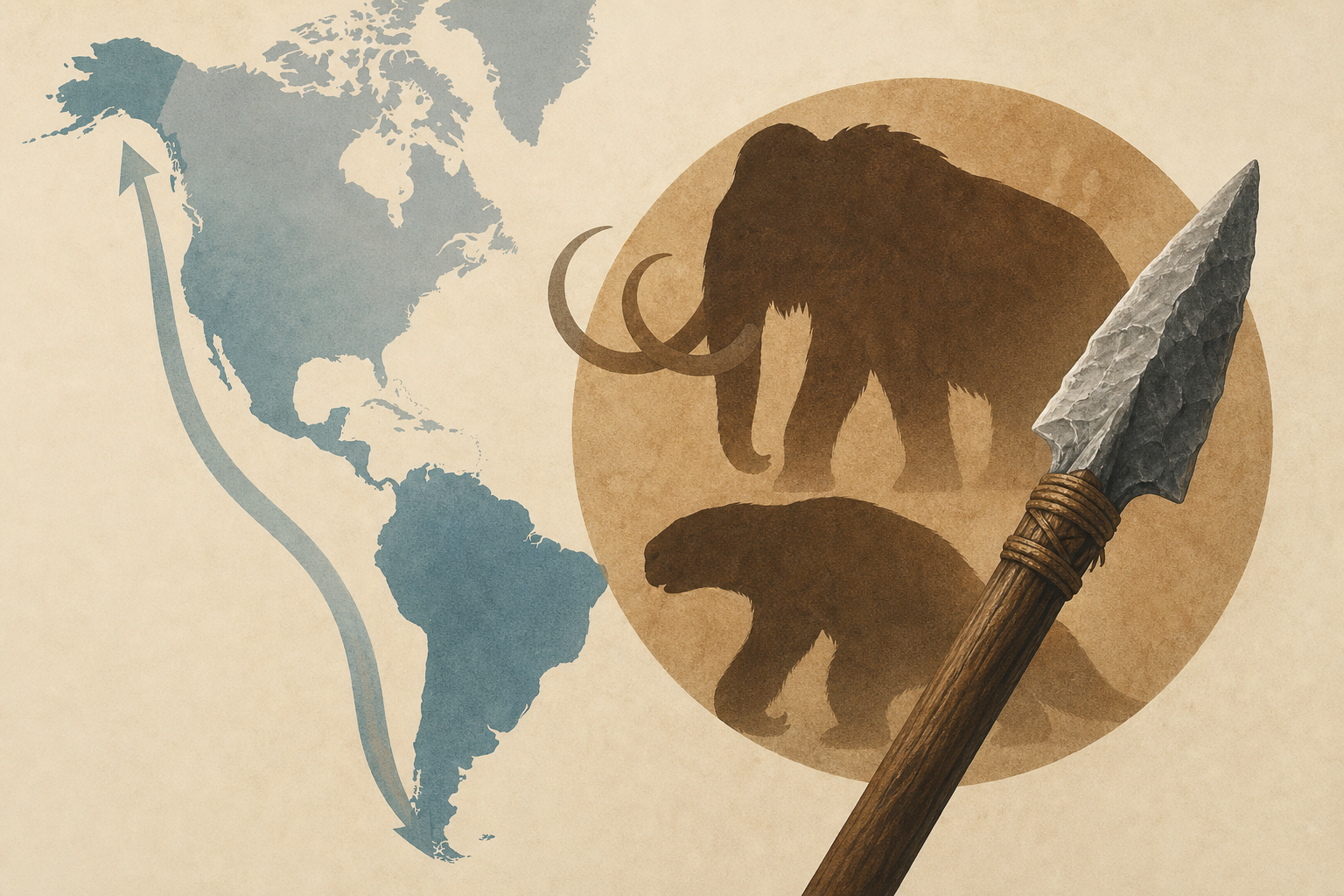
- New research led by University of Alaska Fairbanks archaeologist Ben Potter shows that early Native Americans primarily specialized in hunting large megafauna, such as mammoths and giant ground sloths, across the Americas rather than exploiting a wide variety of smaller animals.
- The study analyzed animal bones from 50 archaeological sites and found that 83% to 88% of the diet of early cultural groups like the Eastern Beringians, Clovis, and Fishtail Projectile Point people came from large plant-eating megaherbivores, despite these animals being rare in the landscape.
- This megafaunal specialization explains the similarity in hunting tools across vast regions and facilitated the rapid human expansion from Alaska to South America, as early humans relied on the wide-ranging large mammals instead of adapting to local ecosystems.
- The timing of megafauna extinctions closely follows human migration patterns southward, suggesting that human hunting, combined with climate change, significantly contributed to the gradual disappearance of these large animals over thousands of years.
- The research team included experts from the U.S., Canada, and Argentina and was published in the journal Science Advances, providing new insights into early human diets and migration in the Americas.


