AI Generated Image
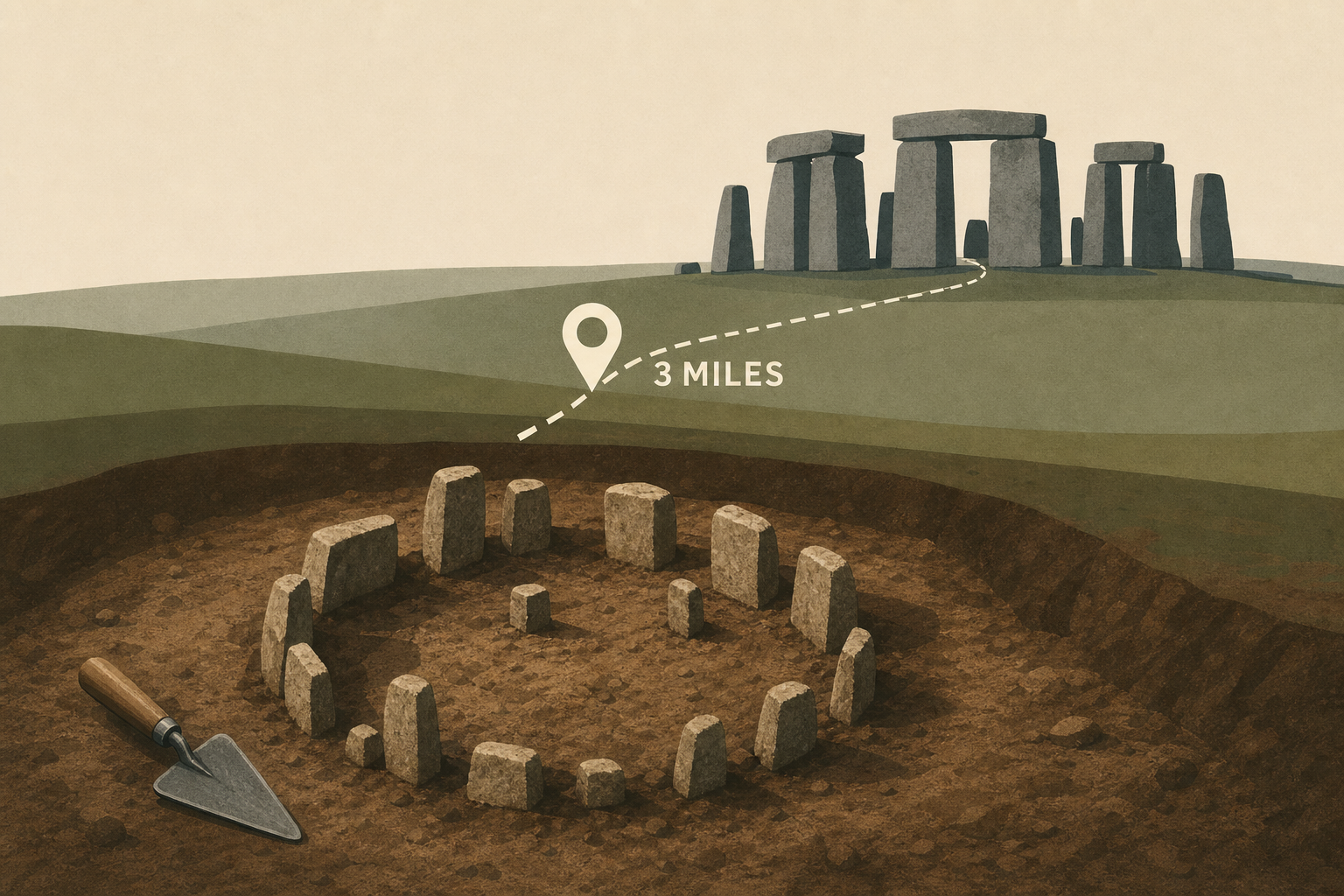
Early prototype of Stonehenge unearthed 3 miles from prehistoric landmark
NBC News • • world
Key Points:
- Archaeologists discovered an earlier, simpler version of Stonehenge near Bulford, about 3 miles east of Stonehenge, dating back around 500 years before the iconic stone monument.
- The site features two large pits believed to have held wooden posts aligned with the summer solstice sunrise and winter solstice sunset, indicating early astronomical knowledge.
- Artifacts such as pottery, flint tools, and animal bones suggest the site was used for ceremonies and gatherings, reflecting the cultural and religious significance of celestial events.
- The discovery highlights that early farming communities celebrated solstices with wooden structures before Stonehenge’s massive stones were erected, emphasizing the sun’s importance in agriculture and social cohesion.
- Stonehenge remains a mysterious and architecturally sophisticated prehistoric monument, with ongoing debates about its builders, construction methods, and purposes, including possible links to burial rituals and seasonal celebrations.


